For many Nepalis, the choice is deceptively simple. They can stay in a country where opportunities to build a decent life remain scarce, or leave in search of work abroad and send money back to support those who remain. This is hardly a choice at all. It reflects a fundamental contradiction in a country that promises its citizens rights, opportunities and prosperity but often fails to provide the conditions necessary to secure them at home.
This contradiction persists despite decades of political change, constitutional promises and successive commitments to reform. From education and employment to healthcare, governance and development, the gap between what the state promises and what citizens experience remains wide. These are not simply policy failures. They point to a deeper institutional cycle in which political actors repeatedly create problems they appear unable or unwilling to resolve.
Joseph Heller’s Catch-22 offers a useful way to understand this predicament. The term describes a self-defeating system of rules in which the conditions for escaping a problem make escape impossible. It captures the absurdity of institutions that manipulate logic and language to protect their authority while leaving ordinary people trapped in contradictions. Nepal’s political and social realities increasingly resemble this predicament.
Nepal’s transition from monarchy to a federal democratic republic was one of South Asia’s most consequential political transformations. Many people paid a heavy price in the struggle to establish an inclusive, participatory society and a new political order. Yet the journey remains uncertain. Political leaders’ commitments repeatedly fall short of meaningful implementation, leaving citizens expected to solve problems that the system itself seems designed to keep unresolved. The result is growing frustration, the normalisation of irrationality and institutions increasingly insulated from public scrutiny.
The bluster of Catch-22
Thirty-six years have passed since democracy was restored in Nepal in 1990. Yet the achievements of that period have been undermined by persistent institutional instability and stagnation. Institutions need stability to mature, but reforms driven by short-term political interests rather than long-term institutional needs repeatedly unsettle them.
The Constitution of Nepal, 2015, sought to establish federalism, inclusiveness and power-sharing. However, its implementation has become entangled in disputes over identity, representation and the distribution of power. Politicians who once appeared committed to structural change have often become defenders of the status quo after acquiring power. This paradox raises serious questions about democratic competition and further weakens the institutions meant to uphold the constitutional order.
The Constitution guarantees social justice, education, healthcare and equality as fundamental rights. These commitments place Nepal among South Asia’s more progressive constitutional democracies. Yet their meaningful realisation remains elusive. Political systems often reward conformity rather than responsiveness to the needs and concerns of ordinary people, allowing the gap between constitutional promises and everyday realities to persist.
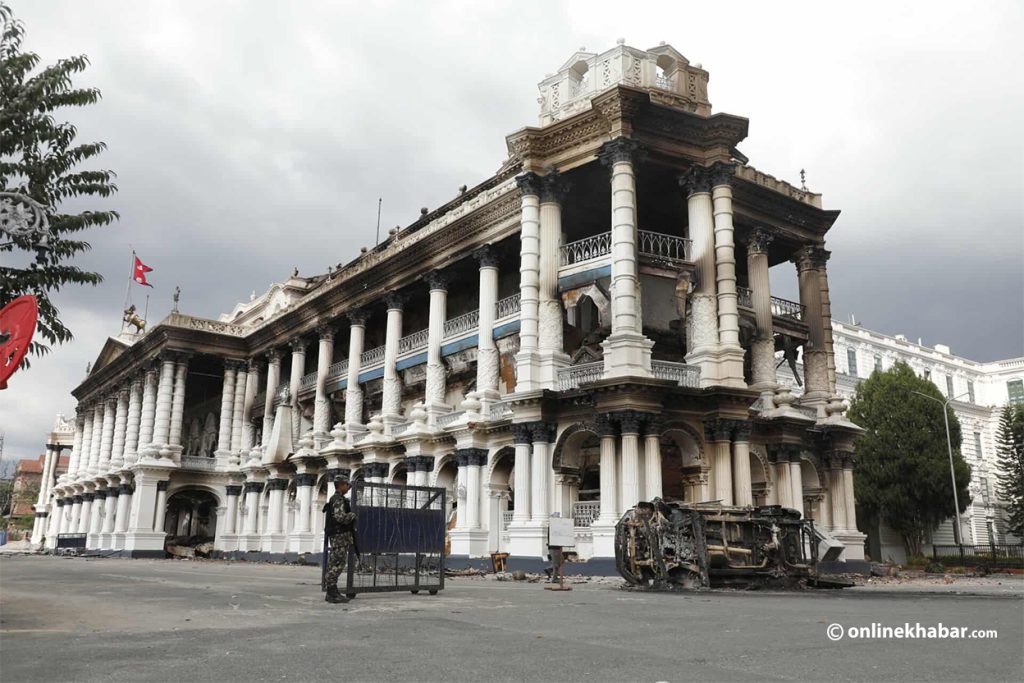
The Gen Z uprising sought national renewal. It challenged institutionalised corruption, impunity, political privilege and the established political class. The deadly crackdown claimed 76 lives and left more than 2,000 people injured. But what substantive gains has the country made since then? The uprising risks becoming a nihilistic revolution, one that destroys before it rebuilds.
Michel Foucault argued that modern political power operates not merely through force but also through institutions, knowledge, surveillance and discipline. His work offers a useful perspective on how power is exercised in Nepal today. By failing to deliver the change they were promised, the present government’s actions risk dashing the hopes and expectations of ordinary people, particularly the poor.
What is fuelling Catch-22 in Nepal?
A country’s decline can begin when people come to believe that a single individual can rescue it from crisis and place that individual above the nation and its institutions.
Hitler’s rise in Germany offers a stark historical warning. He was elevated as an indispensable leader who could rescue the country from its crisis. The consequences were catastrophic. As the Nazi regime consolidated power, German soldiers were required to swear personal loyalty to Hitler rather than to the Constitution. Allegiance to an individual had replaced loyalty to the nation and its constitutional order.
A second warning sign emerges when people are persuaded that political opposition amounts to hostility towards the nation. Those who engage in such manipulation seek to poison public discourse and turn citizens against their opponents. Rather than encourage debate and disagreement, they cultivate suspicion and portray dissent as a threat.
The danger deepens when governments and their institutions attempt to control what people hear and suppress public voices. Such practices undermine fundamental rights and leave citizens with little room to challenge authority.
Hannah Arendt, the German-American political thinker, examined how totalitarian systems seek to eliminate independent thought and public dissent, replacing them with unquestioning obedience to authority. Her work offers an important lens through which to understand the dangers of political systems that treat criticism as disloyalty.
Breaking the cycle of Catch-22
Breaking this cycle requires vigilant, questioning and thoughtful citizens who reject the idea that one individual can provide the answer to every national problem. A leader can initiate change and play a catalytic role in bringing it about, but no individual can substitute for strong institutions, accountable government and an engaged citizenry.
First, we must reject the idea of an unchecked leader who can wave a magic wand and lift the country out of crisis. Political authority must remain subject to constitutional limits, institutional oversight and public accountability.
Second, political parties must reform themselves and develop policy-based manifestos that offer credible solutions to national problems. Candidates who deliberately spread falsehoods to manipulate election outcomes or secure sympathy votes should face appropriate legal and political consequences.
Third, an independent judiciary is essential to upholding justice, restoring public confidence and ensuring the rule of law. Without judicial independence, constitutional guarantees risk remaining promises on paper rather than protections in people’s lives.
Ultimately, good governance, democratic values and constitutional supremacy depend not on politicians alone but on citizens who refuse to surrender their rights or accept arbitrary exercises of power.
The answer lies in the political awareness of sovereign citizens. Civic consciousness gives people the confidence to question rulers, challenge arbitrary decisions and demand accountability. Through such vigilance, Nepal can begin to restore its democratic institutions and protect human freedom.