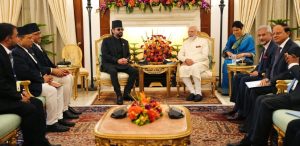

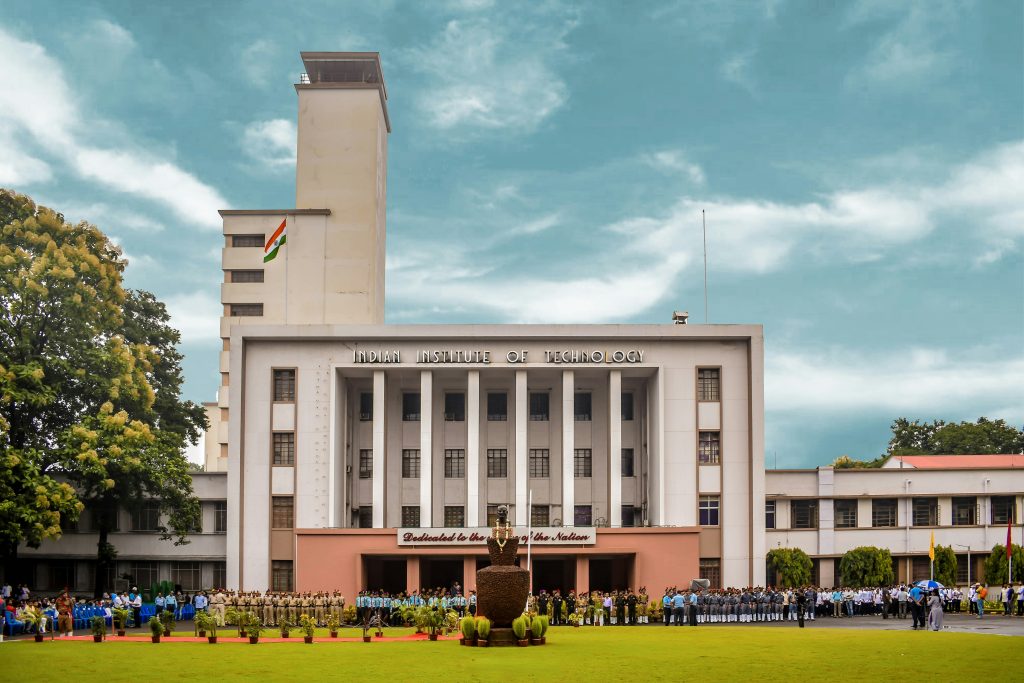
Here is what we know. On Monday, in a room in New Delhi called Hyderabad House, two prime ministers stood side by side and agreed that a campus of the Indian Institutes of Technology would be built in Nepal. We know it will be the third such campus abroad, after Zanzibar and Abu Dhabi. We know there will be an incubator, an innovation hub, a vocational institute. We do not know where. We do not know when. We do not know how much it will cost, or which IIT will lend its name, or who will be let in.
In Nepal, announcements arrive like the monsoon, loudly, all at once, and with an uncertain relationship to what is finally delivered. So let us say the sensible thing first. Wait and see.
Now let us say the other thing, because the waiting has already begun to do its work on someone.
A girl, invented
Let us invent her, because statistics have no face and it is faces that move budgets. Call her Maya. She is sixteen and lives somewhere in Dhading, in a house where the good chair belongs to her father and the good phone to her brother. She is the kind of girl who corrects the teacher’s arithmetic so politely that the teacher thanks her. (Maya is imagined. Her arithmetic is not.)
You think this is where I tell you she gets in. That the IIT arrives, the gates open, and a village girl becomes an engineer with a flag at her back and a camera crew in the yard. It is a good story. Newspapers love it, and I have just written the first paragraph of it myself.
But the thing about doors, and it takes most of us a long time to notice, is that nobody ever asks who is holding them.
The census of absences
Consider what we do know about Maya’s country. Only about 12 per cent of Nepal’s engineering and technology graduates are women. Yet walk into a community campus in Dhading, built with Indian assistance, and about 85 per cent of the students are girls. They are not missing from education. They are missing from one corner of it. The girls were never absent from science. They were absent from the register, filed under humanities and management, because those were the doors that stood open, near enough to walk to, cheap enough to afford, and safe enough that a family would not lie awake over them.
So when a foreign institute of technology arrives, bearing the most coveted three letters in South Asian education, the question is not whether Maya is good enough. The question is whether the door was built with Maya in mind, or only with her brother.
The twist in the gift
Here is the part the joint statement leaves out. Nepal is being offered a great institution, and with it a great unsolved problem.
India introduced supernumerary seats for women at its IITs in 2019, extra places reserved for female students, a decent and sincere reform. In 2025, women still made up only 20.15 per cent of admissions, barely above where they stood five years earlier. The pipeline leaks long before the gate. Women were 31.3 per cent of those who sat the JEE Main in 2025, and only 17.3 per cent of those who qualified for the Advanced round. They do not fall out at the end. They fall out at the start, quietly, at the dinner table, where a family does an arithmetic of its own.
Nepal is about to import the original, flaws included, like a secondhand car that comes with the previous owner’s dent. The temptation will be to polish the badge and ignore the dent. The wiser course is to refuse the dent.
Can it be done? Zanzibar says yes. Women made up 40 per cent of the first batch at IIT Madras’s campus there. It waived application fees for women, and its first head was a woman, Preeti Aghalayam, the first woman to lead an IIT campus. Forty per cent is not a miracle. It is a decision. Someone sat in a room and made it, and then made it again at every stage after.
What the room must decide
Nepal still has the one advantage that Zanzibar had and most nations lose, the foundation stone has not been laid. Before it is, Kathmandu can ask for things that are impossible to add later. A written enrollment target for women. Fee waivers and scholarships that reach the provinces where girls are told, kindly and firmly, that engineering is for someone else. Outreach in grades eight through ten, before the verdict of the dinner table hardens into a personality. Women on the faculty, so that a student does not have to imagine a future she has never seen. Safe hostels and safer roads. And an incubator that funds women founders, in a country where women already own roughly a third of all businesses and are still treated by banks like a rumor.
It would also be wise to ask who writes the curriculum, who hires the faculty and who chooses the problems, so that the campus is Nepali in its questions and not only in its address. Landslides, hydropower and earthquake-proof homes are engineering problems with Nepali names.
How you will know
Years from now, if all this goes well, a woman will stand in a room in Kathmandu to launch a company, or a bridge, or a battery that does something nobody thought a battery could do. She will have come from Dhading or Humla or Saptari. She will have studied at home. And nobody will announce it.
There will be no joint statement, no flags, no handshake in a hall named after a city. That is how you will know it worked. Not the day the door opens, but the day no one thinks to mention who walked through.
Until then, we know what we know, and we do not know the rest. But Maya is sixteen, and she is doing the sums, and she does not have forever.