Kathmandu, September 27
The Shram Sanskriti Party has proposed tightening Nepal’s open borders and introducing a visa system as part of amendments to a bill aimed at controlling human trafficking and smuggling.
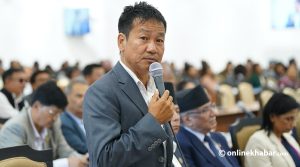
Party chair Harka Raj Rai, popularly known as Harka Sampang, and party lawmaker Aren Rai have proposed the amendment to the Human Trafficking and Transportation (Control) (First Amendment) Bill, 2083.
The proposed bill adds a new provision requiring the government to establish surveillance mechanisms at international borders, international airports and locations considered vulnerable to human trafficking and transportation.
Under the provision, if officials deployed for surveillance suspect that an offence of human trafficking or transportation has been committed or is about to occur, they must immediately inform an authorised investigating officer or the nearest police office.
The Shram Sanskriti Party has proposed adding a specific provision to this section requiring the government to tighten controls at open borders and introduce a visa system.
The proposed amendment states that the law should include a provision to “tighten open borders and implement a visa system.”
The government introduced the bill with the stated objective of protecting the dignity, freedom and fundamental rights of people affected by human trafficking, which has developed into an organised crime operating across countries.
Minister for Women, Children, Gender and Sexual Minorities and Social Security Sita Badi registered the bill in the House of Representatives on August 30. The House has already held a principle-level discussion on the bill, after which lawmakers submitted amendment proposals.
According to Minister Badi, the bill aims to ensure access to justice for people at high risk of trafficking and those who have been trafficked, bring individuals accused of trafficking offences in Nepal or abroad within the scope of the law, and expand the range of punishments for such offences.
The bill also seeks to establish mechanisms at all three levels of government in line with Nepal’s federal structure and make all three levels of government responsible for controlling human trafficking and transportation.
It also proposes clearer legal provisions for the rescue and rehabilitation of victims and affected persons.
The government has further sought to incorporate into national law provisions from the supplementary protocol under the United Nations Convention against Transnational Organized Crime concerning the prevention, suppression and punishment of trafficking in persons, particularly women and children.
A total of 111 amendment proposals have been registered on the bill. Lawmakers have submitted the amendments in 28 groups, including the Shram Sanskriti Party’s proposal to tighten Nepal’s open borders and introduce a visa system.