

Former British Gurkhas have once again stepped up their campaign for equal rights.
As a final push, they are continuing talks with the Nepali and British governments. They have warned of a stronger protest if their demands are not addressed.
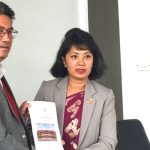
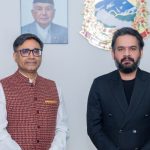
A memorandum with an ultimatum was handed to Foreign Minister Shishir Khanal in Kathmandu. Discussions were also held at the Nepali Embassy in London.
The Gurkhas’ position is that the Nepali government must take concrete and decisive diplomatic initiatives on the issue by December 31, 2026. Within this period, they say, it should form a high-level negotiating committee, set an action plan for the talks, and take the steps needed to begin formal dialogue with the British government.
They have also warned that if there is no meaningful progress by the deadline, the Gurkha community, which is fighting for justice, may be compelled to launch stronger and decisive protests in both countries, including a fast unto death. The Gurkhas have already presented the same December 31, 2026 deadline to the British government.
The memorandum was signed by Krishna Bahadur Rai, chief coordinator of the British Gurkha Satyagraha Joint Struggle Committee, and submitted to Foreign Minister Khanal on Tuesday. Its first point calls for an initiative to form a high-level Nepal-UK bilateral dialogue committee.
The memorandum cites the Supreme Court’s directive order and the directions of Parliament’s International Relations Committee on the issue. It says the Nepali government should immediately begin the process of forming the committee. The committee should include responsible representatives of the relevant government agencies, subject experts and, as needed, Gurkha representatives. The memorandum also stresses that the committee should be given a clear mandate, negotiating priorities and a timeline, so that it works toward results.
Second, the memorandum says the British government has held a different view on the legal effect and interpretation of the 1947 tripartite agreement. It therefore asks the Nepali government to clarify its official position on the legal and treaty basis under which Nepali citizens are now recruited into the British Army’s Brigade of Gurkhas. It also asks Nepal to review the agreement’s obligations, the Gurkhas’ terms of service and their equal rights, in legal and diplomatic terms, and to take a clear stand.
The third point says discrimination against Gurkhas must end and equal rights must be ensured.
Gurkhas who served in the British Army have long said they have not received the same pensions, benefits and treatment as other British soldiers. The memorandum asks the Nepali government to review the existing inequality and its basis, factually and legally, and then make a high-level diplomatic push with the British government to ensure equality and justice.
The Gurkhas also want respect for their contribution, and equal and fair treatment, to be a main agenda item in bilateral talks.
The fourth point demands that concrete diplomatic initiatives and an action plan, with a timeline, be made public.
The former Gurkhas urge the Nepali government to take the necessary political and diplomatic steps to find a peaceful, just and lasting solution.
More than three decades have passed since former British Gurkhas began their movement for justice from the British government on equal pensions, benefits, rights and dignity.
Their central demand is that Gurkhas recruited into the British Army from January 1, 1948 to 1993 be treated equally and fairly. They base this on the spirit of the tripartite agreement among Nepal, India and Britain signed on November 9, 1947, and the obligations that follow from it.
But despite years of dialogue and initiatives, there is still no permanent and decisive solution to their demands for equal pensions, benefits and rights. This has caused serious frustration in the community and added to the worries of elderly veterans who are living in hope of justice.
Because the British government has held a different view on how the 1947 agreement should be interpreted and what legal effect it has today, the Nepali government, Gurkha representatives and the British government have held talks several times. Those talks have not produced concrete, decisive results on the Gurkhas’ main demands.
The Gurkhas also want action to implement the directions that Parliament’s International Relations Committee gave the Nepali government, and the Supreme Court’s directive order. Since the issue involves both judicial directives and parliamentary concern, they believe the government should treat it as a priority.
“The issue of former British Gurkhas is not limited to pensions and financial benefits. It is a matter of national concern, directly linked to equality, justice, human dignity, Nepal’s national prestige and Nepal-UK relations,” said Krishna Bahadur Rai, chief coordinator of the British Gurkha Satyagraha Joint Struggle Committee. “Nepal and Britain share a historical relationship of more than two centuries. To strengthen their friendship further, the Gurkhas’ legitimate concerns must be addressed through diplomatic dialogue.”
Rai said governments, ministers and officials keep changing in Britain, and political leadership and administrative priorities change in Nepal too. This, he said, has made it hard to maintain continuity in past talks.
He said it is therefore essential to form a high-level bilateral dialogue committee led by the Nepali government. That would move the issue forward through an institutional, systematic and results-oriented process, rather than leaving it dependent on individuals or political circumstances.
Many former Gurkhas have died while waiting for justice, after the UK Ministry of Defence (MoD) gave assurances at various times that did not lead to the expected solution. The number of former Gurkhas who receive a regular pension is estimated at about 12,000.
Krishna Kumar Rai, chair of the Gurkha Ex-Servicemen’s Organisation (GESO), was among those present when the memorandum was handed to Foreign Minister Khanal. Rai said Khanal responded positively and said the government is taking the matter of addressing the former Gurkhas’ demands seriously.
Meanwhile, representatives of the G-10 group met Manish Jha on Thursday morning at the Nepali Embassy in London. Jha is a Rastriya Swatantra Party MP and chair of the committee on UK affairs in Nepal’s Parliament. The meeting was about addressing the demands of former Gurkha soldiers.
It discussed the former Gurkhas’ demands for equal pensions and other benefits, and the efforts being made with the British government to resolve them.
At the meeting, Jha said the Gurkhas’ demands are being treated as a priority. He assured them that the Nepali government would take every possible initiative. He said he would do his best, and that the Gurkha side should also keep up its advocacy.
Jha also said that the Gurkhas’ agenda was discussed in his talks and meetings with Alex Baker, chair of the UK’s All-Party Parliamentary Group for Nepal, and others.
The former Gurkha soldiers said they have received no response so far to the 11-point proposal they sent to the British government, seeking an “affordable solution,” meaning a practical one. They said the British government had promised to reply but has not done so.
A few weeks ago, UK Veterans Minister Calvin Bailey and Gurkha representatives held talks over dinner at the Nepali Embassy. At that meeting, the idea of finding a solution by December was raised. The Gurkha representatives said they might have to hold agitation and protest programs after that.
But the British minister said there was no need for an ultimatum or protests. He assured them he would take steps to resolve the problem.
Acting Nepali Ambassador Bipin Duwadi, Defence Attaché Brigadier General Anup Shah and G-10 members were present at that meeting.
Providing details of the meeting, GESO Vice-Chair Dharma Tamang said discussions and initiatives are continuing at various levels to address the Gurkhas’ demands.