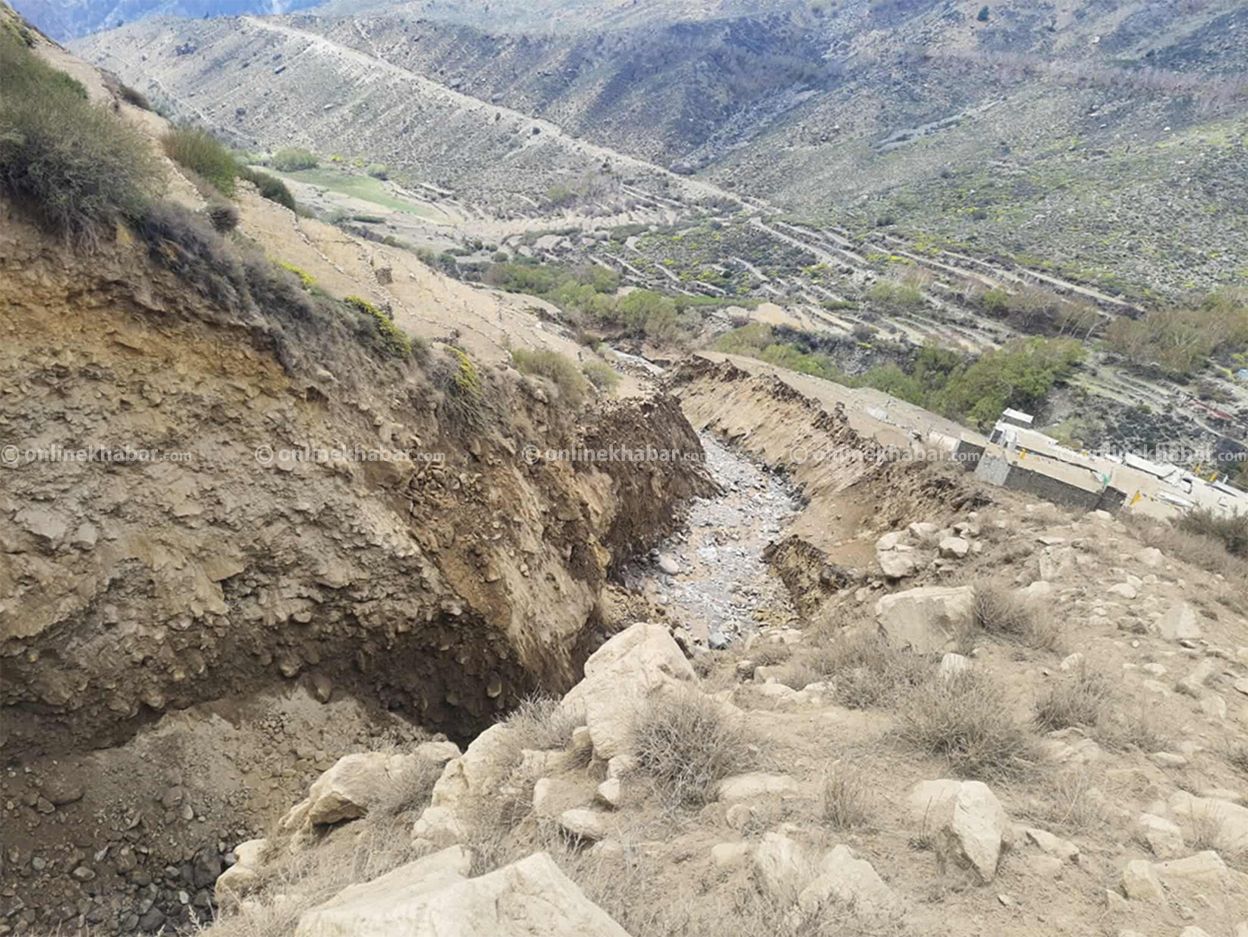
In the nine years since its establishment, the Karnali Province government has blacktopped more than 341 km of roads. In the same period, however, it has opened more than 3,416 km of new road track. This shows that the provincial government has prioritised opening new tracks over upgrading and blacktopping roads.
The provincial government had set a target of blacktopping 165 km of road in the just-completed fiscal year 2082/83. But by the end of the fiscal year, it managed to blacktop only 91.77 km. This is still higher than the previous fiscal year, when 72 km of road was blacktopped across the province.
Since the province’s establishment, a total of 341.37 km of road has been blacktopped. During this period, 3,416.05 km of new (dirt) road has been built. Similarly, 819.60 km of road has been gravelled, while 853 km of work has been done on road upgrading and drain construction.
Blacktopping fell short of targets
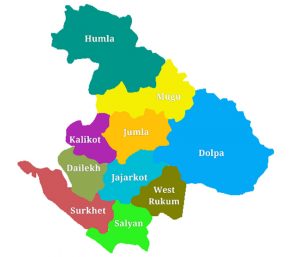
Looking at district-wise progress for the completed fiscal year, most districts failed to meet their blacktopping targets. Among Karnali’s 10 districts, Surkhet had a target of 59.7 km but completed only 29.9 km.
Dailekh exceeded its target, 17.1 km against a 10 km target. Dolpa managed 1.2 km against a 1.5 km target, Humla just 0.2 km against a 1 km target, and Jajarkot only 0.7 km against a 5 km target.
Jumla met its target of 2.5 km. Kalikot, despite a 5 km target, completed no work at all. Mugu achieved 0.9 km against a 1.3 km target, Salyan 16.6 km against 20 km, and Rukum West only 1.7 km against a 20 km target.
Progress on blacktopping has been even weaker in the Himalayan districts. Under the RCIP-AF project, only 21 km was completed against a target of 39 km.
New road excavation exceeded targets
The provincial government’s road data shows that progress in new road construction exceeded targets. Last fiscal year’s target was 216 km of dirt road construction, but about 37 km more than the target was actually opened as new track.
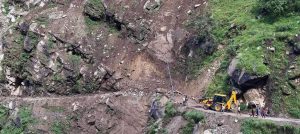
This pattern, failing to meet paved road targets while exceeding new-track targets, has raised questions about the province’s road development priorities. Even as new roads open, the lack of regular upgrading, gravelling, and blacktopping means roads get blocked during the monsoon and accident risk increases.
War and inflation cited as main causes
Prem Bahadur Oli, spokesperson and senior divisional engineer at the Ministry of Physical Infrastructure and Urban Development, said road construction work was affected by international circumstances.
According to him, the war in the Middle East disrupted the supply of bitumen and also raised petroleum prices. He said the rise in construction material costs forced contractors to halt work.
He added that other seasonal factors also affected road construction. He claimed that had the war not occurred, progress would have come close to the targets.
He said that although all three roads under RCIP were on track to be completed last year, around 25 km could not be blacktopped due to the war. Under that project, four paved roads worth about Rs 810 million are being built in Surkhet; the ministry says physical progress on the three roads under construction last year exceeded 70%.
“Paved roads are a priority, but the budget doesn’t allow it”
According to ministry spokesperson Oli, the large budget required for blacktopping is the main challenge; blacktopping 10 km of two-lane road costs nearly Rs 1 billion.
“Paved roads are indeed our priority, but our budget doesn’t allow it,” he said. He said that since vehicle traffic in rural areas is comparatively low, priority for now has to go to building dirt and gravel roads.
Infrastructure ministry’s budget execution only 48%
With road construction progress falling short, the Ministry of Physical Infrastructure and Urban Development’s overall capital budget execution has also been weak.
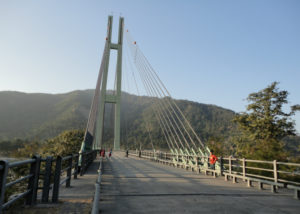
Last fiscal year, the ministry had a development budget of Rs 10.76 billion (10 arba 75 crore 59 lakh 32 thousand). Of this, only Rs 5.21 billion was spent, with capital budget execution limited to about 48%. Progress also fell short of targets for bridge and building projects. The government had prioritised suspension bridge construction under its goal of a “tuin-free Karnali” — but of a target of 52 suspension bridges, only 39 were built.
Similarly, of a target of 43 road bridges, only 21 were completed. Three buildings were constructed. Under the Janata Awas program, 211 houses were built, and under the housing program for the poor, 248 houses were built.
District office performance also weak
Capital budget execution by infrastructure development offices under the provincial government also fell short of expectations. Surkhet Infrastructure Development Office executed 46%, Jumla 61%, Mugu 73%, Rukum West 52%, Kalikot 69%, Salyan 50%, Humla 43%, Dailekh 56%, Dolpa 53%, and Jajarkot only 44% of their development budgets.
Despite repeated instructions from then Chief Minister Yam Lal Kandel to accelerate development works, performance by infrastructure development offices in most districts remained weak.
Only 389 of 772 projects completed
Last fiscal year, 772 projects, including roads, bridges, and buildings, were underway under the Ministry of Physical Infrastructure and Urban Development. Of these, only 389 were completed.
The ministry has also left the liabilities of ongoing and multi-year projects for the incoming government, with multi-year project liabilities worth more than Rs 3 billion passed on to the new administration.
While large sums are being spent to expand Karnali’s road network, there is no balance between opening new roads and making completed roads durable and safe. Blacktopping only 341 km of road in nine years, against opening more than 3,416 km of new road track, shows that the province’s road-development pattern of “track first, upgrade later” persists.