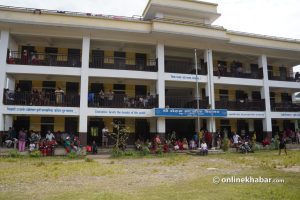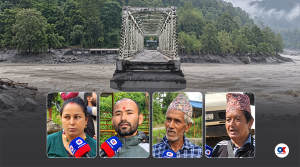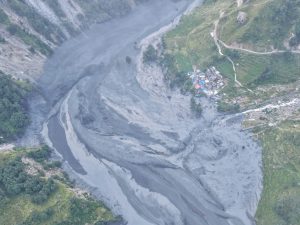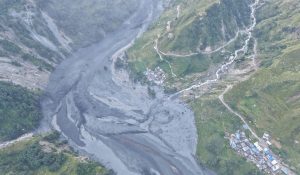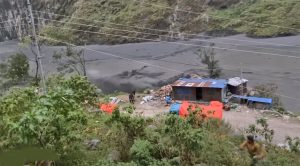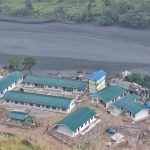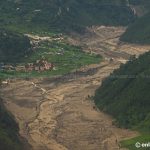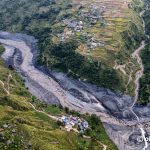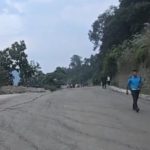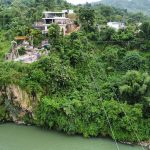

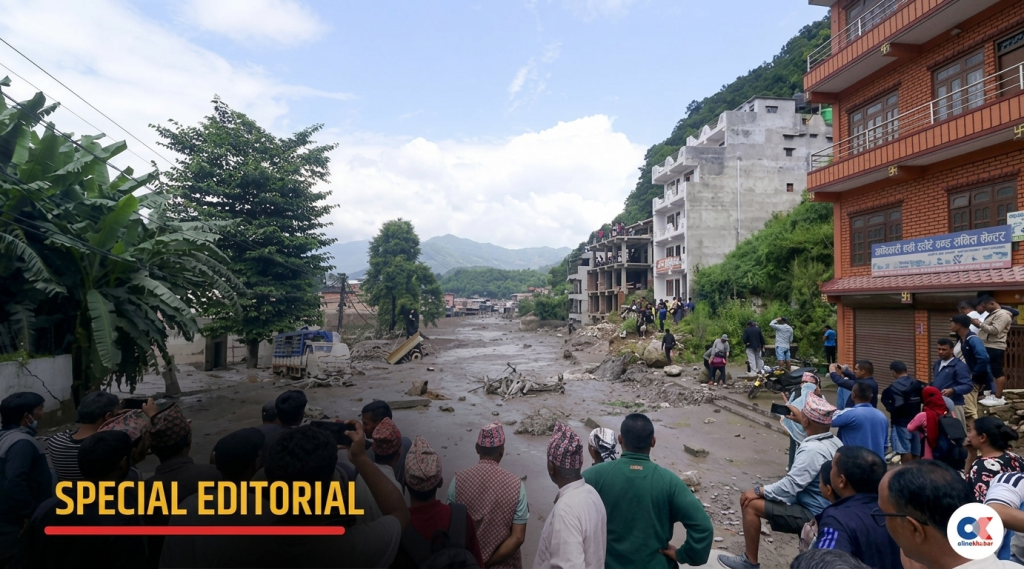
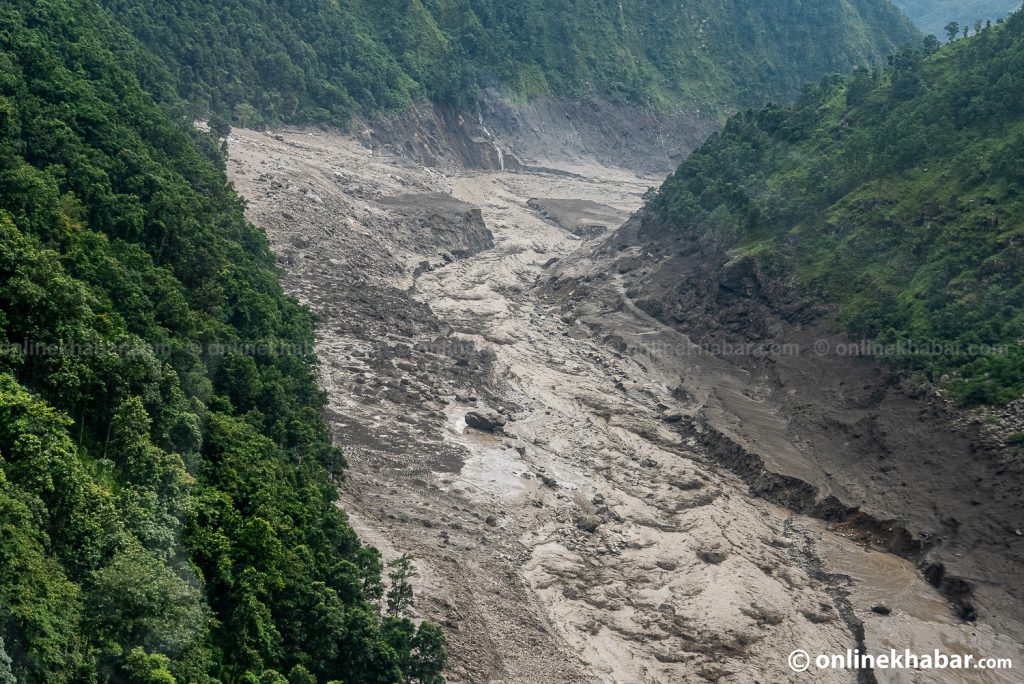
The devastation caused by the Bhotekoshi and Trishuli rivers, which began in the Syafrubesi and Timure areas, has been felt as far as the Terai region of central Nepal. Based on the damage reports, images and footage continuously collected by the Onlinekhabar team through Wednesday evening, as well as conversations with numerous local victims, we can say that the loss of life and property caused by this flood may be the worst since the 2015 earthquake.
Sudden storms that occur in the sea are known as tsunamis. The disaster witnessed in the Bhotekoshi and Trishuli areas is similarly the result of climate change and various crises in the Himalayan region. The exact number of tourists missing in the area is still unknown. Security personnel and members of the general public are also missing. The actual figures were not available by the time this editorial was being written. The latest information puts the death toll at 78, with hundreds of people still missing.
Journalist Kedar Sharma has described this sudden and unimaginable crisis as a “Himalayan tsunami.” Drawing on several references, he has estimated that such Himalayan tsunamis are likely to become more frequent in the future.
Author Ramesh Bhusal, who has studied the flow of rivers originating in the Himalayan region, argues that Nepalis who have witnessed the Melamchi and Roshi floods, as well as the Seti flood a decade ago, cannot describe today’s disaster as entirely unimaginable.
He has said, “We should have been able to imagine that this could happen, and that is where we failed. For now, let us focus on rescue, but let us not create a situation where we once again sit helplessly and call another disaster unimaginable.”
For the time being, the focus must remain on emergency rescue, relief and search operations. The federal government appeared to have taken swift initiatives in this regard on Wednesday. All political parties, the private sector, professionals and communities of every kind need to join these efforts initiated by the government. Provincial and local governments can also help victims receive rescue and necessary assistance more quickly by moving forward in coordination with the federal government.
The scale of this crisis, which emerged in the China-Nepal border region, must have been understood by Chinese President Xi Jinping and Indian Prime Minister Narendra Modi, who themselves expressed concern about Wednesday’s disaster. China has decided to send its vice-premier to assess the situation in the border area. Indian Prime Minister Modi telephoned his Nepali counterpart, Balen Shah.
Anyone who sees the destruction caused by the Rasuwa flood in Nuwakot and Dhading would be alarmed. The Onlinekhabar team had already headed in that direction on Wednesday. We have published photographs, footage and initial reports of the damage and will continue to provide updates. We also appeal to all our readers to avoid the epidemic of misinformation and rely only on factual information.

At the same time, we remain committed to further strengthening the trust you have placed in us over the years. Let us recognise the reality that false and misleading information during a disaster can cause even greater suffering to victims and their families. Let us not turn disasters into spectacles or join the race to go viral by posting videos and photographs taken during the tragedy.
Instead, those of us who have survived by chance, and whose loved ones are safe, should put ourselves in the place of the flood victims and take part in rescue and relief efforts to the best of our ability. A crisis tests the extent of our humanity and our sense of solidarity. Nepalis must pass that test once again. We have survived this disaster, and that makes our responsibility even greater.
Several questions have come to the surface with this disaster. Was the flood caused by a glacial lake outburst in the Himalayan region? The Chinese side has assessed that the flood may have been triggered by an earthquake in the Tibetan region. Can an earthquake measuring less than magnitude 5 cause destruction on such a massive scale? These are questions on people’s minds. Some have suggested that this may have been a glacial lake outburst flood, or a GLOF, similar to those seen in the past.
Tribhuvan University geologist Ranjan Dahal said during a conversation with us, “I have never seen such a massive flood before. Nor had I imagined that a flood coming from the upper reaches could be this destructive. I have never witnessed a flood arriving on such a large, high and explosive scale.”
Although the flooding was seen in the Bhotekoshi, experts believe it may have originated from the Lhende River. Similarly, when a sudden flood occurred in Lhende in Asar 2082, nine people died, and 18 others went missing.
The Chinese side is also studying the disaster. They, too, have not yet reached a conclusion. The governments of Nepal and China have an agreement to exchange information promptly during disasters. However, it does not appear that the agreement was implemented reliably during this disaster. This will probably also be reviewed.
A disaster of a similar nature struck Kedarnath in Uttarakhand, India, in 2013. Since then, there has been broader debate about the causes and possible solutions to such sudden natural crises in the Himalayan region. Nepal is a country surrounded by mountains from east to west. We face greater risks than India and any other country in this region. The Himalayan region is Nepal’s wealth. But if we fail to use and manage this wealth properly, these very mountains can push us toward greater crises.
The immediate priority is to search for victims, rescue them and provide relief. Communities themselves have to come forward to support and sustain their own communities.
After that, let us call on researchers in Nepal and abroad to conduct in-depth studies. We cannot continue to face crises of this nature. It may take decades to rebuild the infrastructure that was swept away within just a few hours. The fact that an entire district has been cut off from communication is not an ordinary occurrence.
At the same time, the Nepali community is being tested. When attempts were made to ignite the fire of communalism from Kaptanganj in Sunsari, the people of the hills and mountains had also taken notice. In the Terai-Madhes region, disasters brought by floods are almost a regular problem. This time, the hills and mountains are bearing a similar disaster. At this moment, all three geographical regions, including the Madhes, must come together to support one another and extend a helping hand.
That is the collective strength of the Nepali community. It is during crises like these that this strength is needed most. Once again, we appeal to everyone: if there are differences or disputes among us, let us set them aside and join hands. At this moment, we have a great responsibility towards our own citizens as well as tourists who have come to Nepal from different countries.
Therefore, those of us who have survived must open our hearts and extend every possible help to all the victims of the Himalayan tsunami.