Major Nepali and English broadsheet dailies published from Kathmandu on Monday have given priority to a host of issues from political, sociocultural and economic spheres.
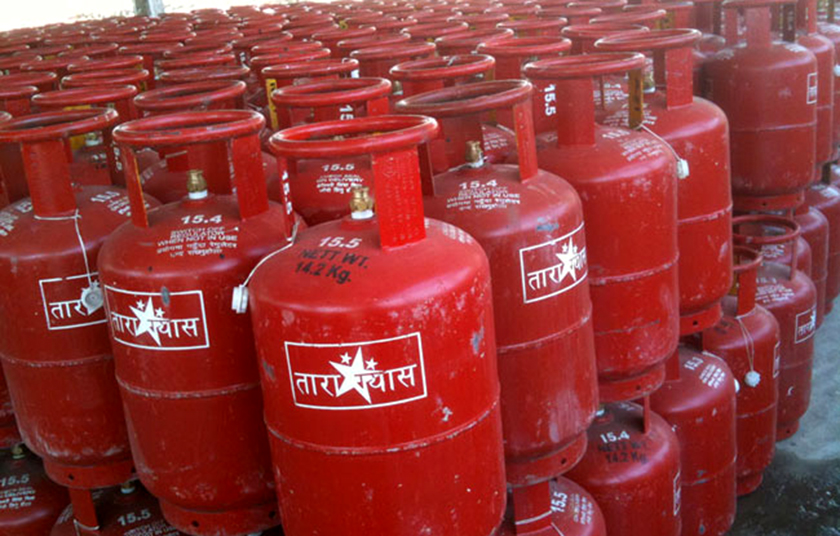
Gas bottlers threatening to stop the supply of LPG cylinders has been covered in most papers along with news of local and provincial government arguing that the federal government is not giving them the freedom to work.
Here is a summary of important, ignored and interesting stories from the cover pages of national broadsheets:
Important
Gas bottlers continue protest to raise commission
Kantipur in its lead story reports that gas bottlers have stopped receiving purchase delivery orders from Nepal Oil Corporation from Friday to press their case for a higher commission. Bottlers are demanding that the operating subsidies be raised by Rs 200 per cylinder including their commission.
The protest launched by bottlers violates laws prohibiting sellers of essential goods from going on strike. The Consumer Protection Act 2018 and Essential Service Operation Act 1957 state that service providers cannot disrupt the supply and delivery of essential goods. Offenders can be jailed for one year and fined Rs 1,000. The bottlers have said that they will stop loading liquefied petroleum gas at their bottling plants from March 12, and they have threatened to stop selling cooking fuel to local gas dealers from March 14. Gokul Bhandari, president of the Nepal LP Gas Industry Association, said they were compelled to launch the protest after their demand remained unheard for a long time.
Malaysia to remove agents by taking online applications
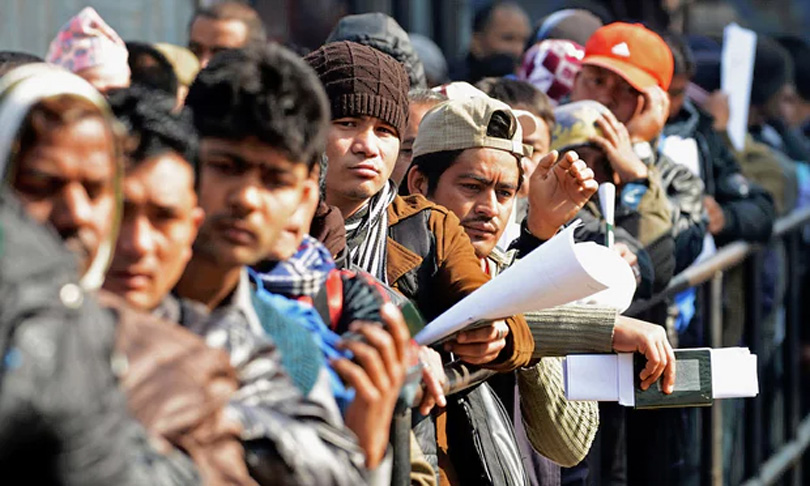
Republica and The Himalayan Times report that Malaysia is considering removing outsourcing agencies or agents involved in the hiring and management of foreign workers as the country prepares to streamline policies governing foreign workers. An estimated half a million Nepalis are currently employed in Malaysia.
Malaysian media report that local stakeholders including the Malaysian Federation of Malaysian Manufacturers (FMM) have suggested introducing a single end-to-end online processing and approval system by eliminating third parties from the hiring process. Their suggestion comes as an independent committee formed to recommend the government on streamlining the hiring of foreign workers is due to submit its report. Malaysia’s preparations to change the law come amid a protracted standoff with labour supplier countries which have been accusing the Malaysian government of profiteering from foreign workers through several layers of agents.
Local, provincial leaders accuse federal government of usurprising rights
The Kathmandu Post and The Himalayan Times report that both the local and provincial government fear that the federal government is making deliberate moves to usurp constitutional rights of local and provincial government, rendering them toothless. Provincial governments are seeking legal recourse to exercise their constitutional rights if Kathmandu fails to address their demands.
According to provincial authorities, their concerns are over security issues–including the attempts to curtail their right to deploy police for peace and security, keep district level structures including the district administration offices, which the constitution does not recognise, and give extra powers to chief district officers. The local levels complain that the federal government has been dilly-dallying in transferring the work of these district offices that look after education, health, agriculture, forest, land, livestock, industry, and cooperatives to local governments.
Ignored
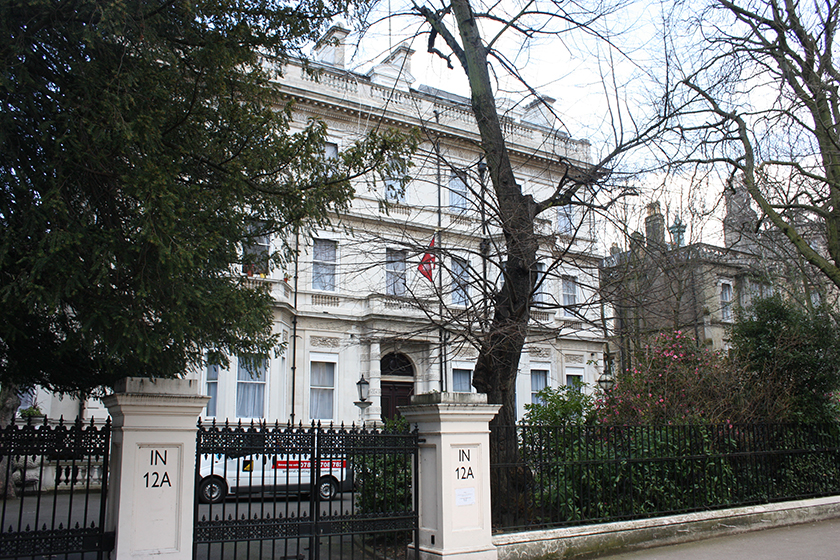
Govt plans to trim down number of missions abroad
The Kathmandu Post reports that the Ministry of Foreign Affairs is reviewing whether the country should add more missions to expand its outreach to the outside world, or trim their number to cut costs. Minister for Foreign Affairs Pradeep Gyawali also has stated time and again that time has come for Nepal to review the number of its foreign missions. Minister Gyawali last year had sought reports from all of the country’s 32 diplomatic missions on their nature, performance, and scope of work with a view to assessing their relevance.
The ministry’s task force, headed by Rudra Nepal, former Nepali ambassador to Australia, is entrusted with studying the reports and making recommendations, whether to bring down the number of missions, which will mean closing down some of the embassies or keeping all of them intact. The panel is also expected to suggest how the country’s diplomatic missions can expand their scope of work. However, many former Nepali ambassadors disagree with the idea of trimming the missions and suggest that now is the time to add more.
Investigation looks into dark side of Nepal’s conservation efforts

The Kathmandu Post in its two-and-half page report sheds light on the dark side of wildlife conservation efforts in Nepal. The story, produced under the paper’s partnership with Buzzfeed, highlights human rights abuse cases involving senior conservation and army personnel in Nepal’s Chitwan and Bardia national parks. The report says that indigenous people living around conservation areas not only have a say in local affairs but are the first victims of anti-poaching operations launched by conservation authorities, who are often outsiders armed with sweeping powers. The report also alleges that one of the world’s best-known conservation organistions, WWF, has been involved in cases where personnel accused of rights abuse have been rewarded.
Govt plan to announce 100 per cent literacy
Republica and Nepal Samcharpatra report that the government is planning to announce that Nepal has achieved 100 per cent literacy later this year by exaggerating the progress made in the education front. However, education experts have termed the government plan “a publicity stunt to befool the ordinary people and hoodwink the international community.”
The government has mentioned its plan to announce the country 100 per cent literate in the Non-Formal Education and Literacy Program Implementation Facilitation Guidelines 2019 and concept paper of Literate Nepal Year 2019 approved through a recent cabinet meeting. Officials at the Ministry of Education, Science and Technology (MoEST) said the government plans to make the declaration on September 9, marking the Literacy Day that Nepal observes annually.
SSP Singh dragged into Pathak corruption case
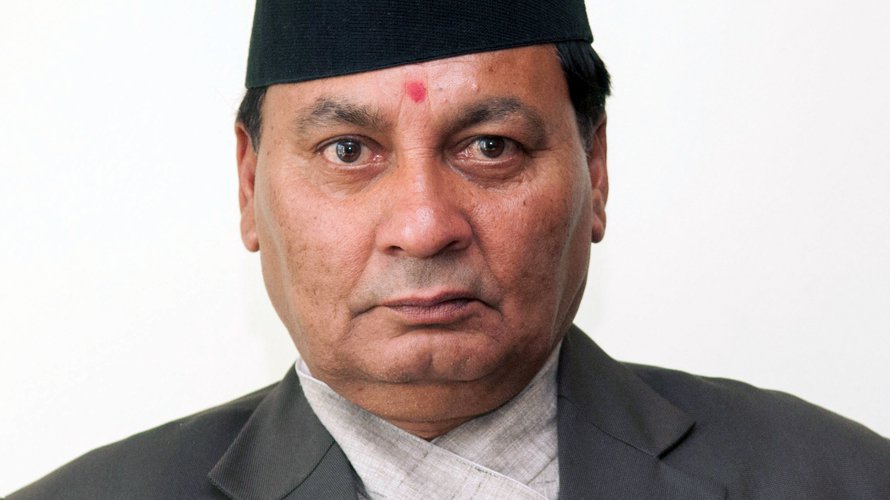
Kantipur reports that Metropolitan Police Crime Division chief SSP Dhiraj Pratap Singh has been dragged into the Raj Narayan Pathak Corruption Case. After Pathak had found out about the video which was captured by Dhwaja Man Moktan, he told Singh to arrest Jha. Pathak has asked Singh to get rid of the evidences. The source has also told Kantipur that Singh was helped by Pillar 4 of Crime Division DSPs who regularly misbehaved with those who had the video of Pathak taking the bribe.
Interesting
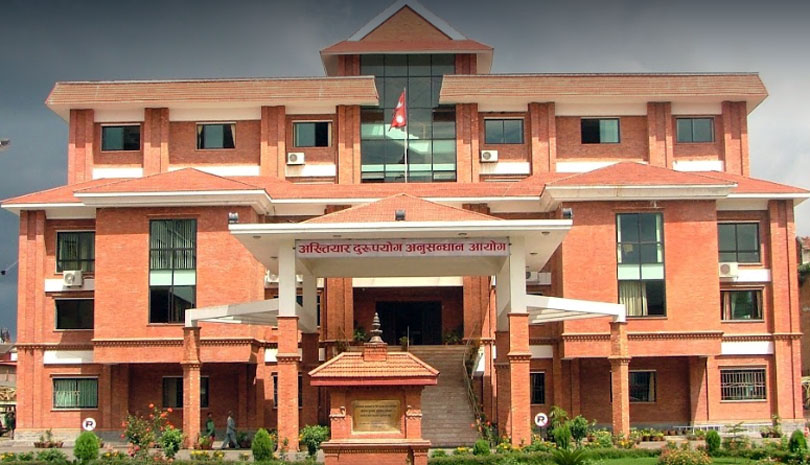
CIAA mobilising officials in crowded govt offices
Naya Patrika reports that the CIAA has planned to mobilise its officials in government offices which are crowded. It has started this initiative to make sure government employees do not take a bribe for completing work quickly. CIAA has mobilised its officials in Land and Revenue office, Transport office, Company Registrar, Courts, District Administrative Office, and local level offices. The official will be in civvies and will act as service seekers.
RJP-N to not have presidium
Gorkhapatra reports that the central committee meeting of the Rashtriya Janata Party – Nepal has decided that the party will no longer have a presidium and will now on have one president to take the party forward. Party leader Sarvendra Nath Shukla said that they will soon endorse this in a presidium meeting in Kathmandu.
Foreign investment increases by 5 billion

Rajdhani reports that Nepal, in the first six months of the current fiscal year, received foreign direct investment worth Rs 13.99 billion. Last fiscal year’s total FDI stood at Rs 8.20 billion which means a rise of Rs 5 billion. Better supply management, fewer strikes, improved economic activities, petroleum supply, environment for investment and political stability has been cited as reasons for the improvement in the FDI.