Kathmandu, August 21
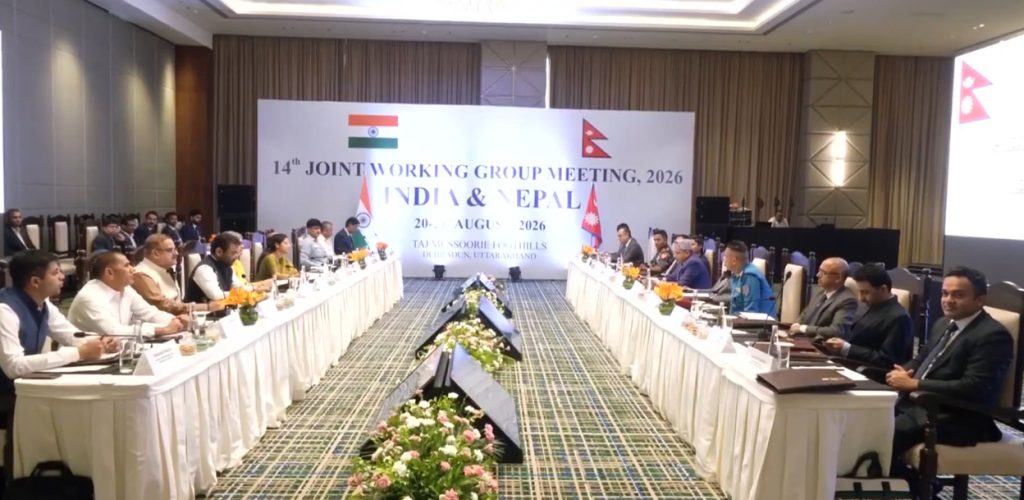
The 14th meeting of the Nepal-India Joint Working Group on Border Management is underway in Dehradun, India, with officials from both countries discussing a range of issues related to the management of the shared border.
The two-day meeting began on Thursday and will conclude on Friday.
Nepal’s delegation is led by Home Ministry Joint Secretary Anand Kafle, while India is represented by Pausumi Basu, Joint Secretary at the Ministry of Home Affairs.
The meeting is discussing the construction, restoration and maintenance of boundary pillars, management of the no-man’s land, GPS mapping of boundary pillars and collection of land ownership details of people living along the border.
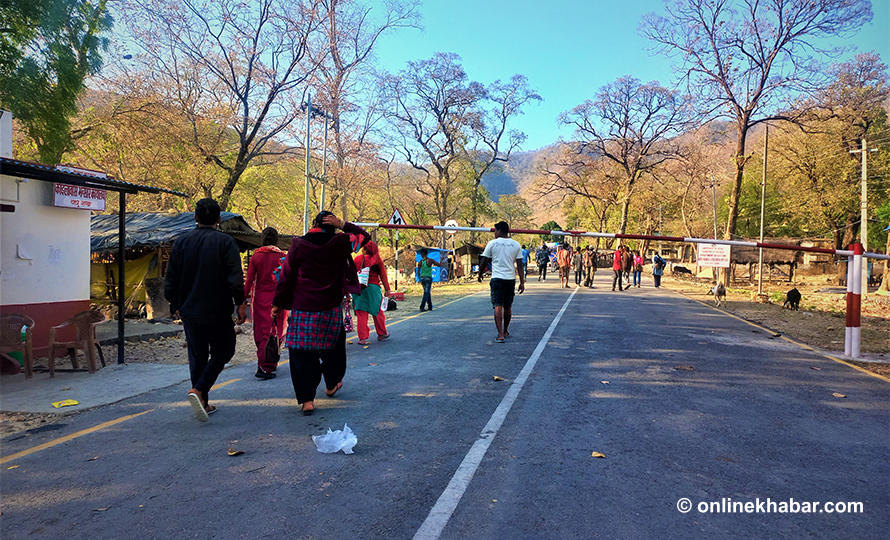
Officials are also expected to discuss day-to-day problems faced by people crossing the Nepal-India border and ways to address them.
Nepal’s delegation includes Foreign Ministry Joint Secretary Gehendra Raj Bhandari, Department of Immigration Director General Ram Chandra Tiwari and security officials including Binod Ghimire and Krishna Khanal.
Will major border disputes be discussed?
The meeting comes amid renewed debate over Nepal-India boundary issues.
Prime Minister Balen Shah had drawn controversy in May after saying that Nepal, too, had encroached on Indian territory at several places.
Against this backdrop, diplomatic observers say the latest meeting could be significant, although the Joint Working Group primarily deals with border management rather than resolving major territorial disputes.
Former Foreign Minister Pradeep Gyawali has urged the two countries to ensure that the working group’s meetings do not become a mere routine exercise.
He said the mechanism should be used to make effective decisions on issues such as the use and control of land along the border.
Former Foreign Minister Upendra Yadav, however, believes the meeting will have limited significance unless the major boundary disputes over Lipulekh-Kalapani and Susta are addressed.
“Without resolving the fundamental border disputes, a meeting of the border management working group remains incomplete,” Yadav said.
Lipulekh-Kalapani and Susta remain unresolved
Nepal and India have prepared strip maps covering most sections of their shared boundary. However, the maps have not been formally signed because disagreements over Lipulekh-Kalapani and Susta remain unresolved.
Border experts have said that resolving the remaining disputes outside these two areas should not be particularly difficult.
The Joint Working Group was established to address practical issues related to border management, including boundary pillars, the no-man’s land and problems faced by people living along the border.
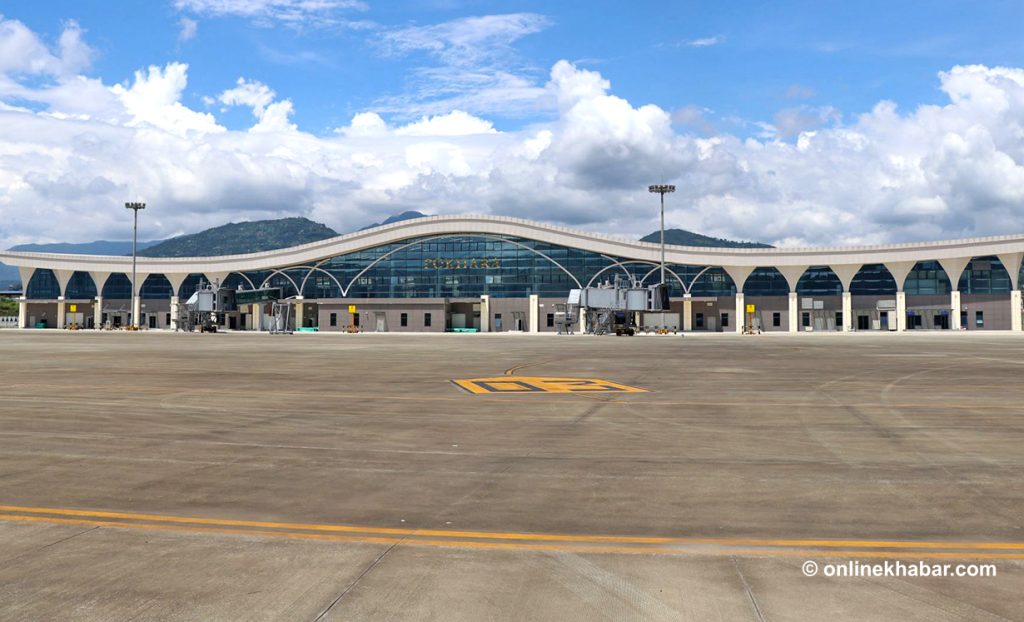
The group has been meeting regularly, except during the COVID-19 pandemic. Its 13th meeting was held in Pokhara last year.
The current meeting will also review the implementation of decisions taken during the previous meeting.
Calls for tighter regulation of open border
Former Foreign Minister Prakash Chandra Lohani has called for more effective regulation of the open Nepal-India border.
Lohani, who represented Nepal at a border security meeting nearly three decades ago, said both countries should consider requiring people crossing the border to carry identification documents.
“We had raised the issue of effective border regulation as early as 2052–53 BS,” Lohani said. “Even if passports are not made mandatory, arrangements should be made to require identification cards when people travel between the two countries.”
The outcome of the Dehradun meeting is therefore being watched to see whether it produces concrete decisions on longstanding border management issues or remains focused on routine technical matters.