
(Uzbekistan): Anticipating that the ongoing crisis in West Asia will persist for a long time, the Asian Development Bank (ADB) has warned that the poor and vulnerable populations will be the hardest hit.
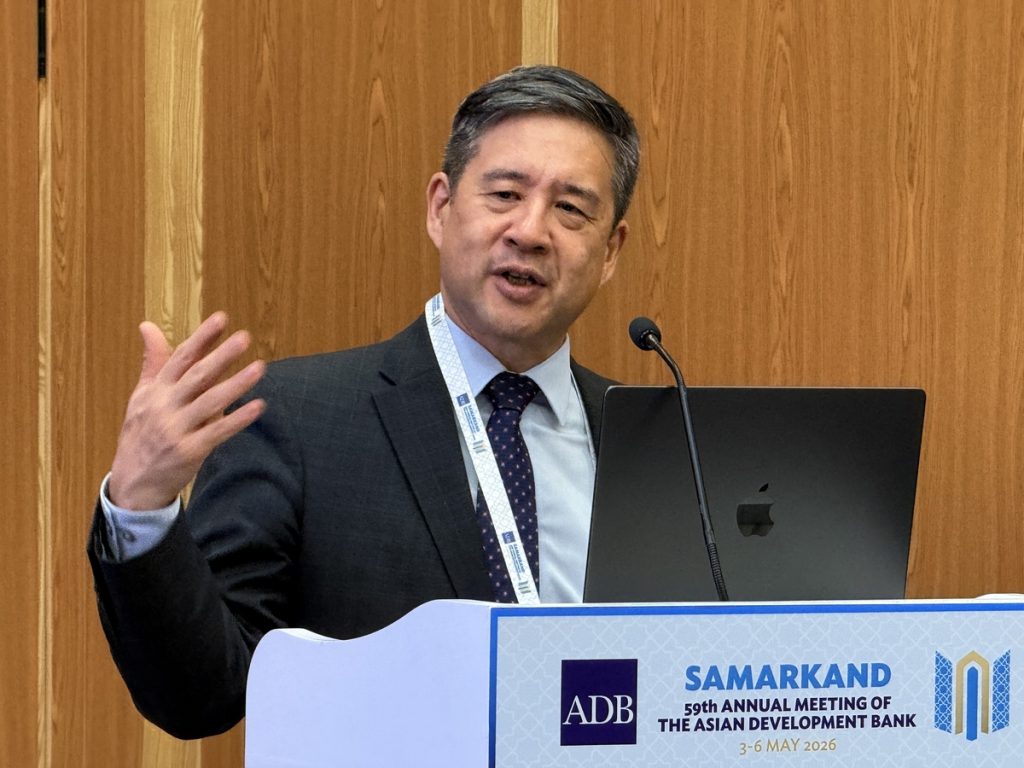
At the 59th Annual Meeting of the ADB in Samarkand, Uzbekistan, ADB Chief Economist Dr Albert F. Park stated that the war in West Asia is not merely a temporary shock but is moving toward a prolonged chain of conflict or persistent shift.
He noted that not only fuel but also chemical fertilisers and many other commodities have seen price hikes, with poor and marginalised households being the most affected.
He said the government should provide targeted support to poor and at-risk families. When Onlinekhabar pointed out that Nepal had not provided any such relief and that fuel prices in Nepal are among the highest in South Asia, he responded that it is the government’s duty to work for the most vulnerable groups.
“It is challenging to provide relief to those who need it most right now, but the government must mobilise resources to support the most vulnerable people,” says Park. “At times like these, the ADB and other donors also help governments access resources.”
He mentioned that the ADB provides support to governments through its budgetary support facility.
“Especially when governments need resources to cope with high inflation or disasters and protect the most at-risk populations, we provide those resources. To address this crisis, governments can take such resources.”
On the same question, ADB Deputy Chief Economist Abdul Abiad said the crisis has forced many nations to rethink alternative energy sources.
“This has pushed countries to diversify their energy sources, particularly to invest more in renewable energy. If that happens, your risk during such times is reduced,” he says.
However, the ADB also advised that rather than providing blanket fuel subsidies in the name of relief, governments should instead offer targeted cash transfers to poor and vulnerable people.
ADB again lowers growth projections
The ADB has revised downward its economic growth projections for the Asia-Pacific region due to the ongoing conflict in West Asia.
Chief Economist Park said the situation has become more complicated than what was projected in the Asian Development Outlook (ADO) April 2026, and he presented two new downside scenarios.
The ADB’s new baseline scenario projects that fuel supply chains will face continued disruption in both 2026 and 2027, with crude oil prices reaching $96 per barrel in 2026 and $80 per barrel in 2027.
The ADB warned that if the West Asia situation deteriorates further through the second quarter of 2026, oil could reach $200 per barrel, a scenario it labelled a severe risk. Under that scenario, crude oil prices could average $150 per barrel in 2026 and $140 per barrel in 2027.
Just last April, the ADB had projected 2026 economic growth for developing Asia and the Pacific at 5.1%. That has now been revised down to 4.7% under the new scenario, and could fall to just 4.2% if conditions worsen further. For 2027, the projection has been cut from 4.8% to 4.0%.
The ADB also warned of a new challenge: stagflation, sluggish growth alongside high inflation, in the coming years.
Despite the ceasefire on April 8, the Strait of Hormuz has not been reopened to pre-conflict levels of shipping traffic, affecting crude oil, LPG, LNG, and container ships. Physical damage to energy infrastructure in the Middle East has reduced global LNG processing capacity by 16.9% and global oil production by 2.6%, with damage to refining centres in Saudi Arabia, UAE, Kuwait, and Bahrain being major contributors.
Risk of fertiliser and food crisis, including Nepal
The ADB report paints another alarming picture for South Asia. Around 35% of chemical fertilisers used by South Asian countries come from West Asia. Prices of urea, sulfur, and ammonia, key fertiliser inputs, have surged dramatically: urea by 85%, sulfur by 50%, and ammonia by over 46%, according to ADB data. This will directly impact agricultural production, and food prices are at risk of spiking sharply within the next quarter.
In Nepal, the fertiliser needed for the main paddy planting season in July/August is not available. Nepal has requested fertiliser from India, but India is also facing shortages and it remains uncertain whether any will arrive. Farmers will likely reduce fertiliser use, which could have long-term consequences for food security, Park noted.
Diesel price has rise wide-ranging economic impact
Since February 2023, diesel prices in countries like Myanmar, Laos, and the Philippines have more than doubled, according to the ADB. Globally, diesel prices have risen much more than petrol prices. In Nepal too, diesel has, for possibly the first time in history, become more expensive than petrol. Since diesel is used across transportation, logistics, construction, agriculture, and industry, rising diesel prices increase costs across the entire economy, potentially triggering a second round of inflation.
Countries like India, Bangladesh, and Indonesia have used heavy subsidies to keep consumer prices stable for now, but the ADB concludes this is not sustainable over the long term.
Policy advice to governments
The ADB advised against “blanket subsidies” (universal fuel subsidies) as a crisis response, arguing that such subsidies disproportionately benefit wealthier people and impose a heavy burden on government finances.
Instead, targeted cash transfers to the poor would be far more effective, Park stated. He also urged central banks to tighten monetary policy only after carefully observing inflation trends, and called for increased investment in renewable energy for long-term energy security.
“This is a supply shock, not a demand shock. So before adopting tighter policies, look at expected inflation and second-round effects, so that tightening doesn’t unnecessarily stifle economic growth,” Park says.