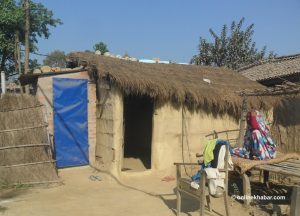

Despite constitutional guarantees against caste discrimination, many Dalits in Nepal continue to face exclusion and humiliation while searching for rental housing in Kathmandu. The problem persists not only for ordinary citizens but even for former lawmakers and ministers.
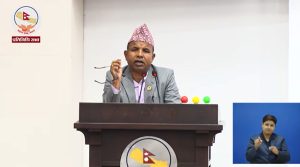
Former proportional lawmaker and former state minister Bimala BK recalled the difficulties she faced after arriving in Kathmandu following the 2017 elections. Although she had earned a seat in Parliament, she struggled to find a room to rent in the capital. House owners frequently asked about her caste before agreeing to rent out rooms. Once they learned she belonged to the Dalit community, many would avoid giving a direct refusal but later stop responding.
Even after becoming a state minister in 2020, Bimala said caste-based discrimination continued. Landlords were unwilling to allow her to stay with security personnel, and she eventually had to move into a ministerial quarter due to the lack of alternatives. She says similar experiences continue even today whenever she searches for flats in Kathmandu.
Former lawmakers Asha BK and Kalludevi Bishwakarma have also shared similar experiences of being denied rental housing because of their caste identity.
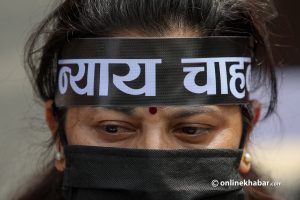
Another case is that of Deepa Nepali from Kailali, who came to Kathmandu for higher studies at Tribhuvan University. While pursuing her master’s degree, she faced repeated rejection from landlords after they learned she was Dalit. In 2019, she rented rooms in Tarkeshwar, but after revealing her surname, the landlords allegedly forced her to leave, claiming “lower caste” tenants could not stay there.
Deepa said she and her friends were subjected to harassment, including water cuts, inflated electricity bills, threats, and attempts at physical intimidation before being evicted. She later filed a caste discrimination case against the landlords. Although the case was registered in 2020, it remains under consideration at the Supreme Court.
The prolonged legal battle severely affected her education and mental health. She said she had to change rooms eight times while pursuing justice, and many landlords later pressured her to leave after learning about her case through media reports.
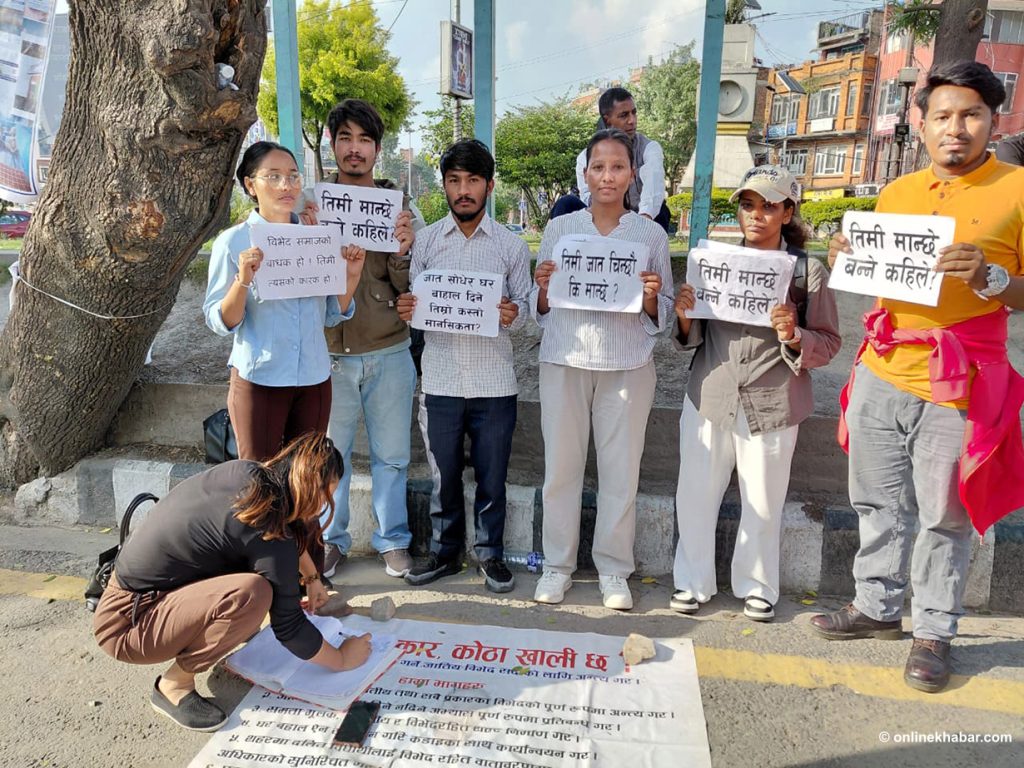
According to Deepa, many Dalits in Kathmandu have been forced to change or hide their surnames simply to secure accommodation and avoid discrimination. She says fear of social stigma has discouraged many victims from speaking publicly or joining protests against caste discrimination.
National Dalit Commission Chairperson Devaraj Bishwakarma said there is no exact data on caste-based housing discrimination. However, he noted that more people are now choosing to alter their surnames rather than file complaints because of distrust in the police and judicial systems and the difficulty of gathering evidence.
The report also highlights the growing role of “room finder” intermediaries. According to one such intermediary in Bhaktapur, some landlords explicitly instruct agents not to bring Dalits or women tenants. Agents often verify identities through citizenship documents or digital payment details before showing rooms.
Former lawmaker Bimala BK warned that the involvement of intermediaries has made discrimination less visible but more systematic and dangerous. Victims now often fail to realise they are being excluded because of caste.
Deepa Nepali has proposed that the government introduce “discrimination-free house” stickers for homes willing to rent without caste bias. She argues that such transparency would help expose discriminatory attitudes and make the housing search safer for marginalised communities.