

Kathmandu, September 8
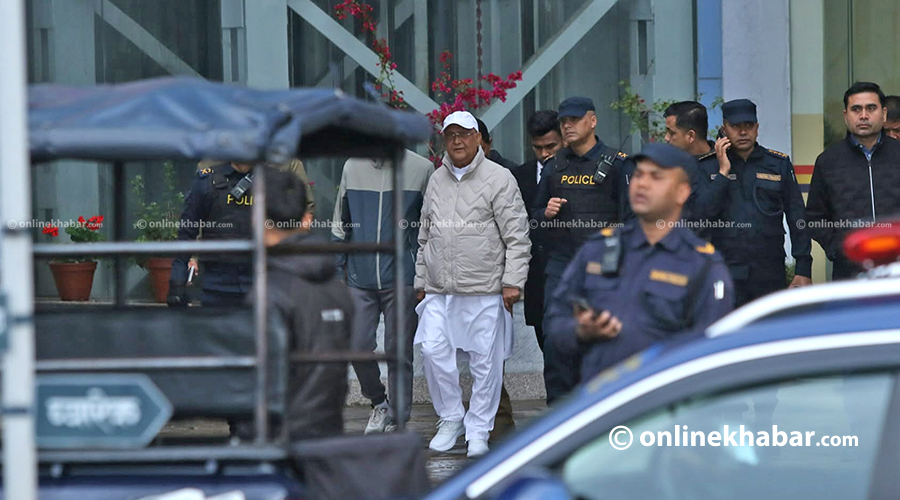
Just hours after Balen Shah was appointed prime minister and took the oath of office, former Prime Minister KP Sharma Oli and then-Home Minister Ramesh Lekhak were arrested in the early hours of Chaitra 14, 2082 BS.
They were arrested as part of an investigation into a complaint of culpable homicide. The allegation against them was that they had ordered the use of excessive force during the Gen Z movement, resulting in the deaths of teenagers.
After spending around 13 days in detention, Oli and Lekhak were released following an order from the Supreme Court. The court had ordered that their detention not be extended, but it had not directed authorities to stop the investigation against them. On Chaitra 26, 2082 BS, investigators and government attorneys released both men on a personal recognisance basis.
What additional investigation has the government conducted against them over the past five months? Did authorities gather evidence against either of them? If no evidence was found, why has no decision been made not to pursue charges? These questions remain unanswered.
Apart from transferring two political figures and taking action against some administrative officials, no further action has been taken against those accused of suppressing the movement.
Not only that, the government formed after the Gen Z movement and the subsequent elections has not considered it necessary to make public any progress on the investigation into the events of Bhadra 23, 2082 BS despite allegations that the then head of government and the home minister responsible for maintaining law and order were involved in the incidents that resulted in loss of life and property. The government has similarly remained silent on the report of the National Human Rights Commission.
Human rights activist Charan Prasai believes the same pattern has been repeated in the suppression of the Gen Z movement. “Several months have passed since reports were made public stating that human rights violations and repression took place during the movement,” Prasai said. “This government has also shown no initiative to take action against those responsible for human rights violations. Impunity appears to be something all those in power cherish. Whoever comes to power in our country seems to embrace impunity. Those in power themselves are nurturing and perpetuating it.”
Accident, use of force or murder?
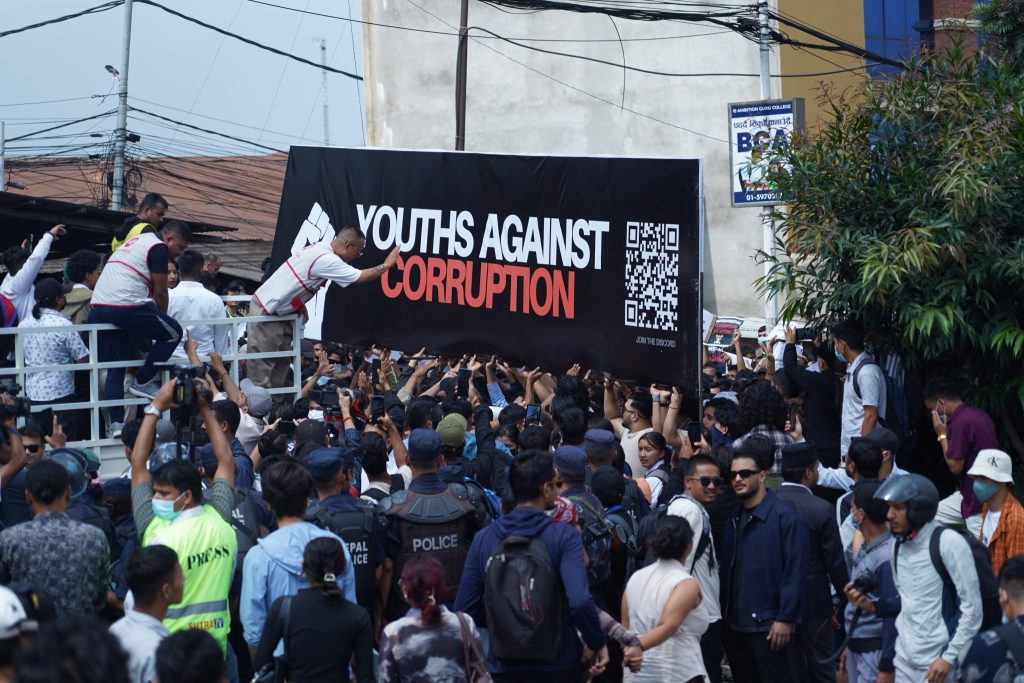
In the immediate aftermath of the Gen Z movement, three broad narratives emerged in Nepali society about the incident in which 21 people were killed in front of the federal parliament building.
Those who were in power at the time claimed that the casualties occurred when the Special Task Force of the Nepal Police, which was regularly deployed in the area, attempted to prevent protesters from entering a sensitive area or “vital installation.”
Former Prime Minister KP Sharma Oli, as well as political leaders in power, administrative officials and security personnel, maintained the same position. They repeated this claim during proceedings before the inquiry commission and in their responses to the courts.
Human rights activists and other stakeholders, however, described the incident as the result of “disproportionate use of force.”
Studies and reports by various human rights activists also stated that the casualties resulted from an unusually lethal use of force and called for those involved to be held accountable. Protesters and leaders of the ruling Rastriya Swatantra Party (RSP), meanwhile, have demanded that the incident be treated not merely as excessive use of force but as murder.
The inquiry commission led by former Supreme Court justice Gauri Bahadur Karki also recommended criminal prosecution, concluding that citizens had died due to negligence by those in positions of political leadership.
Based on the commission’s findings, Prime Minister Balen Shah, Home Minister Sudan Gurung and others directed the arrest of Oli and Lekhak the day after Shah took the oath of office. Although Oli and Lekhak were released about two weeks after their arrests, the criminal investigation against them remains pending.
However, police have not proceeded with questioning other people linked to the incident, collecting additional evidence or examining documents. The investigation has been virtually stalled since Oli and Lekhak were arrested. As a result, questions remain unanswered about the extent of the involvement of those implicated in the Bhadra 23, 2082 BS incident, how much evidence exists against them, and to what extent they should be held responsible and accountable.
Although the inquiry commission and the National Human Rights Commission investigated the incident, detailed documents identifying those involved in the use of force and analysing their accountability are not publicly available.
The inquiry commission formed by the government under the leadership of former justice Gauri Bahadur Karki had faced allegations from the outset that it was working with a political bias. The commission recommended that criminal investigations be initiated against those involved in suppressing the movement and that homicide charges be filed.
In the six months since the report was made public following the elections last Falgun, the government has formed one study team after another to examine the report but has shown little initiative in implementing its recommendations. There has also been insufficient public debate over how much criminal responsibility the political leadership of the time should bear, and to what extent, for the suppression of the movement.
The government led by then-interim Prime Minister Sushila Karki considered its responsibility fulfilled after sending the Karki Commission report to the library of the Federal Parliament Secretariat for public access. The post-election House of Representatives and its various parliamentary committees do not appear to have made studying the report or pursuing policy reforms a priority.
On Jestha 13, the National Human Rights Commission recommended departmental action against several officials over the suppression of the Gen Z movement. The commission held then-Inspector General of Police Chandra Kuber Khapung, current IGP Dan Bahadur Karki, Armed Police Force IGP Raju Aryal and then-chief of the National Investigation Department Hutaraj Thapa, among others, responsible.
Similarly, it recommended investigations into alleged human rights violations by DIG Om Bikram Rana, SP Bishwa Adhikari, Armed Police Force DIG Narayan Dutta Poudel, SP Jeevan KC, National Investigation Department Director Krishna Khanal and Kathmandu Chief District Officer Chhabilal Rijal. Some of these officials continue to hold key positions, while others have been transferred elsewhere. Apart from these measures, the government has not taken further action.
Human rights activist Charan Prasai witnessed the suppression of the 1990 People’s Movement and the 2006/07 People’s Movement firsthand. He has not only witnessed repression but also seen reports recommending action against those responsible and the bitter history of those perpetrators subsequently receiving impunity. An inquiry into the suppression of the 1990 People’s Movement was conducted under former justice Janardan Lal Mallik. The report of what came to be known as the Mallik Commission was never implemented. Similarly, another commission led by former justice Krishna Jung Rayamajhi was formed to investigate the suppression of the 2006/07 People’s Movement, but its report was also never implemented.
From the suppression during the Madhes movement to the Tikapur incident and the commissions formed for transitional justice, either the bodies were not allowed to function effectively or, even when they completed their work, their reports and recommendations were left in limbo. “Those who participated in past movements faced repression simply for taking to the streets, and some lost their lives. Those who came to power afterwards forgot their sacrifices and failed to take action against those responsible,” Prasai said. “This has been happening since 1990. This culture is not a good sign for democracy.”
Where is the investigation and scrutiny into the destruction?
Following the excessive use of force and loss of civilian lives on Bhadra 23, the homes of leaders from various political parties, police stations and government offices were set on fire and attacked on Bhadra 24. It has not yet been clearly established through investigation how many of these incidents were spontaneous reactions to anger, how many were acts of retaliation, and how many involved planned and organised groups.
In particular, apart from a limited number of people accused of carrying out deadly attacks on security personnel during the Bhadra 24 incidents, little action has been taken against others. Investigations into those who set fire to and destroyed documents at Singha Durbar, the Supreme Court and other government institutions have failed to gain momentum.
Although some people accused of attacking public institutions have been arrested and prosecuted, those involved in other, more serious incidents have largely escaped accountability. The interim government at the time itself failed to adopt a clear policy on how to deal with the Bhadra 24 incidents.
The government assigned the Karki Commission responsibility for investigating the events of the following day, but the commission effectively stepped outside its mandate, saying that the Bhadra 24 incidents required “further intensive and detailed investigation.”
Since the government led by Balen Shah came to power, it has not made investigation and prosecution of those involved in the Bhadra 24 incidents a priority. Gen Z rights activist Raksha Bam says the cycle in which people have repeatedly had to sacrifice their lives simply to demand answers to their questions must end.
She says the cycle of deaths in response to public demands will not stop until the government becomes responsible and accountable. “No government can be more valuable than the lives of the people,” she said. Prasai, who concludes that accountability has not been prioritised because those in power see greater benefits in accepting impunity, considers the lack of political will the main reason for its persistence. “Those who come to power have preserved the bad practices of their predecessors as if they were inherited property,” Prasai said. “Impunity, which has become a regular feature of Nepal’s political culture, has been repeated even after the Gen Z movement.”