Kathmandu, September 20
The government is set to provide free legal aid to those injured in the Gen Z movement. To that end, the Act relating to free legal aid is being amended.
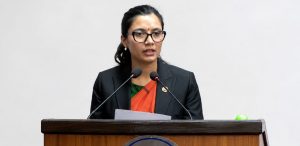
A provision in Section 4 of the bill registered by Law, Justice and Parliamentary Affairs Minister Sobita Gautam in the House of Representatives on Friday addresses the categories of people entitled to receive free legal aid, a list that includes those injured in the Gen Z movement.
The Gen Z movement took place on September 8–9 last year. During the movement, 76 people died nationwide. The government initially declared 45 of them martyrs. On the first day of the movement, 19 people lost their lives.
More than 422 people were seriously injured nationwide during the movement, with the total number of injured exceeding 450.
The Act is being amended to provide free legal aid to these individuals.
Nine categories of people eligible for free legal aid
(a) Socially or educationally disadvantaged women, Dalits, Indigenous nationalities, Madhesi, Tharu, minorities, marginalised groups, Muslims, backward classes, gender and sexual minorities, economically disadvantaged Khas Arya, labourers, farmers, and citizens from oppressed or backward regions
(b) Economically disadvantaged citizens
(c) Victims of domestic or gender-based violence
(d) Children, senior citizens, persons with disabilities, or helpless individuals
(e) Martyrs and victims of the armed conflict, those injured, disabled, or incapacitated during various people’s movements, including the Gen Z movement, democracy fighters, and displaced citizens
(f) Victims of offences related to caste-based or other social untouchability and discrimination
(g) Persons arrested in criminal cases who state at the time of arrest that they are unable to retain legal counsel
(h) Detainees or prisoners held in custody
(i) Parties to a case for whom a court has ordered that free legal aid be provided
The proposed bill significantly widens the scope of who qualifies as unable to afford legal help, and extends free legal aid services to all courts as well as judicial and quasi-judicial bodies.
The bill establishes that an eligible party’s right to legal aid covers everything from free legal consultation and advice through case proceedings, hearings, and even execution of the verdict.
For individuals arrested in criminal cases who are unable to arrange their own legal counsel, the bill ensures the right to free legal aid begins from the moment of arrest.
The bill also includes provisions requiring the use of sign language when providing free legal aid to individuals with hearing or speech-related disabilities, and mandates psychosocial counselling services for eligible parties as needed.
According to the bill, legal aid for eligible parties will be coordinated across all three levels of government: federal, provincial, and local.
Agencies providing legal aid are required to deliver services in an integrated manner. To make free legal aid more effective and centrally coordinated, the Ministry is tasked with developing and implementing an electronic system for free legal aid.
To improve the quality of free legal aid, the bill also includes provisions for providing legal aid services through subject-matter experts.
The proposed bill establishes the structure for a National Legal Aid Council, an Executive Committee, and provincial and district-level legal aid committees.