

Kathmandu, October 16
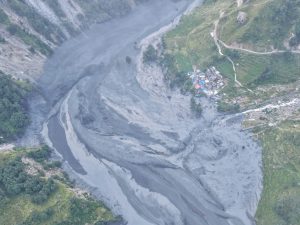
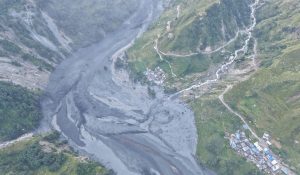
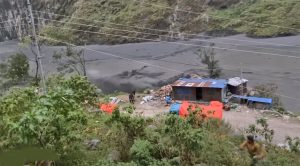
British MPs have urged the UK government to provide sustained support for Nepal’s reconstruction following devastating floods in the Bhotekoshi and other rivers, calling for international assistance to rebuild damaged homes, schools, roads and bridges.
During a parliamentary debate on Wednesday, lawmakers from across political parties expressed solidarity with Nepal and stressed that assistance must extend beyond immediate humanitarian relief to include long-term reconstruction, climate adaptation and disaster preparedness.
The debate, which lasted nearly an hour and a half, was initiated by Matt Rodda, MP for Reading Central. MPs highlighted the historic friendship between Nepal and the UK, praised the contributions of Gurkha veterans and the Nepali diaspora, and acknowledged fundraising and humanitarian efforts by British charities and local communities.
Rodda said he was proud of the support provided by the British government, charities and local communities following the devastating floods that struck Nepal on August 26.
Recalling Prime Minister Andy Burnham’s remarks several weeks earlier that Nepal had always stood with the UK and that it was now time for Britain to stand with Nepal, Rodda asked the minister attending the debate to update Parliament on the UK’s response, long-term reconstruction in affected areas and continued assistance for Nepal’s development.
He also thanked the Speaker for facilitating a debate focused on Nepal and the relationship between the two countries, including the contribution of Gurkhas.
Luke Murphy, Labour MP for Basingstoke, also called on the British government to provide further assistance for Nepal’s recovery after the Bhotekoshi floods.
Murphy told Parliament that at least 1,455 people had died and more than 5,000 remained missing following the floods and landslides. He said rebuilding devastated communities would take years and urged the UK to remain committed to Nepal even after media attention had shifted elsewhere.
He noted that Basingstoke was home to one of the UK’s largest and most respected Nepali communities. Murphy said he was pleased to have attended a memorial service and candlelight vigil that brought together people from different backgrounds to honour those affected by the disaster.
Welcoming the British government’s £5 million in emergency humanitarian assistance and plans for further investment in disaster resilience and climate adaptation, Murphy stressed that rebuilding affected communities would require a long-term commitment.
In the second week of September, Murphy also met Nepal’s acting ambassador to the UK, Bipin Duwadi, at a meeting of the All-Party Parliamentary Group on Nepal at the British Parliament. Their discussions covered the devastating floods, British government assistance and Gurkha pensions.
Gareth Thomas, Labour MP for Harrow West, welcomed the UK’s announcement of £5 million in emergency humanitarian assistance shortly after the disaster. He also described the visit to Nepal by Baroness Winterton, the minister responsible for the Indo-Pacific, as a positive step.
Thomas said Nepal could require around £5 billion for reconstruction and measures to strengthen resilience against future disasters. Given Nepal’s limited capacity to mobilise such a large amount of funding on its own, he said the UK had a responsibility, as a longstanding friend, to work with Nepal and the international community to address the financial challenges.
Monica Harding, Liberal Democrat MP for Esher and Walton, also welcomed the rapid deployment of British personnel and the £5 million in humanitarian assistance. However, she argued that the amount was insufficient and did not reflect the close relationship between the two countries.
Harding said reconstruction would require substantial financial resources. She noted that Nepal had written to the United Nations’ Loss and Damage Fund requesting $20 million in assistance.
The request represented only 0.7 per cent of the estimated $2.7 billion in physical infrastructure damage and economic losses, she said, adding that the fund itself was facing a shortage of resources.
According to Harding, 119 countries had collectively requested $2.8 billion from the fund, while international donors had contributed only $400 million so far.
She said the gap between funding requests and available resources was stark, particularly as climate change intensified and the effects of a potential “super El Niño” began to emerge. She described the international community’s repeated failure to adequately prepare for climate-related disasters as deeply regrettable.
David Reed, Conservative MP for Exmouth and Exeter East, recalled visiting Nepal last year on a development-related trip, saying the visit had given him firsthand insight into the depth and durability of the relationship between the two countries.
He said the relationship had been built over generations through friendship, shared service and the contributions of Gurkhas. Having served in the military alongside Gurkhas, Reed said he had seen their kindness, honesty and courage firsthand.
“The UK has a proud, longstanding and close friendship with Nepal. We must stand with the Nepali people through this tragedy and the difficult circumstances that follow,” Reed said.
He expressed hope that the minister would reassure British families searching for missing relatives, as well as the wider Nepali community.
Anneliese Dodds, Labour MP for Oxford East, said the UK had an important opportunity to stand alongside Nepal, given the strength of their historical and contemporary ties.
She said the Nepali people had given a great deal to Britain and that the UK should now support them in return.
Dodds also called on the British government to listen to vulnerable communities across the Himalayan region that were demanding climate action and help ensure their concerns translated into concrete measures.
She urged the government to work with its Nepali counterparts to develop a shared position on climate action and amplify Nepal’s voice internationally.
Jim Shannon, Democratic Unionist Party MP for Strangford, praised Rodda for bringing the issue before Parliament, describing the debate as important not only from a diplomatic perspective but also on humanitarian and moral grounds.
Gregory Campbell, DUP MP for East Londonderry, recalled how people from different religious communities across the UK, particularly in Northern Ireland, had come together to raise substantial funds following the disaster. He said the efforts had helped address some of the severe difficulties still facing people in Nepal.
Seema Malhotra, Labour MP for Feltham and Heston, said the House remained deeply interested in how support for Nepal was being sustained following the devastating floods.
Jane Kirkham, Labour MP for Truro and Falmouth, said that although Cornwall did not have a large Nepali community, people there came together to help when difficulties arose.
UK reiterates commitment to Nepal’s reconstruction
The British government has pledged to keep Nepal’s reconstruction on the international agenda and continue working with partners to support the country’s resilience and development.
It also reaffirmed its commitment to working with Nepal on climate change, disaster management and long-term reconstruction.
Responding to MPs’ questions, Chris Elmore, a minister of state at the Foreign, Commonwealth and Development Office, said the UK had provided £5 million in emergency humanitarian assistance to help flood-affected communities access shelter, clean drinking water, sanitation and healthcare.
He outlined ongoing cooperation with Nepal and international partners to strengthen disaster preparedness, climate adaptation and early warning systems.
Elmore said the British foreign secretary had highlighted the links between environmental pressures, climate risks and wider security and stability challenges. He added that the World Bank’s annual meetings taking place that week would provide an opportunity to make further progress on these issues.
The British foreign secretary would also share a platform with Nepal’s finance minister to discuss UK support for strengthening disaster information and early warning systems in Nepal, as well as efforts to ensure countries can access financial resources when they need them most during crises, Elmore said.
Expressing solidarity with Nepal, the minister referred to the deaths of at least 1,455 people and the many others still missing. He praised the contributions of rescue workers, volunteers and the Nepali community, and stressed the importance of international cooperation to build climate-resilient infrastructure and support reconstruction in Nepal.