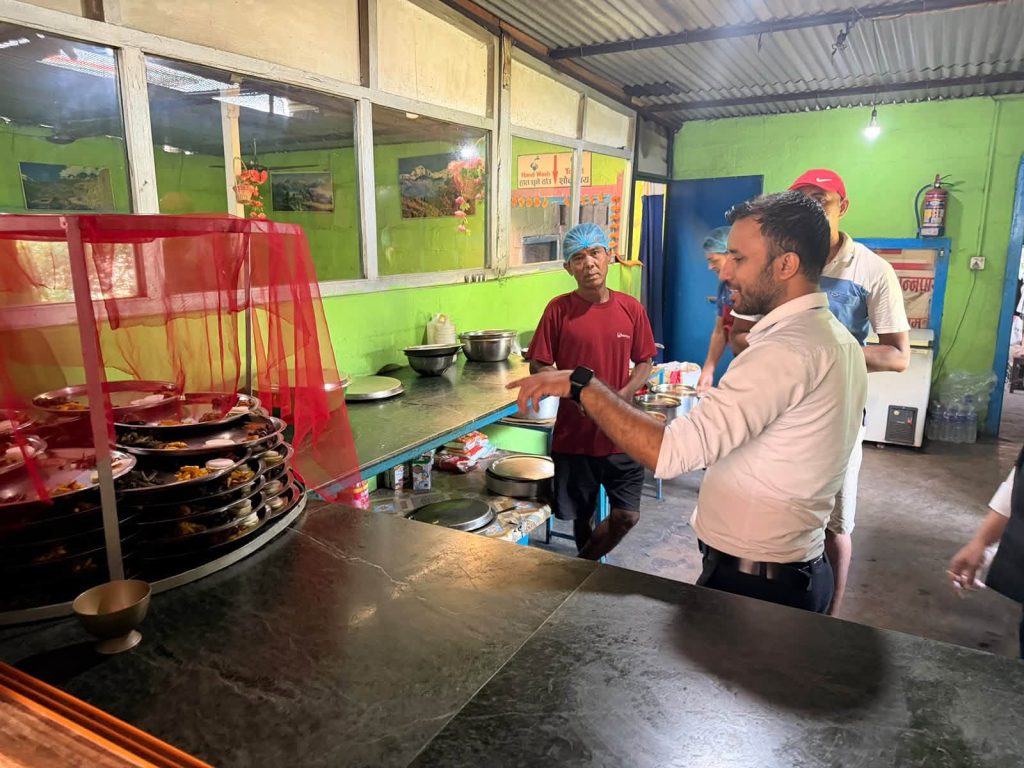
Kathmandu, October 16
As Dashain celebrations gather pace, millions of Nepalis are leaving cities to return to their hometowns and villages. With Tihar and Chhath following close behind, roads across the country are filling with people travelling home for the festive season.
More than one million passengers are expected to leave the Kathmandu Valley alone during Dashain. But, as in previous years, many are facing a difficult journey, with complaints of negligence, unhygienic food and overcharging at highway restaurants.
Traffic and passenger numbers surge during the festive season. On long-distance journeys, passengers often have little choice but to eat wherever their drivers stop. Many of these stops offer few alternatives for travellers seeking clean, hygienic food.
Highway restaurants and snack shops have taken advantage of this captive market, exploiting travellers financially while putting their health at risk.
An informal commission arrangement between drivers and restaurant operators is widely blamed for passengers being directed to establishments where they may be served stale, spoiled or fly-infested food at inflated prices.
Cases of travellers falling ill, suffering food poisoning and even requiring hospitalisation after eating poor-quality food on the way to their destinations are not uncommon. Complaints recur every year, yet the problems persist.
The government says it has stepped up inspections of highway restaurants ahead of the festivals. However, consumer rights activists argue that inspections conducted mainly during festive periods, after months of limited monitoring, have become more of a publicity exercise than a lasting solution.
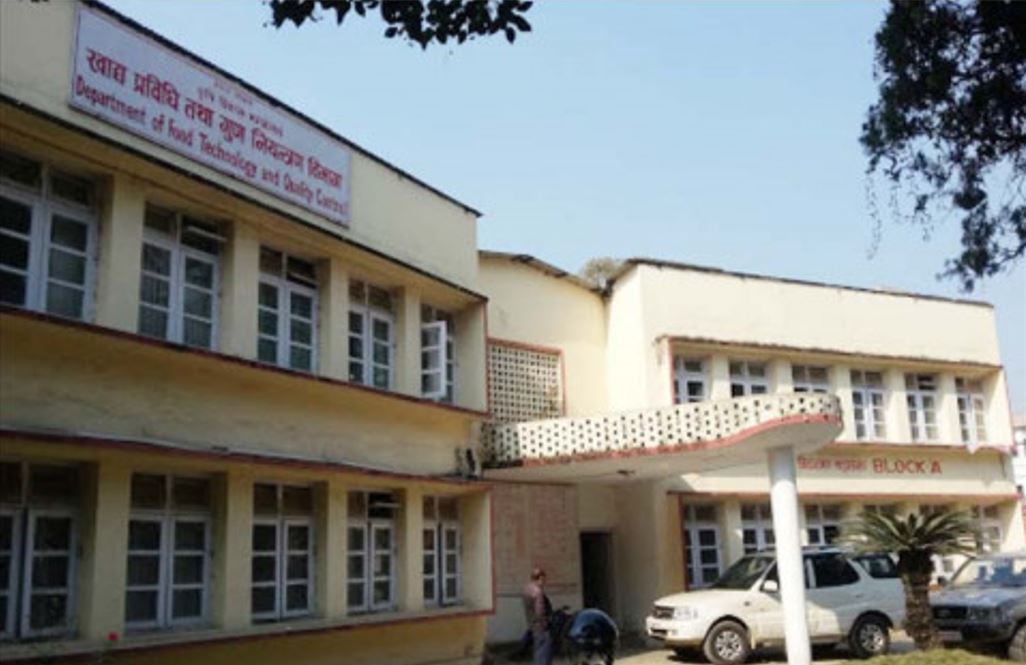
A recent inspection report by the Department of Food Technology and Quality Control offers further evidence of the problem. Travellers are paying high prices for food that fails to meet basic standards of hygiene and safety.
What inspectors found at highway restaurants
A joint team from the Department of Food Technology and Quality Control and its Kathmandu division inspected highway restaurants in Dhading and Chitwan on October 11 and 12, using a mobile food laboratory van.
The team found restaurants using non-food-grade colouring, selling expired drinks and cooking with oil that had been heated repeatedly to potentially harmful levels.
At Sadhu Misthan Marwadi Vegetarian Hotel in Muglin, inspectors found non-food-grade colouring being used to fry jalebi. One kilogram of jalebi and the colouring were seized and destroyed. A bottle of hydroponic solution was also found in the kitchen area, according to the inspection report.
At Hotel Baishnav, also in Muglin, general cleanliness was considered acceptable, but testing found the total polar materials (TPM) level in cooking oil at 26.5 per cent. As this exceeded the prescribed standard, one litre of oil was destroyed and a water sample was collected for further investigation.
The findings were even more concerning at Trimurti Khaja Ghar in Muglin, where oil used to prepare puri had a TPM level of 34 per cent.
Food safety experts warn that repeatedly heated cooking oil can develop harmful compounds, including potentially carcinogenic substances. Inspectors destroyed two litres of oil at the restaurant.
At New Ramayan Hotel Marwadi Shuddha Shakahari Bhojanalaya in Muglin, the refrigerator was not adequately clean. At Bhagirth Hotel, food was found stored uncovered inside a refrigerator.
New Bhagirth Marwadi Bhojanalaya was instructed to store cleaning agents and insecticides separately to prevent chemical contamination of food.
At Transit House Restaurant in Dhunibesi-9, Dhading, inspectors found 54 expired bottles of Mirinda and Mountain Dew, which were immediately destroyed.
Four 100-gram packets of artificial food colouring were found and destroyed at Gurung Restaurant and Multiply Business in Dhading. Inspectors also found raw and cooked food, as well as vegetarian and non-vegetarian items, stored together.
At Sagar Hotel in Bharatpur-29, Chitwan, sections of the walls and floor had damaged concrete. Inspectors found 74 expired packets of cheese balls and two expired bottles of Pepsi.
At Namaste Khajaghar in the same area, 49 packets of expired Kurkure and Lay’s snacks were seized and destroyed.
Other problems were found at several establishments. Highway Kids Fast Food and Restaurant had inadequate temperature control in its buffet system; the refrigerator door at Highway Rest Centre was damaged; and Cafe Himalayan Cream had a one-litre bottle of expired kiwi fruit crush intended for use in coffee.
These 15 establishments are only representative examples of the problems identified during inspections. Hundreds of other highway restaurants that have not been inspected may continue to serve travellers food that falls short of basic safety standards.
Why do the restaurants fail to improve?
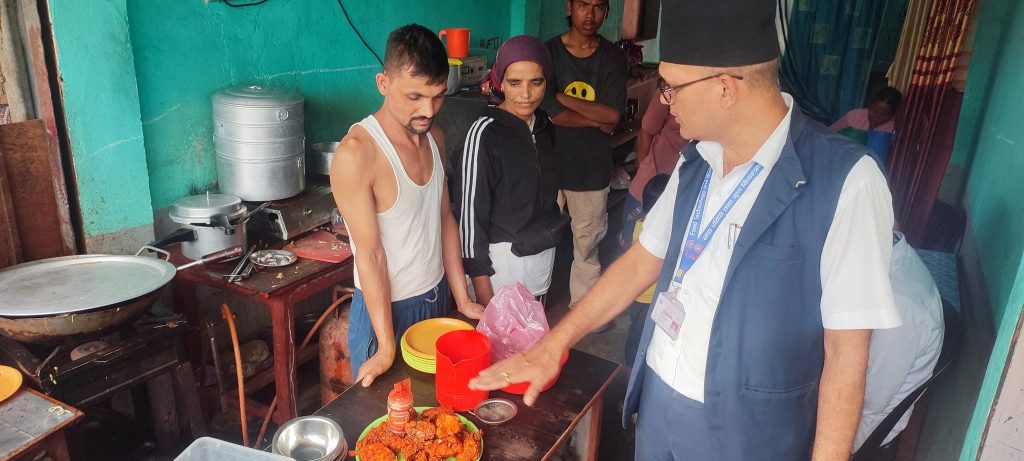
Why do inspections take place every year, yet the same violations continue to appear?
Sanjeev Kumar Karna, director general of the Department of Food Technology and Quality Control, points to structural weaknesses in regulation and limited capacity at local governments.
“The Food Hygiene and Quality Act, 2024, has assigned much of the responsibility for inspecting, monitoring, grading and registering hotels to local governments,” Karna said. “But when local governments lack sufficient capacity, we have to step in on behalf of the federal government. We also face a shortage of staff and cannot reach all 77 districts. Even so, we are currently focusing particularly on highway restaurants during the festive season.”
Karna said the department had launched a grading campaign to encourage restaurants to maintain food safety standards and persuade drivers to stop only at establishments offering safe food.
“We have deployed a team with a mobile van to test food products and help improve standards. We are grading restaurants in Dhading and Chitwan based on food hygiene and putting up stickers,” he told Onlinekhabar. “I also urge travellers to eat only at restaurants displaying the department’s green or yellow stickers under the A, B, C and D grading system.”
According to Karna, establishments found violating standards are initially warned. If the same violations are repeated during subsequent inspections, legal proceedings are initiated under the food safety law.
“The law provides for fines ranging from Rs 50,000 to Rs 500,000 and imprisonment from six months to three years for contaminated food. We can even take action to close hotels,” he said.
The department is also preparing a proposal to recruit additional staff through an organisational and management (O&M) survey.
Transport department warns drivers
Transport operators and drivers are also being blamed for the problems at highway restaurants. Critics allege that some drivers deliberately stop at establishments where they receive commissions or free meals and accommodation, even when the food served to passengers is of poor quality.
This year, the Department of Transport Management, under the Ministry of Physical Infrastructure and Transport, has issued a warning to drivers.
Department director Maniram Bhusal said the department had received widespread complaints that restaurants serving public transport passengers lacked proper sanitation, served stale or fly-infested food, offered poor-quality meals and charged excessive prices.
The department has instructed drivers to give priority, wherever possible, to stopping at restaurants displaying the green stickers issued under the food safety grading system.
“If passengers are found to have fallen ill because of poor-quality food provided by hotels or restaurants, the concerned drivers and business operators will face strict action under prevailing law,” the department said in its notice.
Passengers have also been urged to remain alert. Those who encounter overcharging or poor food quality can report the matter to Nepal Police through its toll-free number 100, the relevant district administration office, traffic police or the nearest Department of Food Technology and Quality Control office.
Consumer rights activists call inspections a publicity exercise

Consumer rights activists blame the government for failing to improve highway restaurants despite years of complaints and inspections.
Madhav Timalsina, a consumer rights activist, said inspections conducted mainly around Dashain had become a publicity exercise and had done little to discourage businesses from exploiting travellers.
“Every year, different government agencies say they will take action against highway restaurants for unhygienic food, stale and spoiled meals and the absence of price lists,” Timalsina said. “But this has been an issue for decades. Despite all the talk, highway restaurants have not improved. There are still no proper price lists, standards are not maintained, and consumers cannot get a decent meal.”
He said inspections carried out during festivals were largely ritualistic.
“Inspections during festivals are just a stunt. They are seasonal inspections,” he said. “People travel all 365 days of the year, and highway restaurants do business all 365 days. Shouldn’t authorities check their kitchens, the raw materials they use, whether kitchen workers wear aprons and whether basic hygiene procedures are followed?”
Timalsina also questioned the effectiveness of the department’s grading stickers, arguing that the system lacked consistent monitoring.
“The department introduced the sticker system, but it has failed to ensure regular oversight. Once a sticker is issued, there is no consistent monitoring of the restaurant or inspection of the raw materials used in its kitchen,” he said.
He argued that the government must establish a permanent and effective monitoring mechanism operating throughout the year to enforce consumers’ fundamental right to quality goods and services under Article 44 of the Constitution.
Only two of 17 Dhading restaurants receive higher grades
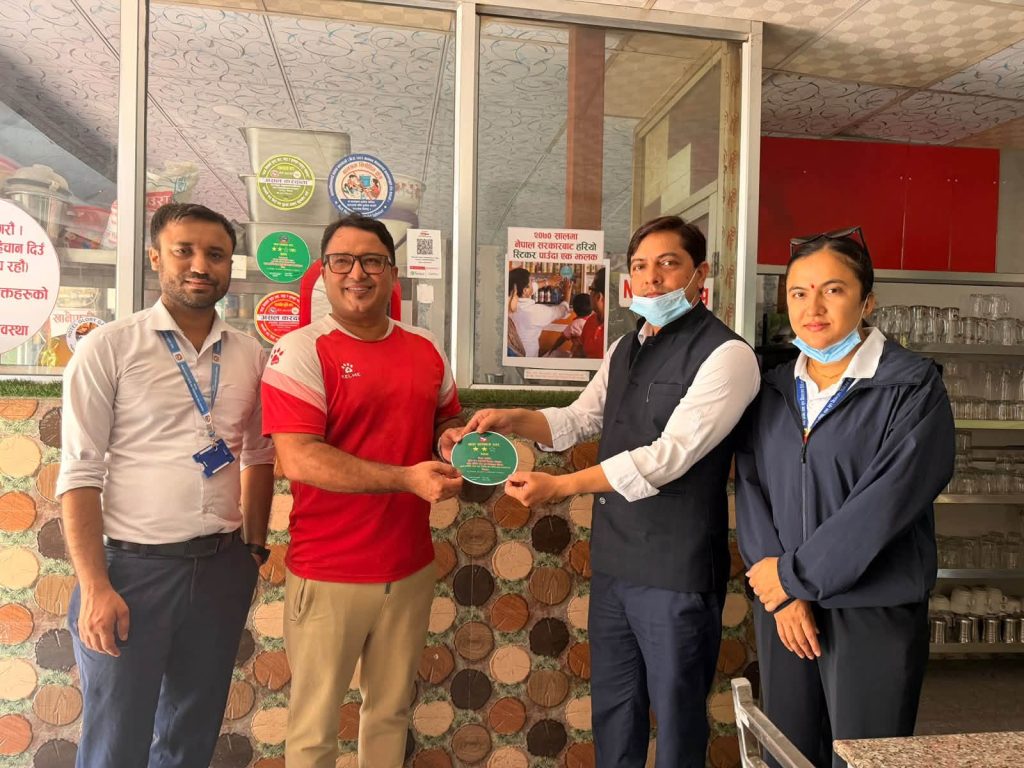
The Department of Food Technology and Quality Control has graded 17 highway restaurants in Dhading’s Thakre, Dhunibesi and Galchhi areas, targeting establishments used by public transport passengers.
The inspections followed complaints that restaurants were neglecting sanitation, serving stale and fly-infested food and charging excessive prices.
Only two of the 17 establishments received the department’s higher rating. Triple Crown Resort Pvt Ltd in Galchhi Rural Municipality-4 and Transit House Restaurant Pvt Ltd in Dhunibesi-1 were rated good and awarded green stickers marked B, indicating two stars.
New Kasthamandap Hotel in Thakre-2 received a satisfactory rating and a green C sticker, indicating one star.
The remaining 14 establishments were graded as having only an average level of food hygiene and received yellow D stickers.
Those receiving yellow stickers included Hotel New Namaste Nepal and Cold Store, Kantipur Hotel and Lodge, and New Pathibhara Hotel in Thakre-1.
Hotel Sayapatri in Thakre-2, Diwasi Cold Store and Shree Annapurna Hotel in Thakre-6, and Riya Hotel and New Supa Deurali Hotel in Thakre-8 also received yellow stickers.
In Dhunibesi, the establishments graded at the average level included Thakali Bhansa Ghar in Ward 6; Highway Break Point Cold Store, Highway King Fast Food and Restaurant, and New Pandey Khaja Ghar and Lodge in Ward 1; and New Aandhikhola Hotel.
Juntara Restaurant and Lodge in Galchhi-6 also received a yellow sticker.
The department expects the grading campaign to help improve food hygiene and quality at highway restaurants, where complaints about overcharging and unsafe food continue to rise. Consumer rights activists, however, say stickers alone will not solve the problem without regular inspections and sustained enforcement throughout the year.