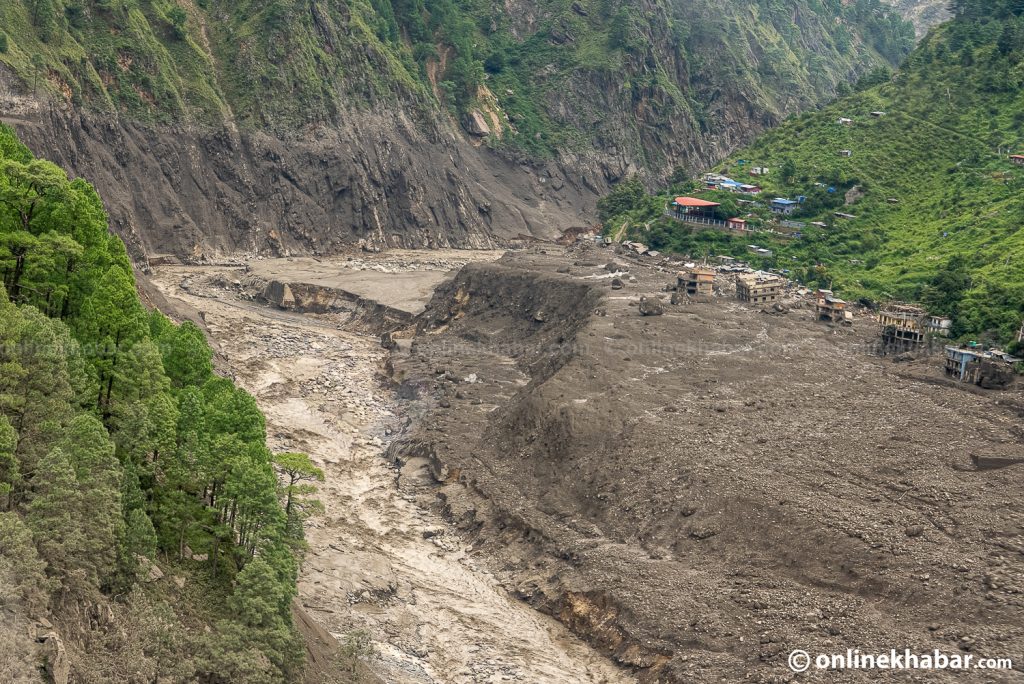
Disaster risk reduction is rarely a priority until a disaster strikes close to home. Yet even the destruction caused by the Bhote Koshi flood on July 8, 2025, was not enough to spur the state into taking meaningful action to reduce future risks. Thirteen months later, disaster struck the same corridor on a much larger scale.
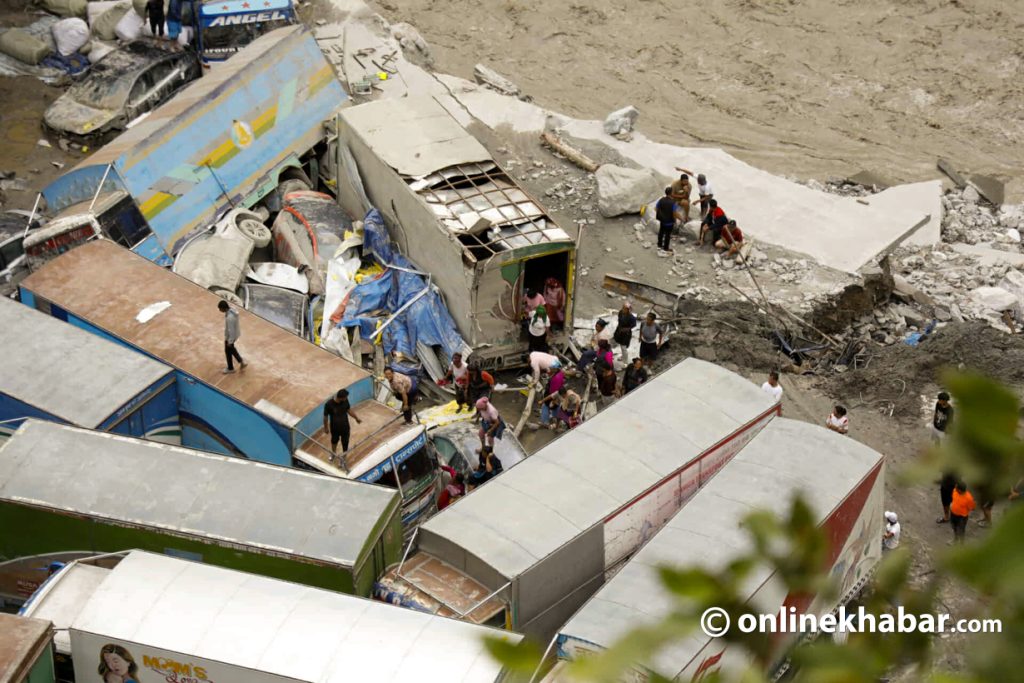
On August 26, 2026, an ice avalanche triggered a massive flood that swept through the Bhote Koshi–Trishuli corridor. More than 1,400 people were killed, more than 5,000 were reported missing, and approximately 7,570 homes were damaged or destroyed. Roads and hydropower projects also suffered severe damage.
This was not the first time Nepal had experienced such a disaster. In 1985, an ice-related event in the Khumbu region caused major flooding along the Dudh Koshi River. In 2012, an ice avalanche in the Annapurna region contributed to a devastating flood along the Seti River, killing people and damaging settlements and infrastructure. Nepal has also experienced at least 24 glacial lake outburst flood events.
How many disasters will it take before we learn to reduce their consequences? What assurances can we offer people who continue to live along Nepal’s high-risk, snow-fed rivers? And what answers can we give those who will never see their loved ones again, including the grandmother recovered from a flooded house in Betrawati after 11 days and the baby pulled alive from a mud-filled house in Timure three days after the disaster?
We cannot prevent an ice avalanche by producing a flood of articles and expert commentary on glacial disasters. Such an event could happen today, tomorrow or the day after. What we can control is how effectively we protect lives, settlements and development projects along Nepal’s snow-fed rivers.
This article draws lessons from the experiences of Bhote Koshi flood survivors and the destruction of settlements, roads and hydropower infrastructure. These lessons fall into three broad areas: human resilience, development resilience and institutional resilience.
Human resilience
Six-year-old Zoyal Tamang from Timure ran uphill from his school, climbed a tree and survived the flood. Sushant Lamichhane from Rasuwagadhi escaped from his room as the flood approached. His laptop and phone fell to the ground, but he did not stop to retrieve them. He ran uphill and survived.
Kishor Gauli, an employee of Prabhu Bank in Timure, was not as fortunate. Instead of immediately seeking safety, he spent valuable time closing the bank’s cash vaults. Similarly, Suroj Dangol, the principal of a school in Betrawati, was swept away after staying behind too long to instruct school staff to evacuate.
Ramesh Thapa, a security guard at the Upper Trishuli Hydropower Project, was swept away while trying to rescue others. He survived by drawing on diving skills acquired through training. Suman Lama from Betrawati said his previous experience swimming in rivers helped him save himself and his wife. As the flood reached them, he managed to hold on to a tree and survive.
These experiences reveal both the importance and the limits of individual preparedness.
Lessons: In an emergency, escape first and retrieve belongings later. Prioritise life over property. Help others when it is safe to do so, but do not put yourself at unnecessary risk.
Where appropriate, vegetation and trees can provide footholds or places to hold on to during an escape. Swimming and water-safety education should be expanded, including for schoolchildren, alongside practical guidance on escaping flash floods. Buildings, fences and other structures should not obstruct evacuation routes. Communities need clearly marked escape paths leading to higher ground.
Development resilience
Development resilience in the affected corridor was extremely weak because settlements, roads and hydropower projects were highly exposed to flood hazards.
Timure, the nearest settlement to the China customs office, occupies a narrow strip of land between the Bhote Koshi riverbank and a steep hillside. This geography leaves residents with few escape options during a major flood. The settlement was reportedly only about eight metres above the riverbed, while floodwaters rose more than 20 metres.
In Betrawati, buildings are situated along a bend in the Bhote Koshi River. The force and momentum of the fast-moving flood drove water into the settlement, causing extensive damage. Other severely affected areas, including Trishuli Bazar, Devighat and Dhunge Bazar, are located on low-lying land shaped by previous major floods.
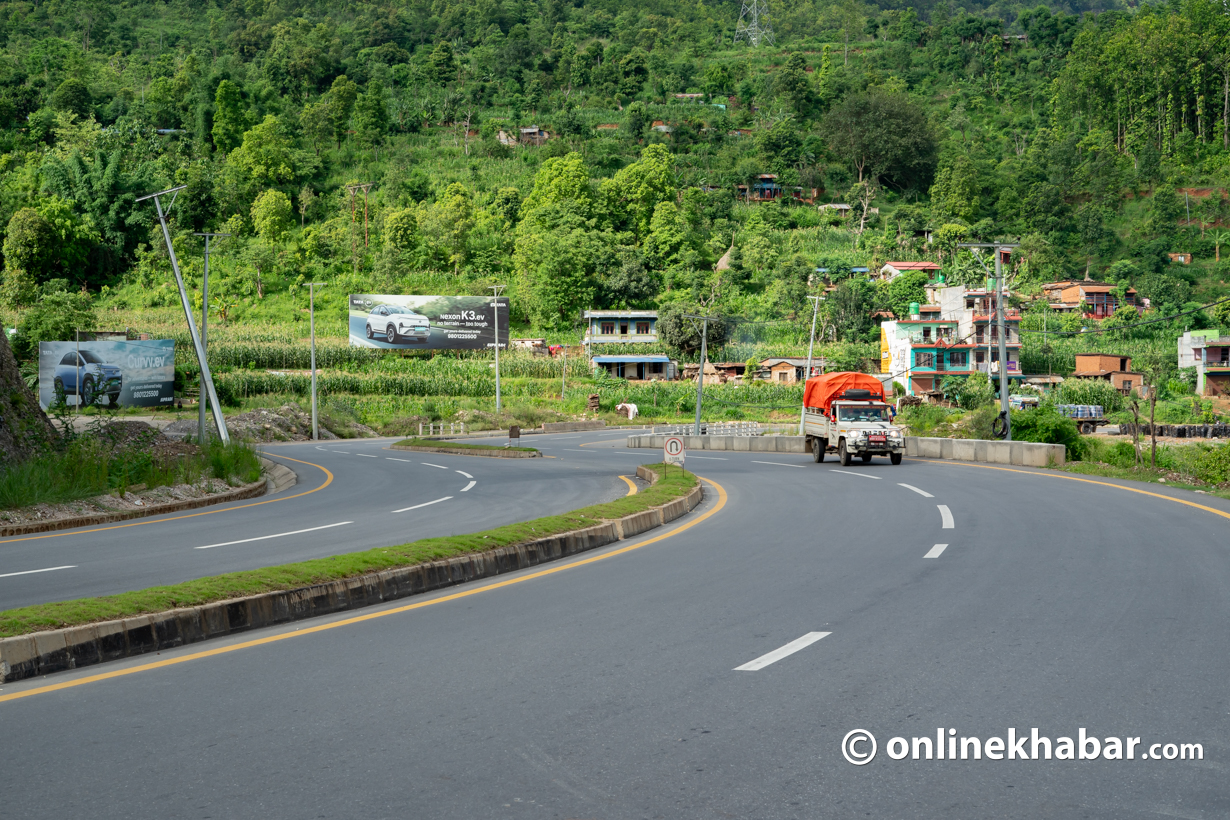
The Bhote Koshi road corridor is squeezed between the river and steep hillsides. During a flood of this magnitude, sections of the road are highly vulnerable to damage and collapse. At several hydropower projects, tunnel entrances face directly towards the river, exposing them to boulders and debris that can block access and trap workers inside.
Lessons: Settlement planning must account for extreme flood levels, not just the river’s normal flow. Where feasible and supported by detailed hazard assessments, settlements such as Timure and Syabrubesi should be considered for relocation to safer, higher ground. An increase in elevation of around 40 metres could be explored as a preliminary option, but the appropriate height and location must be established through technical assessments.
The fact that some settlements at higher elevations in Syabrubesi reportedly escaped damage offers an important lesson. The flood’s high-water marks should be documented and used alongside historical records and hazard modelling to guide future land-use decisions.
In Betrawati, relocation away from the exposed river bend should be considered. A distance of at least 300 metres could be assessed as a starting point, subject to detailed flood modelling and local topography. Development on high-risk floodplains, including areas around Trishuli Bazar, Dhunge Bazar and Devighat, should be strictly controlled. Where risks cannot be reduced to an acceptable level, planned relocation to safer land must be considered, with adequate support for affected households and businesses.
The entire Bhote Koshi corridor needs a risk-sensitive land-use plan that clearly identifies areas where development should be prohibited, where it can be encouraged under appropriate safeguards, and where existing settlements and infrastructure may need to be relocated.
Road investments should also be guided by long-term risk assessments rather than a commitment to existing alignments. Where necessary, safer alternatives should be explored instead of repeatedly rebuilding vulnerable road sections. Hydropower projects must be designed and retrofitted to reduce the risk of tunnel blockages, worker entrapment and structural damage during extreme floods.
Institutional resilience
Institutional resilience is the final line of defence for communities and infrastructure in highly exposed locations. Effective early-warning systems may not prevent property damage, but they can save lives by giving people time to reach safety.
The National Disaster Risk Reduction and Management Authority (NDRRMA) was active during the Bhote Koshi disaster, issuing alerts and coordinating with disaster risk reduction agencies. However, the event exposed serious weaknesses in the ability to detect the hazard, communicate warnings and reach people in time.
According to the reported timeline, the ice avalanche began at its source at 8:37 a.m., while the Flood Forecasting Division became aware of the event at 9:00 a.m. Nepal Telecom and Ncell sent 679,295 warning text messages at 9:15 a.m. By then, the flood had reportedly reached Betrawati after devastating Timure and Syabrubesi. When NDRRMA issued its warning at 9:28 a.m., the flood had already damaged Trishuli Bazar and was moving towards Devighat.
Around noon, NDRRMA was reportedly sending letters to various agencies, including the Army, requesting helicopter support. In an emergency where every second matters, relying on formal written requests and waiting for responses can cost valuable time.
Lessons: Establish a system of continuous river monitoring near Rasuwagadhi and other strategic locations. Trained observers could monitor river conditions in shifts from safe vantage points, supported by automated sensors and remote monitoring wherever possible.
A network of sirens connected through strategically placed towers could provide rapid alerts from Timure to Devighat. Unusual changes in water levels or flow should trigger warnings through established protocols. Sudden drops in river levels may also indicate upstream blockages or other hazards and should prompt immediate investigation. Sirens should be backed by mobile alerts, local communication networks and clearly understood evacuation procedures so that warnings reach people even when one communication channel fails.
NDRRMA and other responsible agencies should establish emergency response protocols that do not depend on lengthy written correspondence. Dedicated response teams, with access to helicopters and other appropriate equipment, should be positioned or mobilised rapidly for major snow-fed river corridors. They should have clearly defined authority to act immediately within established emergency procedures, rather than waiting for multiple layers of approval.
Early-warning systems must be integrated with evacuation planning, regular drills, clear lines of responsibility and reliable communication between agencies. A warning is useful only if it reaches people in time and they know what to do.
There is nothing wrong with studying ice avalanches, debating the science of glacial hazards or arguing that Nepal, despite contributing relatively little to global greenhouse gas emissions, deserves international support and compensation for climate-related losses. But these discussions must not distract us from the measures we can take ourselves. Installing and maintaining effective early-warning systems, for example, is a practical step that Nepal can pursue while continuing to seek international assistance.
The United Nations Green Climate Fund (GCF) and the United Nations Development Programme (UNDP) have reportedly committed US$35.5 million to reducing glacial disaster risks, including plans to install early-warning systems. This raises an important question: why did the government fail to make sufficient progress in putting these resources to work after the 2025 Bhote Koshi disaster?
The lessons of this disaster must not fade once the immediate public attention subsides and the festival season passes. Authorities must be willing to enforce risk-sensitive land-use policies, even when doing so is politically difficult or faces resistance from communities and businesses.
Reconstruction must not mean rebuilding the same vulnerabilities in the same places simply because there is public pressure to restore what was lost. It must mean creating safer settlements, more resilient infrastructure and a stronger economy.
Ultimately, disaster risk reduction is not just about responding to the next catastrophe. It is about making the decisions today that will prevent tomorrow’s disaster from becoming another tragedy of avoidable loss.