
I have worked through several emergencies in Nepal. I have seen communities struggle through conflict and its aftermath, and I have seen families lose homes and loved ones in the 2015 earthquake.
Every disaster is different. But there is one lesson I have carried from each of them: when a crisis strikes, children often bear some of its deepest consequences, even when their protection is not immediately visible in the emergency response.
That is what I find myself thinking about as Nepal confronts another devastating flood.
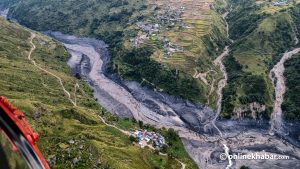
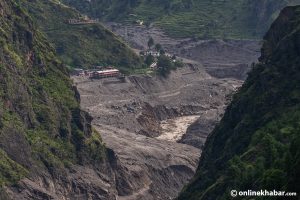
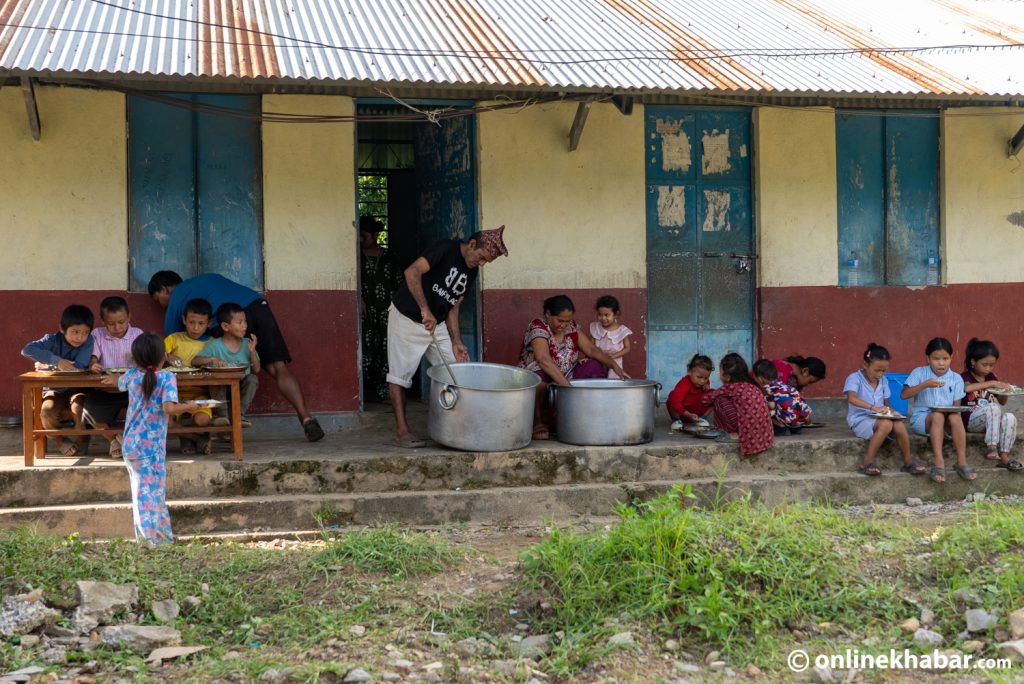
The images from the affected areas are difficult to absorb. Homes have disappeared. Roads and bridges have been swept away. Schools and health facilities have been damaged. Families are searching for loved ones. Lives have been lost and people remain missing.
Behind every number is a human story. And behind many of those stories is a child.
UNICEF’s initial assessment estimates that at least 17,000 children have been affected by the recent floods. The figure will likely change as access improves and assessments continue. But even 17,000 can become an abstract number unless we ask what it actually means for a child.
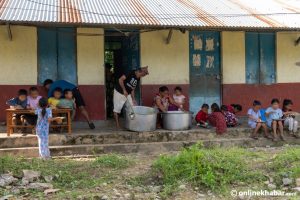
It can mean waking up in an unfamiliar shelter after losing a home. It can mean not knowing where a parent or sibling is. It can mean losing a school, a friend or the routine that made life feel normal. It can mean being frightened and having no words for that fear.
A child does not stop being a child during a disaster
In the first hours of an emergency, our priorities are clear: rescue people, provide food and water, find shelter and treat the injured. They have to be. But child protection cannot be something we think about after the immediate crisis has passed.
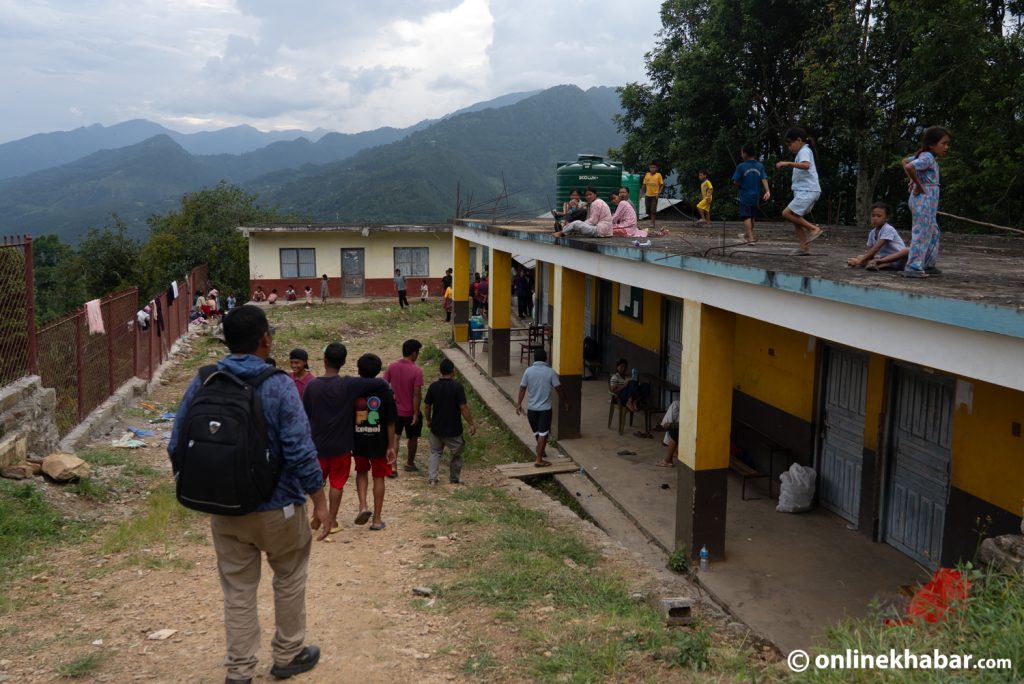
A child who has survived a flood may have lost a parent, sibling, home or livelihood. They may have been separated from their caregivers during evacuation. They may now be living in an overcrowded shelter among people they do not know. And some children will say nothing at all.
That silence should not be mistaken for safety.
Emergencies can increase children’s exposure to violence, abuse, exploitation, trafficking, child labour and neglect. They can also leave children struggling with fear, grief and psychological distress long after the floodwaters have disappeared.
This is why protecting children must be part of the first response—not an activity added later.
A shelter is not necessarily a safe place
When we ask whether families have been given shelter, we should also ask a more difficult question: Is that shelter safe for children?
Can girls and boys sleep safely? Are sanitation facilities secure? Can a separated child be identified quickly? Is there someone a child can approach if they feel threatened? Are children with disabilities receiving the support they need?
These questions may appear less urgent when families are still struggling for food and clean water.
They are not.
A crowded shelter can provide a roof while creating new risks. A child who has become separated from their family can be physically protected from the flood but still remain deeply vulnerable.
This is why family separation must be treated as an emergency in itself.
During a disaster, communication networks fail, roads disappear and families are moved from one place to another. Children can easily become separated from the people they depend on.
Recently, nine schoolchildren who had been stranded at their school for two days were reunited with their families. Their story is a reminder that tracing and reunification are not secondary humanitarian tasks. For a frightened child, finding their family can be as important as finding food or shelter.
The school that was destroyed but whose children survived

The floods have also offered a powerful lesson in what preparedness can achieve.
In Nuwakot, a timely warning allowed a school principal to evacuate more than 1,600 students before floodwaters reached the school. The school was later destroyed. The children, however, survived. That distinction matters.
When we talk about disaster preparedness, we often focus on infrastructure, evacuation routes and early-warning systems. These are essential. But preparedness must also answer a more fundamental question: How do we protect every child when the warning comes?
For children, a school is more than a building. It is a place of routine, friendship, trusted adults and familiarity. When a disaster destroys it, children lose more than a classroom.
That is why continuity of education should also be part of disaster response and recovery. We know what to ask. We should know the answers.
Nepal has experienced conflict, earthquakes, floods, landslides and other emergencies. We have learned painful lessons from each.
Yet too often, preparedness becomes a conversation that begins after disaster has already struck.
Every municipality and rural municipality should already know where its most vulnerable children are, what happens if children are separated from their caregivers, where children can find safe spaces, who provides psychosocial support and how cases of violence, abuse or exploitation will be referred.
They should know how children with disabilities will be supported and how education will continue when schools are damaged.
They should even have plans for protecting or restoring essential documents such as birth registrations.
These are not questions for the aftermath.
We should have the answers before the water rises.
The real crisis begins after the headlines fade

There is another danger in the way we think about disasters.
We often measure the response by what can be seen: how many people were rescued, how many relief packages were distributed, how many roads were reopened and how many houses were rebuilt. Those numbers matter. But they do not tell us whether a child feels safe again.
When the floodwaters recede, some children will return to homes that no longer exist. Some will return to schools that have been destroyed. Some will return to families that have lost their livelihoods. Others may never return to the family members they were separated from.
And a child who appears physically unharmed may still be carrying fear, grief or trauma. So recovery must ask different questions, too.
Are children back with their families? Are they back in school? Do they feel safe? Are they protected from exploitation and violence? Are children who need psychosocial support receiving it?
These are not soft measures of recovery.
They are measures of whether recovery is actually happening.
And we need to listen to children
There is one more thing adults often forget in emergencies: children themselves know what they need. They know which places in their communities feel safe. They know what frightened them during the evacuation. They know what they have lost. They know what would help them feel normal again.
Yet children are often treated only as recipients of aid rather than people whose voices matter.
Listening to children does not mean asking them to solve a disaster. It means creating safe ways for them to tell adults what they are experiencing and what support they need. They are not simply beneficiaries. They are rights-holders.
Over the years, I have also seen something else repeatedly in Nepal: extraordinary community strength.
Teachers, local leaders, volunteers, security personnel, health workers, social workers and ordinary citizens step forward when others are in danger. Communities often become the first responders long before formal systems arrive. We should be proud of that strength.
But we should not build our disaster response around courage and goodwill alone.
We need systems. We need trained people. We need functioning referral mechanisms. We need local governments with child-sensitive disaster plans. We need preparedness that considers not only how to get children out of danger, but how to keep them safe once they are out.
Most importantly, we need to stop treating child protection as something that can wait until the rescue operation is over. It is part of the rescue operation. The floodwaters will eventually recede. Roads will be rebuilt. Houses will be reconstructed. Schools will reopen. But for some children, these days will remain with them for years.
Nepal has already learned difficult lessons from conflict, the earthquake and repeated disasters. The current floods are another reminder that those lessons cannot remain in reports and post-disaster assessments.
We have to turn them into preparedness. Because when the next emergency comes, a child should not have to depend on luck to survive. And surviving should not be the end of what we ask for.
Children deserve safety, dignity, family, education, care and hope—even in the middle of a disaster.
The water will recede. Our responsibility must not.