
September is on the horizon. Around this time last year, the lava of public anger and dissatisfaction had begun to boil beneath Nepali society, eventually erupting into the Gen Z uprising.
Nearly a year after that explosive youth revolt, an uncomfortable irony is becoming harder to ignore: the very political figures whose removal from power was at the heart of the movement are now moving, without much hesitation, to reclaim their parties and political influence.
At first glance, this may look like little more than the familiar ambition of three ageing politicians who refuse to leave the political stage. But something larger may be at work.
Nearly a century ago, political scientist Crane Brinton offered a framework for understanding precisely this kind of political reversal in The Anatomy of Revolution.
Brinton compared revolution to a fever.
As injustice and dissatisfaction accumulate, the fever rises. Citizens become restless, anger builds and eventually people take to the streets demanding change. But no society can remain indefinitely in a state of political fever. Eventually, exhaustion sets in.
Brinton called the stage that follows the “Thermidorian Reaction.” After the upheaval of revolution, society begins to crave stability and peace. The appetite for permanent confrontation weakens. The distinction between the “new” and the “old” can begin to blur, and with it the political energy required to question the return of forces that had once been rejected.
That is precisely the danger Nepal now appears to be approaching.
The revolutionary energy that demanded change is gradually being squeezed. The political environment is beginning to shift in ways that are increasingly favourable to the old establishment. And the old political elite is moving quickly to take advantage of that opening.
The same leaders whom the Gen Z movement pushed from the centre of political life towards the margins are once again attempting to reclaim their place.
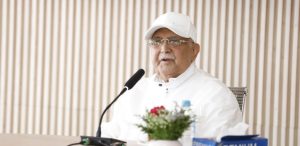
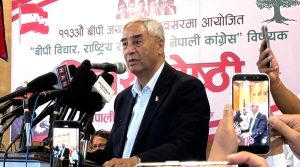
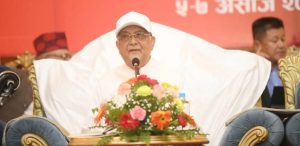
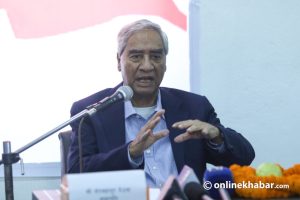
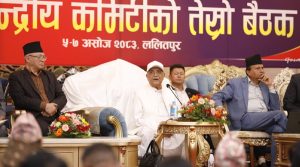
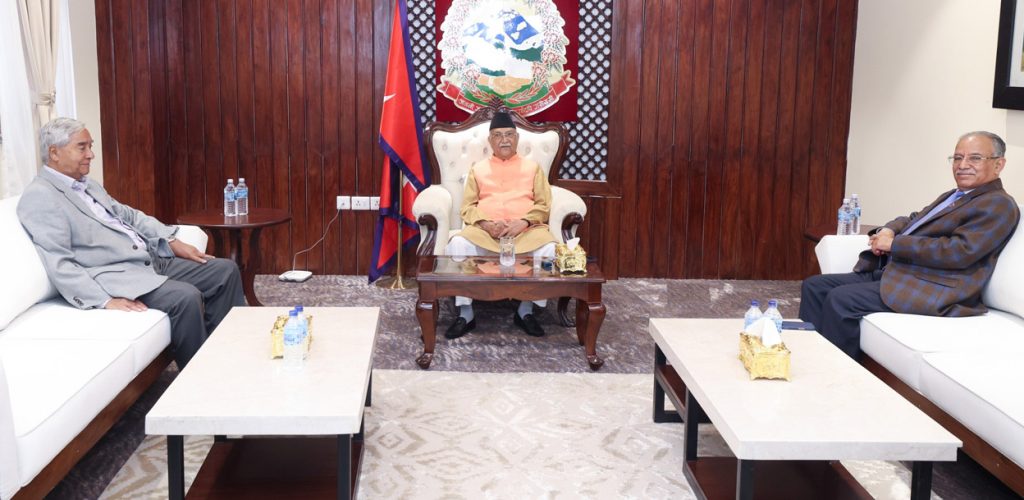
The latest efforts of Sher Bahadur Deuba, KP Sharma Oli and Pushpa Kamal Dahal can, in many ways, be read as a Nepali version of the Thermidorian Reaction.
For a generation that expected accountability, if not outright political repentance, from these leaders, their apparent determination to return represents more than disappointment. It raises the possibility of political regression.
Nepali Congress’ internal wrangling, communists’ relief
There is little point in spending too many words on the communist parties that continue to operate through largely unchanged political structures despite the heat of the Gen Z uprising.
What is more revealing is what is happening inside the Nepali Congress.
The party had raised hopes of generational change and reform following the movement and the intervention of the Gen X generation. Yet the effort to turn the clock back appears to have gathered considerable momentum.
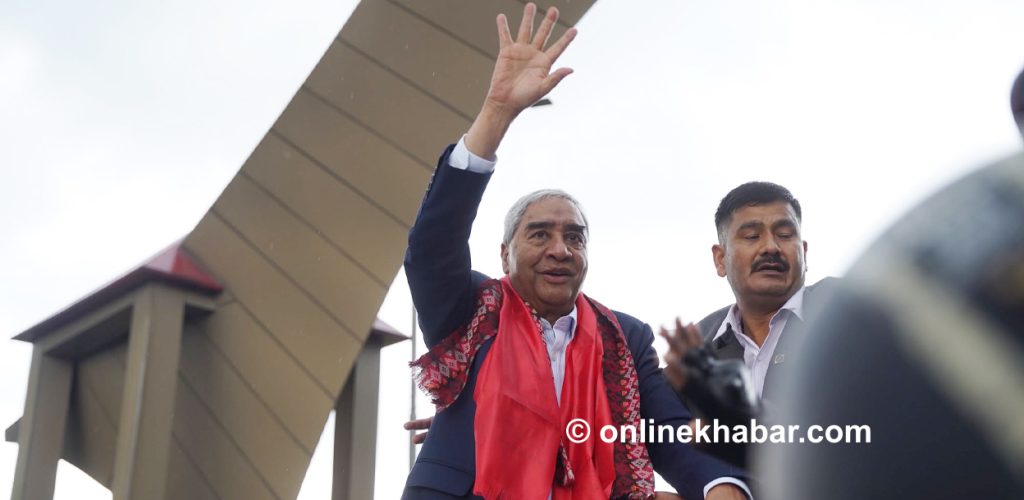
Deuba, who went abroad after coming under physical attack during the protests, has since returned through the windows of political opportunity.
His appetite for a political comeback appears so strong that he has refused to settle into the role of an elder statesman. Instead, he is once again moving actively through the political landscape, attempting to reclaim the old throne of party power.
Political manoeuvring is hardly unfamiliar territory for Deuba.
He once dissolved parliament in accordance with the wishes of the then king and did not hesitate to split his own party in the pursuit of political power.
Now, too, he appears unwilling to rule out anything—from a party split to religious issues—in his effort to regain influence.
His efforts have been helped by a section of his party and, seemingly, by the conduct of the state.
Recent developments suggest that Deuba’s return was not simply the result of a single day’s decision. As legal processes appear to weaken and the Nepali Congress’s legitimacy dispute has once again entered the courts, the party’s internal conflict has taken an increasingly consequential turn.
The sequence of events, from an arrest warrant to a security escort, has raised questions about whether his political return is simply coincidental or part of a broader preparation.
The same Home Ministry that had worked to secure an Interpol Red Notice to bring Deuba back to Nepal from abroad later escorted him to Chundevi.
The political symbolism is difficult to ignore.
There have also been discussions within judicial circles about alleged pressure from senior leaders of the ruling coalition regarding the Congress case.
Whether these developments are coordinated or merely coincidental is a question that deserves scrutiny.
But Deuba’s highly publicised rehearsal of a return to the “president’s chair,” even if staged at Chundevi, must certainly have offered some relief to Oli and Dahal.
The missteps of the new parties and the government have, in turn, brightened the prospects of the old political establishment. The space created by the Gen Z uprising is beginning to look less permanently closed to those who once occupied it.
Oli, Dahal and the resistance to generational change
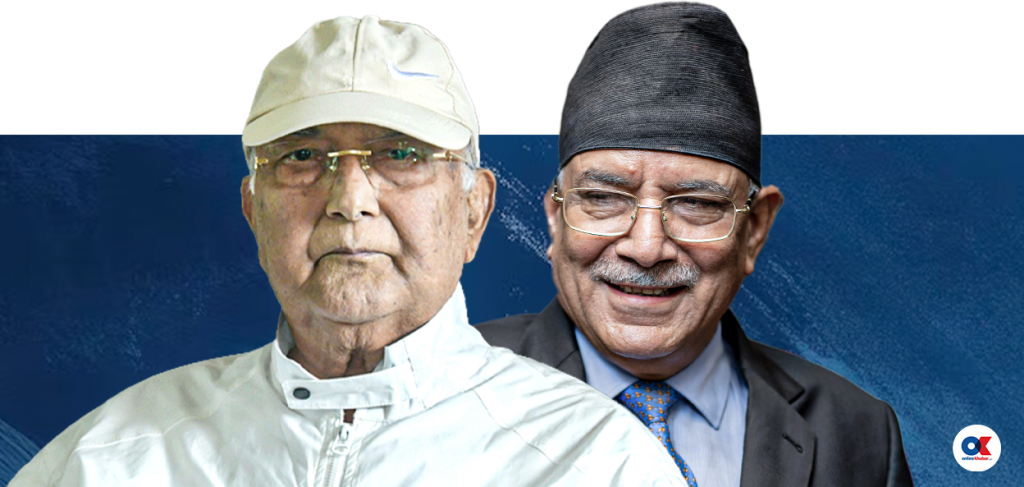
Oli and Dahal, meanwhile, are confronting a different but related challenge: resistance to their leadership from younger generations within their own parties.
Within the CPN-UML, leaders who cautiously raise the question of party restructuring have faced Oli’s warnings and accusations.
Dahal, on the other hand, appears to have gone even further.
Less than a year after the Gen Z uprising, he has challenged the political consciousness and contribution of those who fought in the conflict by handing an important ministry in Koshi Province to his own son-in-law.
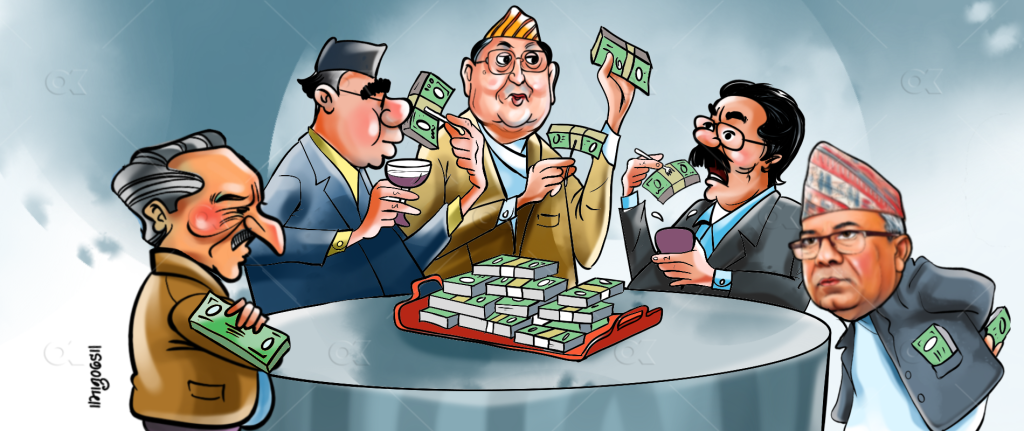
Oli’s intolerance toward political reform, Deuba’s hunger for power and Dahal’s embrace of nepotism may look like different political habits. But together they point to the same underlying problem: an old political elite struggling to restore the power it lost.
There is something deeply unsettling about watching old leaders perform a crude dance of power on political ground watered by the sacrifices of a generation that took to the streets demanding their downfall.
It is not merely disappointing. It deserves to be challenged.
The politics of fatigue
Brinton’s comparison of revolution to a fever offers another useful way to understand what may be happening in Nepal.
A society cannot remain in a permanent state of political mobilisation. Eventually, people become tired of upheaval and begin to value stability.
That fatigue is not inherently a rejection of change. But it creates an opening for those who were displaced by it.
There are already signs that Nepali society is becoming tired. And the old leaders are taking advantage of that exhaustion to replay a political game many believed had finally been discredited.
This, too, is not entirely new to Nepal.
After the political change of 1951, the Rana and royal establishments continued to occupy the centre of power in different forms.
After the 1990 democratic movement, elements of the old Panchayat establishment also found ways to return to political relevance.
The same pattern appeared after the Maoist insurgency and the 2006 movement that established the republic. Feudal structures and old political practices repeatedly found new forms in which to survive.
The lesson is not that revolutions inevitably fail. It is that revolutions do not, by themselves, guarantee that the structures and habits they challenged will disappear.
As the heat of a movement fades, old leadership and old political consciousness can begin to regain ground.
Nepal is not alone in this.
The Philippines offers a striking example. The People Power revolution drove Ferdinand Marcos into exile. Three and a half decades later, Filipinos elected his son to the country’s highest office.
In Egypt, the Arab Spring brought down Hosni Mubarak after three decades in power. Only three years later, Egyptians were living under the rule of military general Abdel Fattah el-Sisi, whose government became even more authoritarian.
Research into 123 movements between 1990 and 2015 and 98 counter-revolutionary challenges examined by Killian Clarke offers another important warning: the possibility of figures rejected by a movement returning to power increases not only when a new government is weak, but also when a new government is trying to institutionalise itself.
The reaction to a challenge against established power is rarely simple.
Sometimes, it is precisely the attempt to reform the existing system that forces the old rulers to fight back.
They make one final attempt to return.
The ‘lumpens’ versus the ‘incompetents’
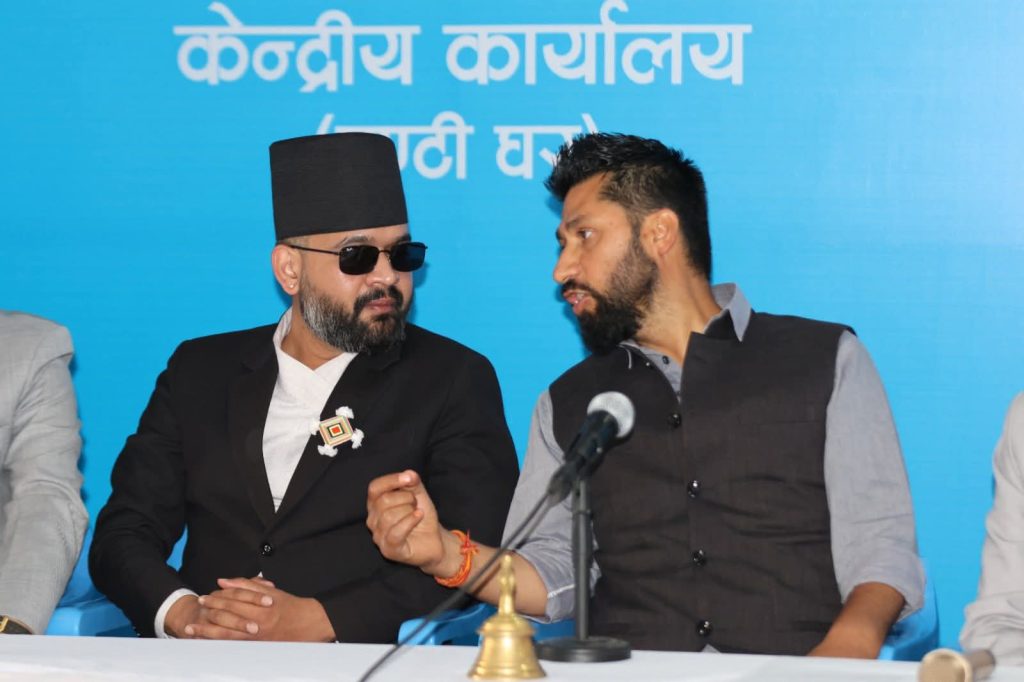
Left-wing leader Ghanshyam Bhusal once offered a memorable description after the elections: the country had been in the hands of the “incompetent” and had now fallen into the hands of the “lumpens.”
The distinction is worth considering.
To be incompetent is to lack ability, judgement or expertise. To be a lumpen is to lack discipline, political culture and proper conduct.
An incompetent government can make mistakes. A lumpen political culture can damage not only governance but also the political environment in which governance takes place.
The warning is becoming increasingly relevant.
If the government, the new political parties and younger leaders within established parties fail to prove their worth, the voices of the old leaders will become louder and their political stature will rise again.
Every new generation claiming leadership—whether in government or in political parties—must work to prove Bhusal wrong.
Because when new parties and new governments fail to justify their existence, political space does not remain empty for long.
The old establishment fills it.
There is another point that must not be forgotten: the Gen Z uprising changed political faces, but it did not necessarily change the structure of power.
The arrogance that Oli displayed from the prime minister’s chair before the Gen Z movement—the tendency to place himself above rules, institutions and political norms—can now be seen in the behaviour of some leaders who came to power through the movement’s political opening.
The old leaders weakened internal democracy and promoted loyalists. Some of the new leaders appear to be reproducing the same practices once they acquire power.
They avoid dialogue with citizens, challenge institutions and procedures, and increasingly behave as though they themselves are exceptions to the rules.
That is slowly weakening the thread of trust between the new government and the public.
And it raises a fundamental question for the new generation:
Is political change simply about replacing old faces, or is it about changing institutions and political culture as well?
Why does a party that claims to represent the people gradually become the party of a handful of leaders?
The answer lies partly in internal democracy.
Unless democratic practices are institutionalised within political parties, changing faces will not necessarily change behaviour.
And if the new generation does not change its political style, the basis for resisting the old leaders waiting at the gates will become increasingly weak.
Put simply, when ordinary citizens have to stand in the rain for an entire day simply to obtain a cylinder of cooking gas, only to return home empty-handed because they lack political access, the voices of ageing leaders swimming comfortably in the syrup of power will inevitably become louder.
The risk and the responsibility
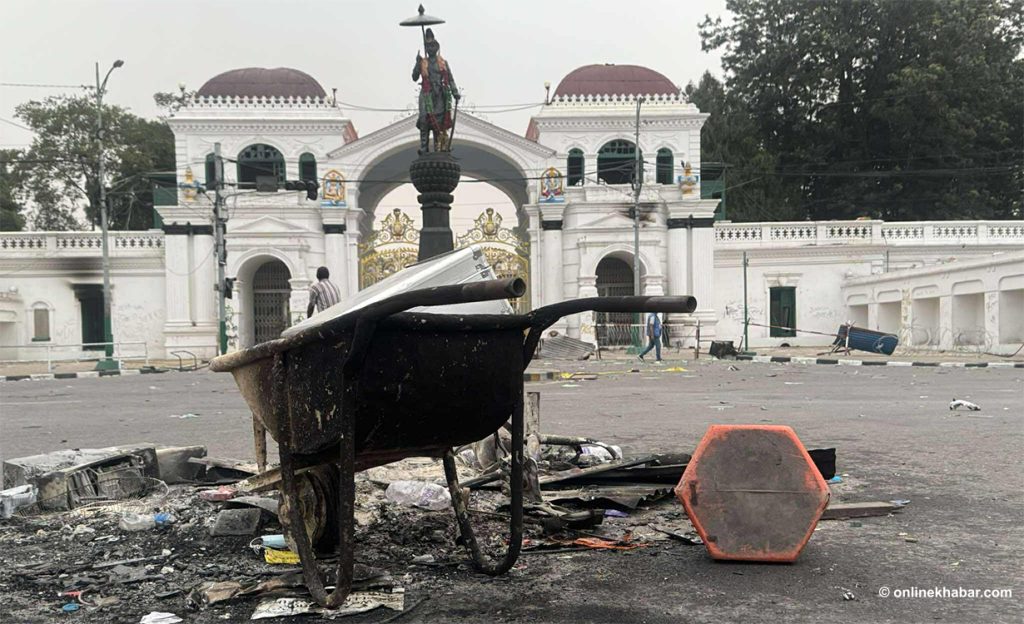
The political vacuum created when new forces fail to govern, communicate and institutionalise reform cannot last forever.
Sooner or later, someone fills it.
The old leaders will fill it with narratives of experience, organisation and past contribution.
That is why the growing desire of Deuba, Oli and Dahal to return to the centre of power—combined with the weaknesses and short-sightedness of the new political forces—could turn the Gen Z uprising into a political tragedy.
This is not only a challenge for the ruling party and government. It is an even greater challenge for the younger generations inside the old parties who claim to be working for political renewal.
For the third and fourth generations inside the communist parties, where internal democracy has still failed to take deep root, the question is particularly important.
The Rastriya Swatantra Party, too, needs to pay close attention.
The movement opened the door.
But opening the door is not the same as deciding who should walk through it.
Unless an organisation capable of making that distinction is built, the storm created by a popular movement can bring even worse characters and tendencies into power.
If political parties cannot stop or correct such figures, they themselves become the window through which citizens understand the state.
The ability to bring people onto the streets and the ability to govern a state are not the same thing.
A new generation that appears powerful on the streets must now demonstrate the institutional skill, political discipline and commitment required to preserve and deepen the change it demanded.
Otherwise, the sacrifices of the Gen Z uprising risk becoming a footnote in another cycle of Nepali political history.
The lesson of history is uncomfortable but clear: revolutions do not automatically destroy old political structures.
Sometimes, they merely push them temporarily out of sight.
The old order waits for fatigue. It waits for mistakes. It waits for disappointment.
And then it returns.
That is why vigilance cannot be the responsibility of one leader or one party.
It belongs to the generation that opened the door to change—and paid for it with its blood.