
Kathmandu, August 18
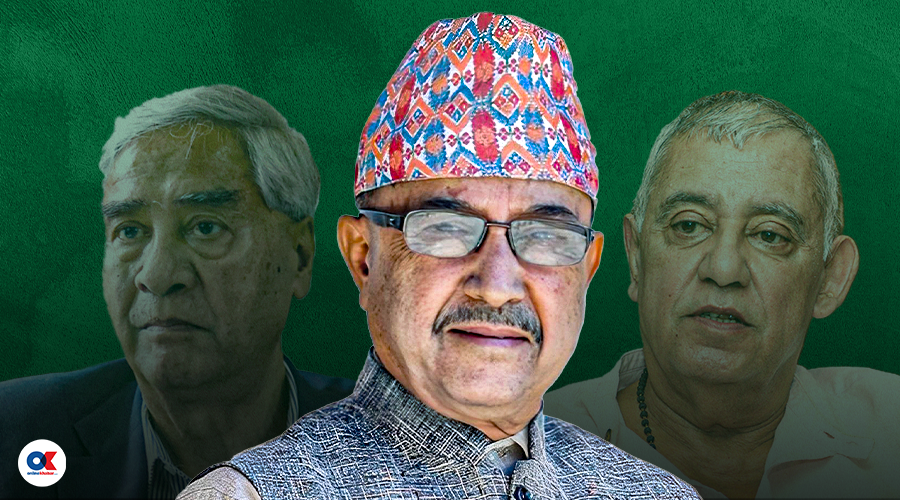
A Supreme Court order has given fresh momentum to the faction of the Nepali Congress opposed to the party establishment. But the three-day national gathering that followed has also triggered a subtle shift in the faction’s internal power balance, with Dr Shashank Koirala emerging as its new political coordinator and Purna Bahadur Khadka’s role becoming less prominent.
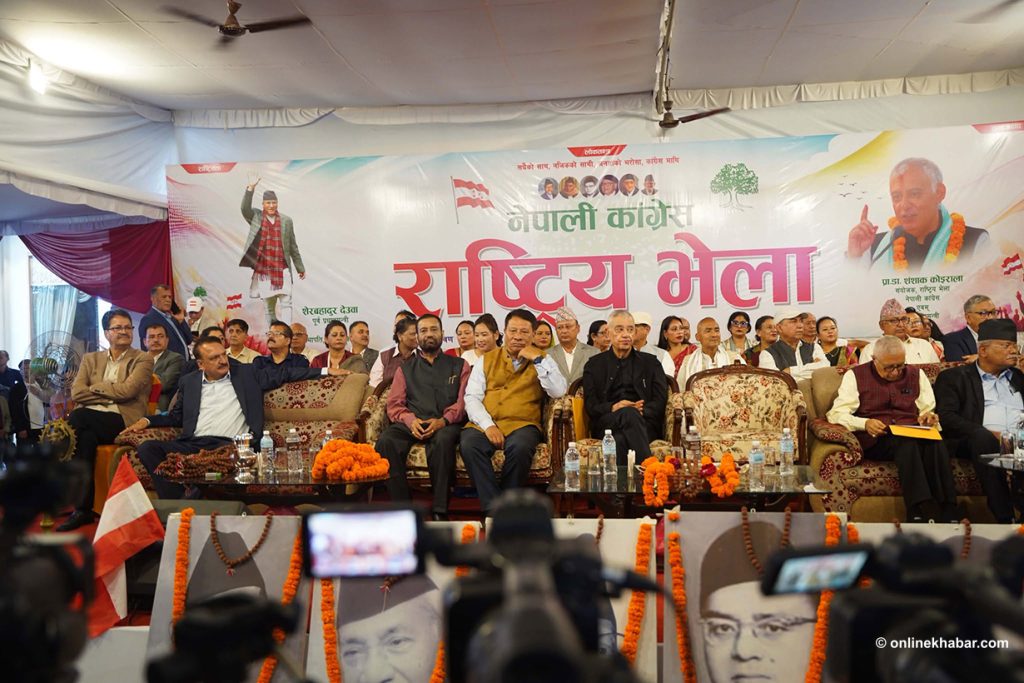
The faction used the gathering, held in Kathmandu from August 14 to 16, to demonstrate its strength after the Supreme Court ordered a review in the dispute within the party.
Former Nepali Congress president Sher Bahadur Deuba, who returned to Nepal just a day before the gathering, became its chief guest. Senior leaders from the non-establishment faction were at Tribhuvan International Airport to welcome him.
His presence changed the dynamics of the gathering.
Had Deuba not returned, Koirala, who had been designated coordinator of the gathering, would have served as chief guest.
But the more consequential development was what happened to Khadka, a longtime Deuba loyalist who had been playing the leading role in the faction’s activities while Deuba was away from active politics.
Khadka agreed to attend after assurances party would not split
Khadka had initially been reluctant to participate in the gathering.
As acting Nepali Congress president, he had taken the position that he would not attend if the gathering was intended to pave the way for a split in the Nepali Congress.
The situation changed after the Supreme Court ordered a review of the earlier decision. With the immediate prospect of a party split receding, Deuba also decided to attend the gathering.
Koirala, accompanied by NP Saud, went to Khadka’s residence to persuade him to participate.
According to leaders familiar with the discussions, Khadka told them he would attend if the gathering was genuinely intended to preserve party unity and there was an assurance that the party would not split.
He eventually joined the opening session. But he did not attend the closing day.
That absence became significant because the gathering made a decision that effectively changed who would coordinate the faction’s activities going forward.
Koirala takes charge of convention preparations
The gathering decided that Koirala would lead the group’s activities until the 15th General Convention, working under Deuba’s direction.
The first point of the gathering’s decision states that the coordinator of the national gathering and convention will coordinate the party’s regular activities required until the 15th General Convention under the direction of the party president.
With that decision, Koirala effectively moved into the faction’s second position.
This is significant because Khadka had previously played the central role in calling meetings of the non-establishment faction, pursuing the legal process and setting the date for the national gathering.
The shift does not mean Khadka has formally lost his position as acting party president.
Non-establishment leader Guru Baral rejected that interpretation.
“Purna Bahadur is the acting president. We asked Shashank to lead the work related to the general convention,” Baral told Onlinekhabar.
But Khadka’s absence from the final day and the decision to place Koirala in charge of the faction’s future activities have nevertheless created speculation about his political position.
One leader from the faction said Khadka stayed away because he would not have authority to lead the group’s activities while serving as acting Nepali Congress president.
“When Sher Bahadur Deuba was not active in politics, it would have been natural for Purna Bahadur to lead the group,” the leader said. “But once the acting president was not given responsibility to lead the activities of our group, Purna Bahadur did not attend.”
The same pattern emerged over the faction’s contact office
The tension over roles within the faction had already surfaced when the group established a separate contact office at Chundevi.
Senior leaders including Bimalendra Nidhi, Krishna Prasad Sitaula, Prakashman Singh and Dr Prakash Sharan Mahat were involved in establishing the office.
Second-tier leaders including Min Bishwakarma, Mohan Basnet and Kanchharam Tamang also played an active role.
Khadka had initially taken the position that he would not visit the office if it was being established with the intention of splitting the party.
According to leaders, he agreed to attend its inauguration only after being assured that the initiative was not aimed at dividing the Nepali Congress.
The office formally began operating on July 6.
The leaders who took the initiative to establish the office also helped position Koirala as the leader of the faction.
Nidhi, Sitaula, Singh and other former office bearers gathered at the office and announced Koirala as the group’s leader.
“We have unanimously made him our coordinator and leader. We have chosen him as the leader of our group,” Nidhi had said.
From Deuba’s closest ally to a possible presidential contender
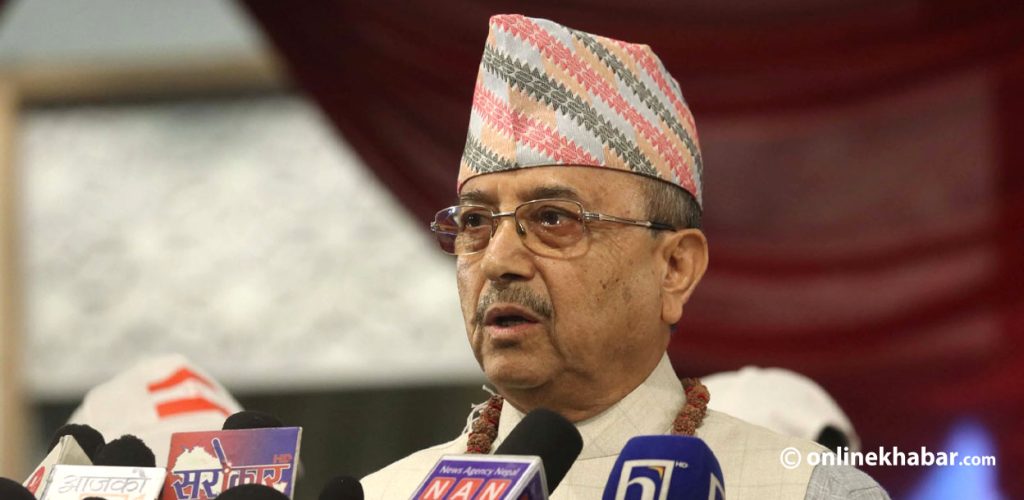
Khadka’s changing role is particularly notable because of his long association with Deuba.
He has served as acting party president, vice president, general secretary, joint general secretary and Central Working Committee member from Deuba’s faction.
Even during the current dispute, Khadka has repeatedly maintained that preserving Nepali Congress unity is more important than securing a position.
Nepali Congress leader Ramhari Khatiwada said Khadka’s decisions should be understood from that perspective.
“Purna Bahadur said he would not even go to the contact office if the Nepali Congress was going to split. Once it became clear that the party would not split, he went to the gathering. For him, unity is important, not the position,” Khatiwada told Onlinekhabar.
Khadka had, however, faced criticism from within the party while serving as acting president.
Critics accused him of failing to effectively perform his responsibilities when Deuba travelled to Singapore for medical treatment, with the Central Working Committee meeting continuing for around one and a half months without reaching a meaningful conclusion.
Khadka has defended himself by saying that he faced criticism precisely because he stood against a split and in favour of preserving party unity.
Khadka’s next move could be the general convention
The national gathering has now shifted the leadership of the faction opposed to the special general convention from Khadka to Koirala.
Khadka had earlier received the signatures collected for the proposed special general convention while serving as acting party president.
The faction subsequently approached both the Election Commission and the Supreme Court under Khadka’s leadership, seeking to invalidate the special general convention.
Following the latest gathering, however, Koirala has been given the mandate to lead the faction’s preparations for the 15th General Convention.
That could leave Khadka with a different political objective.
A leader from the faction believes Khadka may now focus on preparing to contest for the party presidency himself at the general convention.
“Whatever happened before has happened. Now Purna Bahadur will prepare to contest for party president at the general convention,” the leader said.
For now, Deuba remains the central figure around whom the faction continues to organise. But the national gathering has made one thing increasingly clear: as the Nepali Congress moves toward its 15th General Convention, the internal leadership of the faction is no longer as straightforward as it once was.