

Kathmandu, August 21
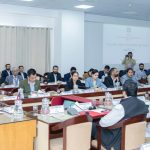
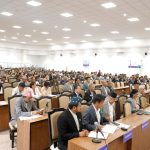
Nepal Medical Council (NMC) has suspended the registration process of 14 foreign doctors after questions were raised over the authenticity of documents they submitted to work in Nepal.
The doctors had come to Nepal to work at hospitals or take up faculty positions at medical colleges.
The issue came to light when the NMC began scrutinising the documents submitted by some of the doctors during the registration process. Among them were “good standing certificates” — documents that confirm a doctor is registered with the relevant regulatory authority in their home country and is eligible to practise medicine.
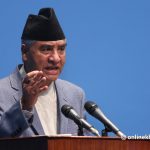
NMC Acting Registrar Dr Dipendra Pandey said the council became suspicious after examining the documents submitted by some of the newly arrived foreign faculty members.
“We reviewed the certificates and other documents submitted by the doctors for registration. Some aspects appeared suspicious, prompting us to conduct a further internal investigation,” Pandey told Onlinekhabar.
The council then sought verification from the relevant authorities in India regarding some certificates submitted by doctors who claimed the documents had been issued by Indian regulators.
The response raised further concerns: the Indian regulatory authority informed the NMC that it had not issued the certificates in question.
Pandey clarified that this does not necessarily mean the doctors themselves were not registered to practise medicine in India. Rather, the concern is that the specific “good standing certificates” submitted for their registration in Nepal may have been fabricated.
“We suspended the registration process after receiving a response that the certificates had not been issued by the concerned council,” Pandey said.
The NMC subsequently expanded its scrutiny and found other documents raising similar concerns. The registration process of 14 foreign doctors has so far been suspended.
The council has also sought written explanations from medical and dental colleges, health science academies and hospitals that recommended the doctors for registration without first verifying their documents.
The concerned institutions may also be required to bring the doctors before the council to verify their identities and documents.
NMC to examine records of around 500 foreign doctors
The discovery has prompted the NMC to widen its investigation beyond the 14 doctors.
The council has formed a five-member investigation committee led by Dr Chhabi Pant to examine the registration status, employment and professional activities of foreign doctors working in Nepal.
Around 500 foreign doctors are currently working in hospitals and medical colleges across the country, according to the NMC. A significant number are employed as faculty members at medical colleges.
The council plans to examine the files of all of them, including their academic qualifications, professional registration documents and good standing certificates.
“We are studying all around 500 files. We have currently suspended the registration process of 14 doctors. How many more will be identified will become clear after the investigation,” Pandey said.
The NMC has also informed the Medical Education Commission about the investigation.
But the investigation is not limited to the authenticity of certificates. The council is also looking into a wider concern over the use of foreign doctors as nominal or “dummy” faculty members at medical colleges.
Concern over ‘dummy faculty’ being used to secure medical seats
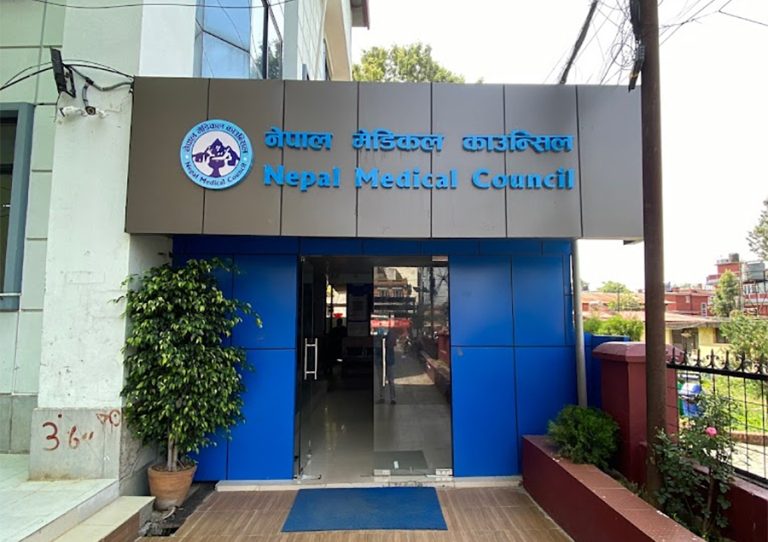
According to an NMC member, some medical colleges may be temporarily bringing foreign doctors into Nepal and showing them as faculty members during inspections conducted to determine student quotas.
The Medical Education Commission considers the number and qualifications of faculty members, among other criteria, when determining seats for MBBS, MD, MS and other medical programmes.
This has raised concerns that some colleges could be bringing in foreign doctors shortly before inspections to show that they meet the required faculty strength and then allowing them to leave once the inspection is over.
Such doctors are commonly referred to as “khadebaba” or dummy faculty.
“Doctors are brought from India, documents are allegedly prepared or falsified, and they are kept at the medical college for a short period so they can be shown as faculty during the commission’s inspection and help secure seats. They then return to India after staying for a few days,” an NMC member said.
According to the member, such practices may become more common as the deadline for determining MBBS seats approaches, with colleges seeking to demonstrate that they have the required number of faculty members before inspection teams arrive.
The NMC has now decided to investigate medical colleges to determine whether foreign doctors have been used in this manner.
“We had heard about the use of dummy faculty, but this incident has confirmed the concerns,” the member said.
The council has warned that medical colleges could also face action if the investigation finds that foreign doctors were listed as faculty merely to increase or retain student seats without actually carrying out their academic responsibilities.
The investigation into the 14 doctors is therefore expected to determine not only whether the documents submitted to the NMC were genuine, but also whether some medical colleges have been misusing foreign faculty to meet regulatory requirements on paper.