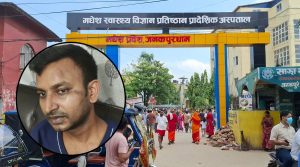

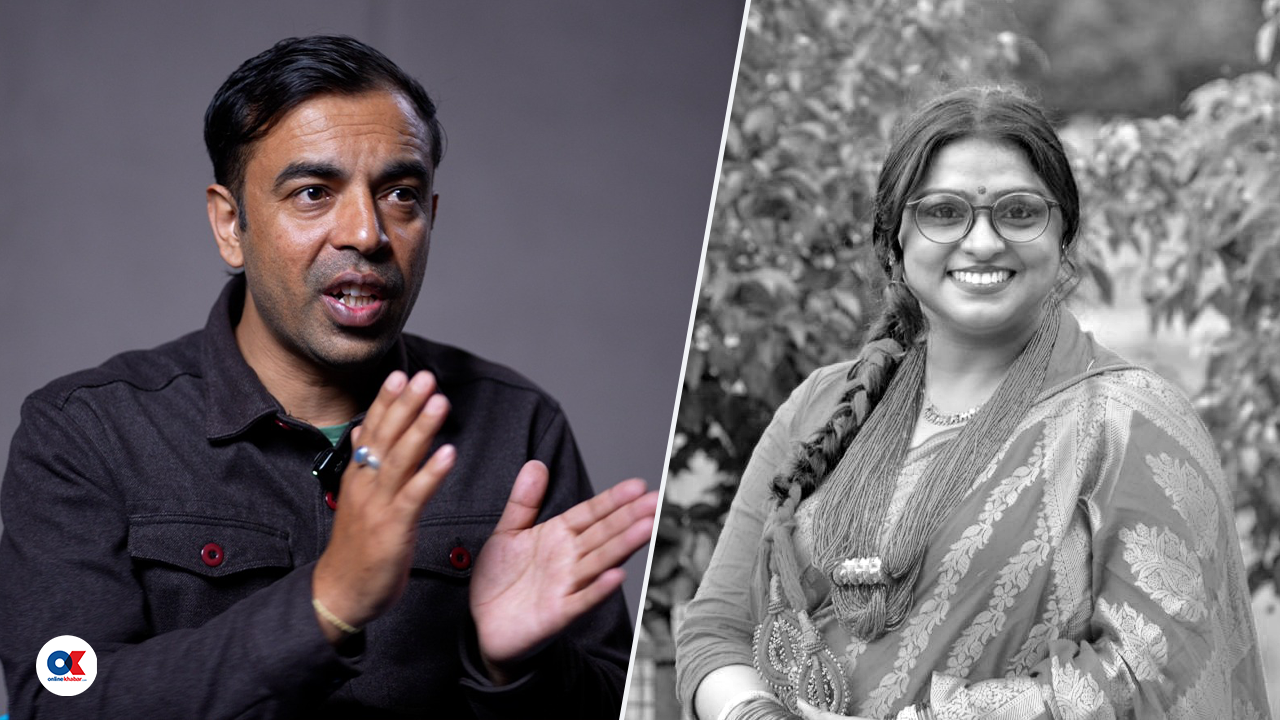
Subash Parajuli of Gothatar, Kathmandu, took his wife Manita to the hospital when she went into labour. She gave birth to a daughter, but Manita passed away before she could even see her daughter’s face.
Subash is suspicious about the cause of the death.
“My wife died due to medical negligence,” he says to Onlinekhabar.
Clutching all available medical documents, Subash has been running from office to office seeking answers about his wife’s death. But his demands for justice have remained unheeded.
“This whole year I spent seeking justice, I clearly understood the disorder within the health sector,” Subash says. “The powerful people of the institutions I reached out to seek justice caused me trouble.”
What happened?
The incident occurred on December 11, 2024. At around 1:00 PM, the 41-year-old Manita experienced severe pain in the upper part of her abdomen. She was 34 weeks pregnant at the time.
Due to the pain, Manita panicked and tried calling Dr Jyotsna Sharma, but it went unanswered. Manita had been under Dr Jyotsna’s regular consultation, and the doctor had told her to call immediately if any problem arose.
Assuming the doctor was busy, Manita sent an SMS, “Doctor, please pick up the phone. I’m in extreme pain. Where should I come?”
Manita’s first pregnancy had ended in miscarriage at five months. The couple was very cautious this time. Fearing something might happen to the baby, Subash and Manita headed toward the hospital while continuously trying to call the doctor, but received no response.
The Parajuli couple had been undergoing checkups at Everest Hospital in New Baneshwor. However, based on Dr Jyotsna’s advice, they had chosen Kathmandu Medical College (KMC) in Sinamangal for delivery due to convenience and accessibility.
Dr Jyotsna works at both Kathmandu Medical College and Everest Hospital. After the couple entered KMC, Dr Jyotsna finally called and instructed them to come to Everest Hospital instead, assuring that she would also come there.
They rushed to Everest Hospital.
“Even after waiting for hours in the emergency room, Dr Jyotsna did not arrive,” Subash recalls.
At the emergency room, Manita underwent an ultrasound and blood tests. Her blood pressure was 180/120, which is extremely high.
After nearly two hours, Dr Jyotsna arrived.
“When we saw her, our confidence level became very high,” Subash says. “But without any consultation with us, my wife was taken upstairs for surgery.”
After some time, surgery was performed. Manita gave birth to a daughter. However, her condition did not improve, and her blood pressure remained high.
Subash questioned the doctor, “How could you perform surgery when her blood pressure was so high?”
Dr Jyotsna replied that medication had normalised the blood pressure before surgery, but it rose again after the baby was delivered.
Soon after, Subash heard Dr Jyotsna repeatedly calling out “Manita, Manita, Manita…” from outside. The doctor then informed him that Manita had developed seizures and had been given medication, and that she might need to be shifted to the ICU if her condition did not improve.
Seizures occurring after childbirth, characterised by sudden convulsions, unconsciousness, and body stiffness, are known as postpartum preeclampsia.
Manita was quickly shifted to the ICU. Subash followed, but by then Dr Jyotsna had already left the hospital.
“The pain she had when we first came to the hospital did not subside even after the baby was delivered,” Subash says tearfully.
At 1:30 PM on December 11, Manita’s condition worsened to the point that CPR had to be performed. Subash says that reports from 10 AM and noon had already indicated problems, but the hospital never informed him.
“I trusted the doctor and took my wife to Everest Hospital because we had decided two years ago to deliver under Dr Jyotsna’s supervision,” Subash says. “But once her condition became critical, they told us to refer her to another hospital.”
Only then were they told that her liver had failed and her kidneys were also affected.
Following Dr Jyotsna’s advice, the family decided to take Manita to HAMS Hospital. At HAMS, doctors revealed that she had already developed HELLP syndrome and preeclampsia during pregnancy, conditions that cause blood-clotting issues and liver damage.
Manita was placed on a ventilator.
Doctors told the family, “Organs that have already failed cannot be restored. We can only try to prevent further deterioration.”
All efforts failed. After seven days on the ventilator, Manita passed away.
“She never got even a moment with the daughter she gave birth to,” Subash says. “By the time we reached HAMS, it was already too late. Due to medical negligence, she left the world within days.”
The harassment Subash faced
After completing Manita’s funeral rites, Subash learned from HAMS doctors that the complications could have been avoided with proper treatment.
He consulted several doctors he knew and eventually decided to pursue a legal battle for medical negligence.
“If proper treatment had been given on time, this situation would never have arisen,” Subash says. “The doctor neither informed us during treatment nor during follow-ups. Instead, she left an ICU patient and walked away.”
He adds that after preeclampsia, magnesium sulfate must be administered immediately, often called a life-saving drug. Manita did not receive it in time.
Subash requested treatment records and wrote applications to Everest Hospital seeking clarification on the cause of death, but received no response. He also requested preservation of CCTV footage, only to be told that no footage existed.
He then approached the Nepal Medical Council, filing a complaint on February 11 2025, alleging gross negligence by the treating doctor.
Council officials told him a decision would be made within three months. He also went to the Ministry of Health, but officials redirected him back to the Council, saying it was not under their jurisdiction.
Six months passed with no hearing. Every few weeks, Subash would visit the Council. Sometimes he was told expert opinions had not yet been taken; other times, that investigations were ongoing.
Friends warned him, “The Council exists to protect doctors. Ordinary people never get justice there.”
Still, Subash continued knocking on the doors of the council.
A Shocking Decision
On September 8, 2025, Subash received the Council’s decision by email.
“Since all treatments were conducted according to guidelines, no negligence or carelessness is observed,” the mail reads.
The email shocked Subash, and he immediately replied to the email, requesting a review. He later filed a formal review application, arguing that the decision was one-sided and ignored evidence he had submitted.
Carrying his infant daughter, he continued visiting the Council. Officials kept redirecting him to one another. He claims that even two months later, Council Chair Dr Chopalal Bhusal refused to endorse the review application.
Eventually, on October 18, 2025, after relentless effort, the application was forwarded to the Professional Conduct Committee.
“When victims go seeking justice, they are instead subjected to further suffering,” Subash says. “Council officials will go to any extent to protect doctors.”
Divided expert opinions
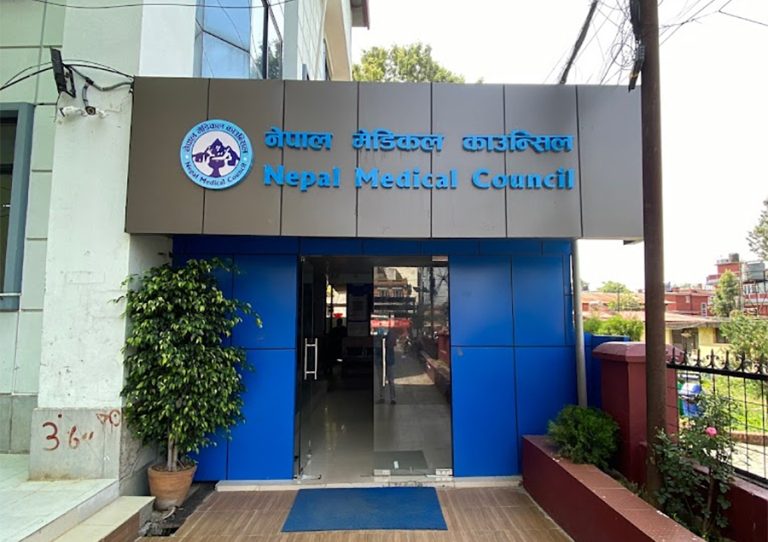
In Suvash’s case, the Ethics Committee sought opinions from five experts. The third expert clearly identified medical negligence, citing failure to properly manage high blood pressure, preeclampsia, and delayed administration of magnesium sulfate.
Despite this, the conclusions were identical, apparently copied and pasted.
According to high-level Council sources, after one expert identified negligence, two more experts were added.
“The investigation does not appear deep or impartial,” the source says.
The Ethics Committee itself did not issue any conclusion, and the full Council meeting made the decision solely based on expert reports.
Allegations of abuse of power
Subash alleges that the Council, established to regulate doctors and ensure justice, is instead protecting them.
He further alleges that Dr Jyotsna’s husband, Dr Sanjiv Tiwari, the General Secretary of the Nepal Medical Association, abused his influence to protect his wife.
Subash claims hospital administration backed off from providing documents after receiving calls from the Association.
Dr Tiwari, however, denies all allegations, stating that he neither interfered nor influenced the case and is ready to face any action if proven otherwise.
Turning to the courts
After losing hope in the Medical Council, Subash has knocked on the doors of the judiciary.
“I have now approached the Consumer Court. The investigation is ongoing,” he says. “If justice exists in this country, I will get it, even if I have to go up to the Supreme Court.”