Kathmandu, July 1
Given the risk of monsoon-related disasters, the Nepali Army has put forward a special three-phase preparedness plan.
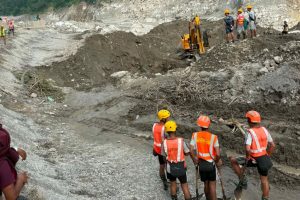
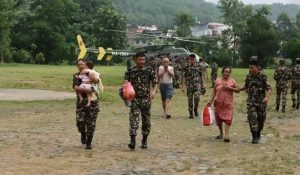
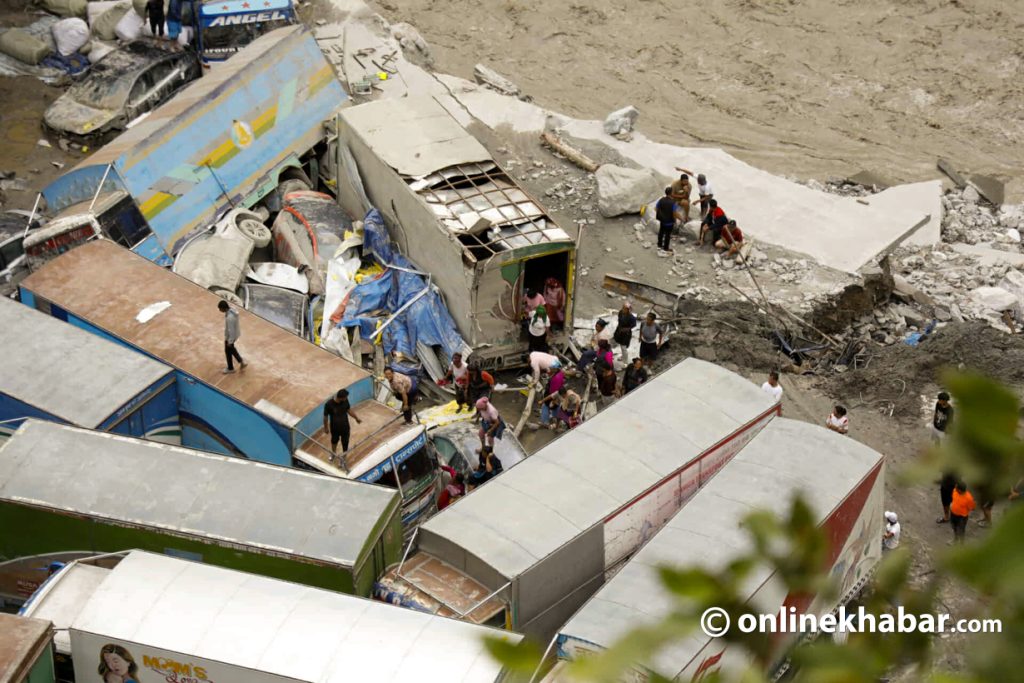
The army says it has mobilised its personnel and resources with heightened alertness to minimise potential damage from floods, landslides, and other natural disasters, and to enable immediate rescue operations.
According to Army Spokesperson Rajaram Basnet, the first phase, preparation and planning, has already been completed. As part of this, the army conducted an in-depth study of past disasters and revised its plans accordingly. Various joint exercises, including “Hatemalo,” were carried out from army headquarters down to the lowest-level units to keep the force ready.
Under the second phase, the army says pre-deployment of resources has been accelerated. Companies and platoons have been positioned for immediate mobilisation, while composite search-and-rescue teams with relief materials are on standby at the battalion level.
To address the risk of road networks being blocked by floods and landslides, Bailey bridges have been kept on standby in Gajuri (Dhading), Bharatpur (Chitwan), and Bara. Spokesperson Basnet said mechanised bridges and field hospitals equipped with emergency medical kits have also been kept ready in Kathmandu.
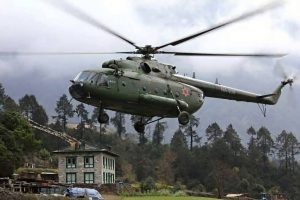
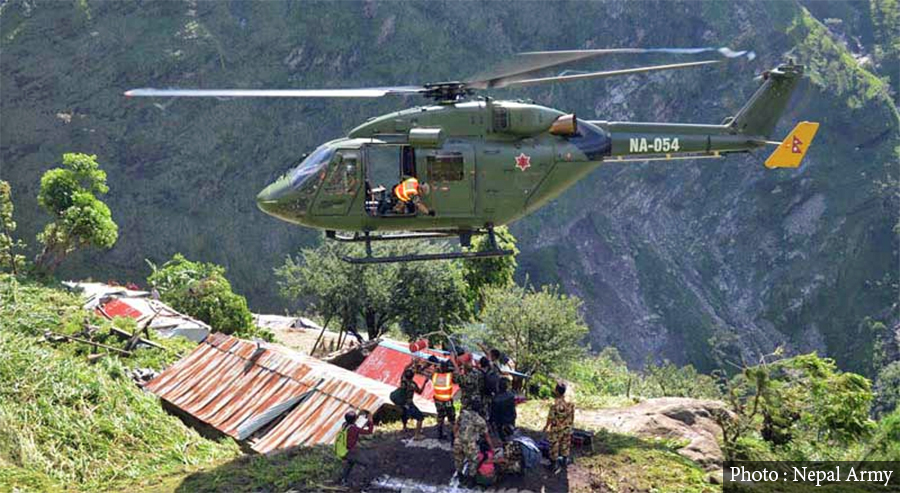
The army has also made special preparations for aerial rescue. Helicopters have already been deployed in Itahari and Surkhet, while two additional helicopters are on standby in Kathmandu, ready for immediate deployment depending on weather conditions. Search-and-rescue teams have been mobilised at airports, and a special aerial rescue exercise was recently conducted at the Bagmati Dam.
Regarding the third phase, Spokesperson Basnet said the army has trained volunteers through community disaster response training. He added that the army remains committed to improving disaster response by coordinating with and collaborating with these volunteers and relevant agencies.
The army has requested the general public to regularly follow weather forecasts issued by the government and to comply with instructions issued.
Basnet also appealed that in the event of a disaster, people should immediately inform the local or district disaster management committee, the nearest police unit, or the Nepali Army’s Public Relations and Information Directorate.