Kathmandu, July 1
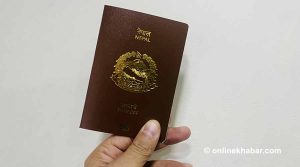
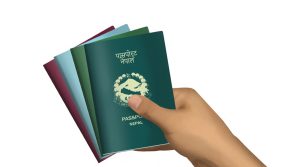
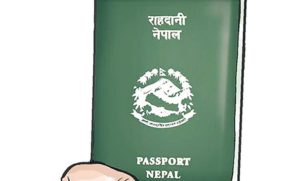
After days of uncertainty, Nepal has decided that two German companies will proceed with printing the country’s passports under the existing procurement contract.
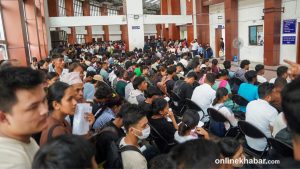
The decision comes after the stock of printed passports ran low following the filing of a corruption case at the Special Court over the passport procurement process. The Ministry of Foreign Affairs has now confirmed that German firms Mühlbauer and Veridos will continue the project.
“Once the current stock of around 50,000 passports is exhausted, the newly contracted companies will begin printing,” a senior official at the Ministry of Foreign Affairs said. “Until then, there is an understanding that the ongoing case at the Special Court will not affect the implementation of the passport contract.”
According to the Department of Passports, both companies have already completed the installation of equipment and data management systems. Of the two contractors, Veridos has already printed around 500,000 passport booklets and is expected to receive payment of approximately Rs 420 million.
Mühlbauer, meanwhile, is responsible for equipment installation, system management and maintenance. Since most of its assigned work has already been completed, the company will receive payment once passport printing officially begins.
Nearly two weeks of uncertainty
The uncertainty began last week after advisors and staff at the Prime Minister’s Office questioned officials from the Department of Passports over what they described as an unusually long delay in passport printing that was affecting public services.
On the same day, the Prime Minister’s Office also summoned the Chief Commissioner of the Commission for the Investigation of Abuse of Authority (CIAA), Prem Kumar Rai, along with other commissioners, asking why corruption charges had not been filed despite what the Prime Minister’s team described as evidence of large-scale irregularities.
That night, the CIAA arrested Department of Passports Director General Tirtha Raj Aryal, Director Sunil Kumar KC, and Manindra Raj Malla, the local facilitator for French company Mühlbauer. Siddhartha Thapa, the Nepal representative of Veridos, later became unreachable while under CIAA investigation.
IDEMIA’s efforts to retain the contract
A week after the questioning at the Prime Minister’s Office, the CIAA filed a corruption case at the Special Court, seeking Rs 10.13 billion in damages over alleged irregularities in the passport procurement process. Following the case, French company IDEMIA—which had participated in the bidding process but was not selected—reportedly sought either to regain the contract or continue printing passports under the previous arrangement.
IDEMIA emerged after French company Oberthur, which had earlier won Nepal’s Machine Readable Passport (MRP) printing contract, merged into the company. It has been printing Nepal’s passports for nearly 15 years.
In recent years, as the government failed to finalise a new passport contract, IDEMIA continued supplying passports through variation orders. Most recently, it received approval from the government led by then Chief Justice Sushila Karki to print around 700,000 additional passports.
Although IDEMIA participated in last year’s international tender, it failed to secure the contract. It subsequently sought a review from the Department of Passports, and after that request was rejected, filed a complaint with the Public Procurement Review Committee. Another petition filed by the company remains pending before the Supreme Court.
German bid offered lower price
Until now, IDEMIA had been supplying Nepal’s passports for US$10.13 per passport, down from the original contract price of US$10.45.
The German consortium of Mühlbauer and Veridos won the new contract with a bid of US$8.61 per passport, while IDEMIA had offered US$9.93. The French company has argued in its complaints that authorities failed to properly evaluate the discounted pricing it had proposed.
The CIAA has alleged in its case before the Special Court that changes made to the tender specifications resulted in a lower-quality passport. However, officials involved in the procurement process have rejected that claim, arguing that the quality of passport booklets is directly linked to the payment structure agreed under the contract.
Veridos, which has already received around Rs 180 million, has completed printing 500,000 passport booklets and is seeking additional payment. That payment process has reportedly stalled at the Nepal Rastra Bank. Mühlbauer, on the other hand, will receive payment for equipment installation and maintenance only after passport printing officially commences.