Kathmandu, June 25
Tea factories that had been shut down due to export disruptions have resumed operations after the government assured tea producers that their concerns would be addressed through a special task force.
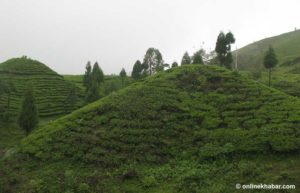
Tea processing plants in Jhapa and Ilam had suspended operations from June 15 and June 18, respectively, following obstacles imposed by India on tea exports. However, the factories have begun reopening after the government pledged to resolve the issue.
According to Shiva Gupta, Senior Vice President of the Nepal Tea Producers Association, all 30 CTC tea factories in Jhapa resumed operations on Thursday after the Prime Minister’s Secretariat formed a high-level task force to address export-related problems.
Gupta said factory owners decided to restart production after the government showed seriousness in responding to their demands. He added that tea factories in the hill districts were also in the process of reopening and were expected to resume operations within a day or two.
To address challenges facing the tea sector, the Prime Minister’s Secretariat has established a task force comprising representatives from several ministries and government agencies. The committee has been instructed to submit a report within two weeks outlining short-, medium-, and long-term solutions.
Tea entrepreneurs from Jhapa and Ilam are currently in Kathmandu, holding discussions with the task force and other stakeholders.
The task force includes senior officials from the Prime Minister’s Office, the Ministries of Finance, Home Affairs, Foreign Affairs, and Agriculture, as well as the Department of Customs, Department of Food Technology and Quality Control, Department of Weights and Measures, and the Tea and Coffee Development Board. An under-secretary from the Ministry of Industry, Commerce and Supplies has been appointed as the member secretary.
The crisis began after India’s Tea Board introduced a new Standard Operating Procedure (SOP) on May 1, requiring laboratory testing for every consignment of Nepali tea entering India. The rule required exporters to wait around 15 days for test results and pay a fee of INR 11,500 per truck, causing exports to halt for 21 days.
Although Indian authorities later agreed in writing to conduct only random sampling instead of testing every truck, exports were disrupted again when officials began collecting samples directly from exporters’ warehouses and instructed that tea shipments should not move until test reports were received.
As a result, nearly 100 tea factories were forced to shut down, leaving green tea leaves unprocessed in plantations and causing estimated losses of around Rs 20 million per day. More than 100,000 workers and 30,000 farmers were directly affected.
According to association data, Nepal produces more than 20 million kilograms of CTC tea and 6.5 million kilograms of orthodox tea annually.
Gupta said factories have reopened primarily to process fresh green tea leaves and prevent further losses to farmers, while processed tea will be stored in warehouses until export procedures become easier and more predictable.