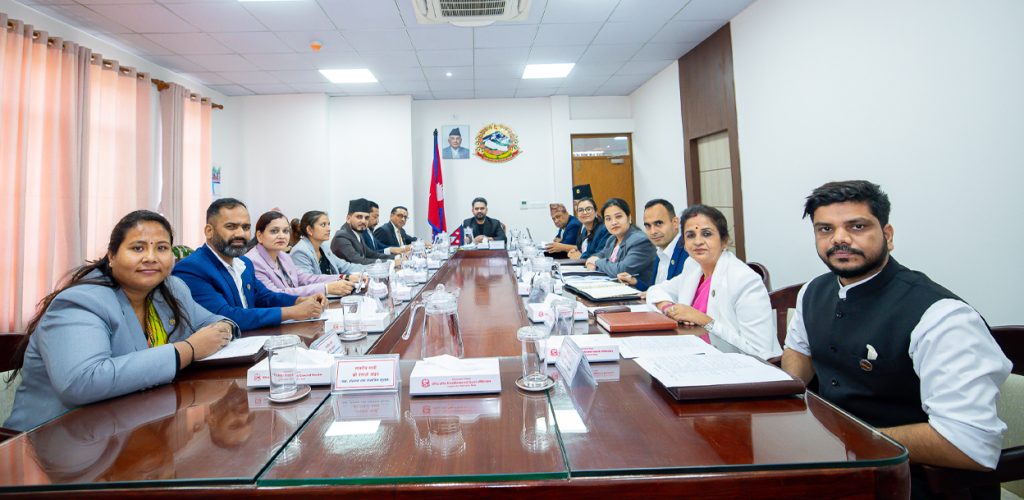
Nepal has long reeled from leaders who were all talk and little action. After almost 20 years of that pattern, we have reached a point where we face the opposite problem: a leader who does not believe in dialogue and communication at all, choosing instead to govern through status, mouthpieces, and algorithms.
It has been almost a month since the Nepalese emphatically elected the RSP and its prime ministerial candidate, Balendra Shah, to the top spot. Although there may be disagreement on the exact weightage, there is no denying that the victory was propelled partly by frustration with the old guard and partly by the hope of a new beginning.
Achievements deserve recognition
After a long hiatus, Nepal finally secured a government with a concrete mandate. This mandate was to clean up a decades-long mess in governance, lapses in financial management, doldrums in foreign policy, nepotism, and a gross lack of accountability and transparency across every sector.
Completing the full government line-up with reduced line ministries and prioritising “inclusion” was an excellent first step. Barring a few exceptions, the government is well-balanced in terms of age, technocratic personnel, gender, and ethnic and geographical representation.
Functionally speaking, this government is doing great in establishing its early presence and taking steps towards good governance. The 100-point commitment, which was in sync with its election manifesto, is a fundamental but necessary step in establishing public trust in the party in power.
Investigations into the abuse of political and financial power are another step that has raised public hope, although the government has shown it is ready to walk a thin line between proper investigation and a “purge”. Arresting the political and systemic elites of the past received a resounding thumbs-up from the people, even if the haste of those actions was ultimately judged premature by the legal system.
Breaking the syndicate among “health check-up” corporates, the decision not to hang the PM’s photograph in every government office, the reduction in VIP culture, and prudence in government expenditure can also be viewed as victories for people-oriented governance.
Publishing the SEE results within such a short span is an achievement deserving of huge accolades. It highlighted just how inefficient our past management truly was.
However, it is still too early to comment holistically on the performance of the government. Much will become clearer after the federal budget is presented on the 15th of Jestha and during the ensuing budgetary session of parliament.
Alarms: Democracy requires consultation
Things have not been completely rosy, though no one expects them to be given such a monumental shift.
The first alarm came from the Ministry of Education, which, without feeling the need to consult anyone, published a decree banning bridge courses and preparatory classes. Although the decree survived a mere two hours, this was highly immature behaviour from a government backed by such an astounding mandate. The fact that the government did not feel the need to listen to the public, engage in dialogue with those who would be impacted, or follow due process was quite alarming.
The seam between words (prioritising business and entrepreneurship) and action (outright banning) split right there.
The exodus of two ministers within a short span also served as a reminder that nothing is permanent in politics, though, admittedly, there will always be two schools of thought on that issue.
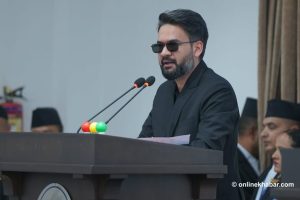
A major dent in the relationship between the people and the government occurred when the “powerful” PM did not think it wise to address the public via parliament. As much as citizens were fed up with the old guard filibustering for hours on end, people still expect to hear from their leader to understand their intent and priorities. Sadly, that did not happen.
As the saying goes, two wrongs do not make a right. The PM should have spoken to the people, in some shape or form. Instead, he chose to release an upgraded version of his old rap song. While many might have been highly interested in listening to his rap about the future before his rise to power, the timing now feels misplaced.
The government’s approach to dealing with rising fuel prices also leaves many unanswered questions.
Enforcing the “100 Rs” tax law at the borders was a decision dictated from within the four walls of Singh Durbar, rather than from the realities of people’s day-to-day lives. Given how powerful the mandate is, people are now afraid to question a PM who, in his rare election speeches, made a point of mainstreaming Madhesh to Singha Durbar.
Then came minor alarms regarding the feudalistic behaviour of certain responsible Members of Parliament. While this is something to note, it shouldn’t be taken too seriously; such behaviour is bound to happen occasionally, even under ideal conditions.
The bulldozing fiasco: Efficiency at the cost of empathy
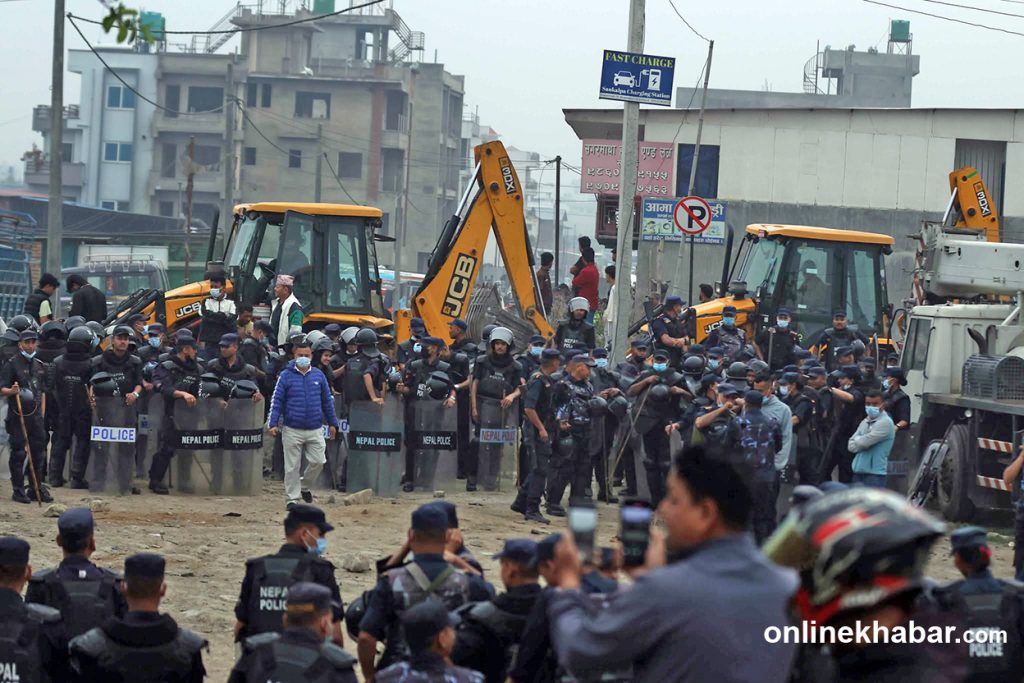
As mayor, Balen tried to clear squatter settlements but failed to secure proper support from the federal government of the time. Now that it falls within his direct ambit, he has made it his top priority.
Where do we even begin with this?
The squatters were not given adequate time to evacuate. The rehabilitation centres were poorly planned, as evidenced by the disastrous and often inhumane conditions in which people are kept. Furthermore, the government used the full force of the media, tabloids, and social platforms at its disposal to villainise the residents, instead of treating them as citizens in need of humane policy solutions.
By highlighting the wealth of a few outliers, government spokespeople on social media painted a picture suggesting everyone there was as wealthy as ministers, implying they genuinely enjoyed living through floods, hooliganism, dust, and filth just for a few square feet of land. People were photographed leaving their settlements as if they were criminals. Through selective media access, the government clearly wants the public to follow a manufactured narrative.
For now, the public seems to be enjoying the decisive action. Remorse will only come later, when the spotlight eventually shifts onto them. A statement currently circulating on social media captures this perfectly: You stay quiet when the government comes after others, to the point that when the government comes after you, there will be no one left to support you.
The entire squatter fiasco seems to stem from the PM’s own unfinished business. What would have been lost if the government had taken its time to make the necessary arrangements, distinguish genuine squatters from opportunists, and ensure the dignity of fellow Nepalese?
Some ardent supporters of the RSP have been heard arguing that due process takes too long, and that nothing got done while the old parties were in power. But please note: the public voted for the RSP precisely because the old parties failed to deliver correctly. The RSP could have done this differently by learning from past mistakes, utilising its governance acumen, and leveraging its resounding mandate.
A country where its own people are vilified based on their economic status is not the country we envisioned. Upholding the dignity of each and every citizen must be the topmost priority of the government. Period.
Order, order, ordinance
There is absolutely no logic in proroguing parliament to rule through direct ordinances. There cannot be, particularly when you have so many representatives willing to sign off on any law you propose. One cannot sense anything short of autocracy in this entire ordinance chapter.
This is fundamentally wrong. Ruling by ordinance demeans the sheer value of democratic institutions.
Someone, please remind the PM and the party president that this is a five-year government, not a five-month one. As much as I hate to say it, a government built on the frustration and urgency of social media is acting exactly like its source.
The government would be far better off taking things steadily, listening more to the public, following the rule of law, and empathising with citizens. The Nepalese people are already fed up with the successive past governments. We cannot let history repeat itself this time around; otherwise, we risk pushing ourselves toward unforeseen consequences that will benefit no one.
To start with, those in power need to listen to the people more—including those who might differ with them, criticise them, dislike them, or counter their initiatives. They are people, after all.
We have long fought wars for a government of the people, by the people, and for the people.
Democracy is not just about winning elections; it is inextricably intertwined with consultation, transparency, and due process. For all the beauty of democracy, one must realise it is a highly demanding proposition that requires patience and adherence to processes you may not always like.
As it stands, the government is quickly becoming “off” the people, “bye” the people, and detached “from” the people.