
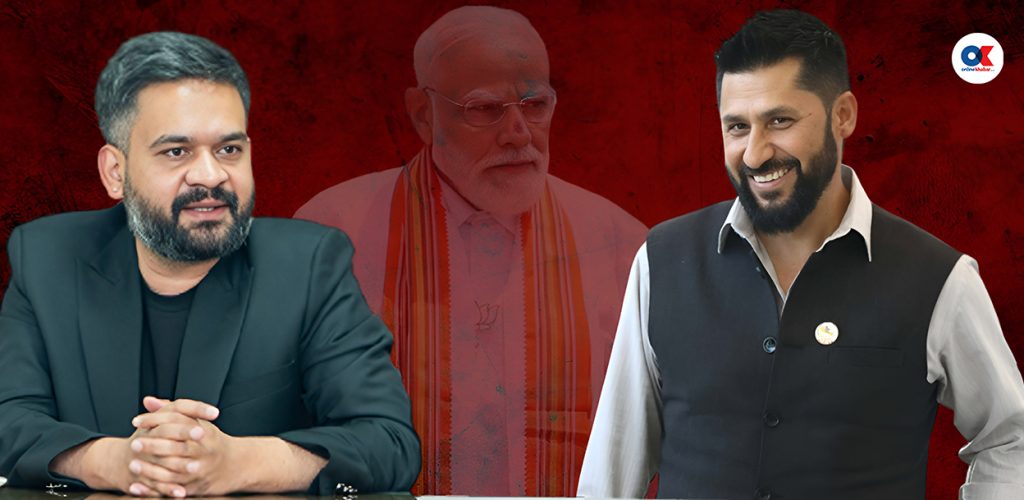
While there has been no progress regarding Prime Minister Balendra Shah’s foreign visit, Rabi Lamichhane, the chairman of the Rastriya Swatantra Party (RSP), is preparing to travel to India on June 1. Since the Prime Minister is not a party chairman, Chairman Lamichhane is set to visit even before Balendra Shah.
Experts have stated that the visit of a party chief prior to that of the head of government is not something to be suspected.
Sanjeev Humagain, an expert in politics and international relations, explains that such visits are neither a novel experiment nor a structural departure, noting that international diplomacy routinely accommodates these engagements as established practice.
“Granted, such developments are often sensationalised as imminent signs of a government’s collapse, and we have certainly seen our share of conspiracy theories propagated in the past. Yet, this is simply the standard course of political affairs and should be viewed without alarm,” Humagain says to Onlinekhabar.
However, while Lamichhane’s visit appears routine in his capacity as party chairman, the government seems to have overlooked the opportunity to elevate its strategic significance.
Humagain points out that even in the absence of an official prime ministerial visit, it would have been far more impactful had Chairman Lamichhane travelled as an emissary of the current coalition.
“Had the government treated this not merely as a party-level engagement, but instead framed it to represent the State—perhaps even accompanied by the Foreign Minister- it would have carried significantly more diplomatic weight,” Humagain notes.
There is ample historical precedent for leaders of ruling or major political parties visiting India ahead of an official trip by a sitting prime minister.
For instance, in February 2010, CPN-UML Chairman KP Sharma Oli travelled to New Delhi to engage with the Indian establishment regarding Nepal’s peace process, political stability, and inter-party consensus. At that time, senior UML leader Madhav Kumar Nepal was the Prime Minister.
During Nepal’s turbulent transition, marked by the peace process and the drafting of the new constitution, Oli—then an influential leader handling the diplomatic reins for his party—undertook the trip to India. During the visit, he held talks with top officials, including the then Indian External Affairs Minister S.M. Krishna.
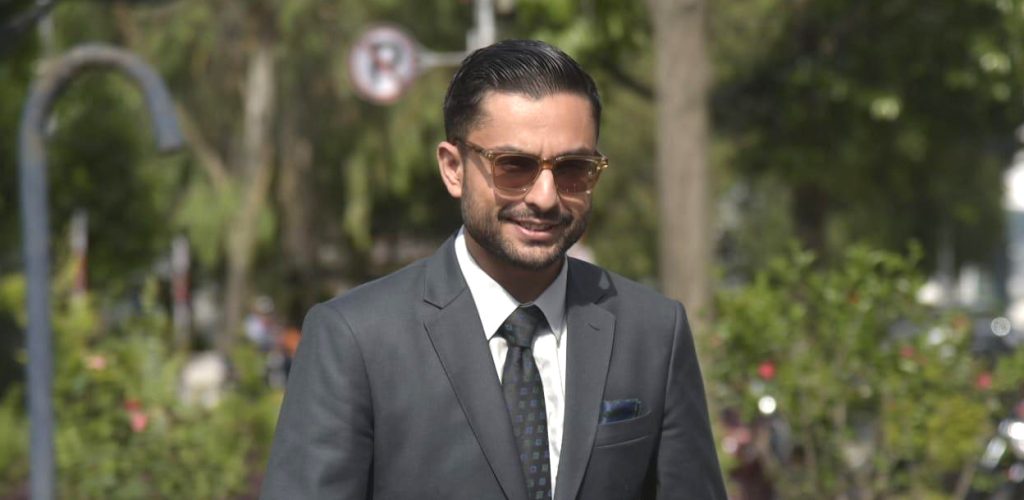
Government spokesperson and Education Minister Sasmit Pokharel stated that RSP Chairman Lamichhane is embarking on his India visit independently. While briefing on the cabinet decisions last week, he clarified that there is no connection between Chairman Lamichhane’s travel and Prime Minister Shah.
“The Prime Minister will travel to India, or any other country for that matter, when the time is right,” Spokesperson Pokharel remarked. “It is not that he is avoiding India specifically; he is simply not travelling abroad at all right now. Our workload during these first hundred days is immense, and our primary focus at the moment is strictly on governance. Therefore, the Chairman is making this trip entirely in his own capacity.”
During Nepal’s turbulent transition, marked by the peace process and the drafting of the new constitution, Oli—then an influential leader handling the diplomatic reins for his party—undertook the trip to India. During the visit, he held talks with top officials, including the then Indian External Affairs Minister S.M. Krishna.
Government spokesperson and Education Minister Sasmit Pokharel stated that RSP Chairman Lamichhane is embarking on his India visit independently. While briefing on the cabinet decisions last week, he clarified that there is no connection between Chairman Lamichhane’s travel and Prime Minister Shah.
“The Prime Minister will travel to India, or any other country, when the time is right,” Spokesperson Pokharel remarked. “It is not that he is avoiding India specifically; he is simply not travelling abroad at all right now. Our workload during these first hundred days is immense, and our primary focus at the moment is strictly on governance. Therefore, the Chairman is making this trip entirely in his own capacity.”
Former Ambassador to India Lok Raj Baral maintains that such engagements should be viewed as entirely standard and commonplace.
“This trip ought to be taken in stride. We have plenty of historical precedents where party leaders have travelled abroad before the sitting Prime Minister,” he says.
Baral analyses that these visits are highly productive for ruling parties to forge ties with neighbouring countries and their political establishments.
“To cultivate a solid rapport with the ruling party of any nation, these dynamics are essential. I observed these very patterns firsthand during my tenure as ambassador to India,” Baral says.
With the Prime Minister’s trip currently stalled, the Chairman now has a prime opportunity. This marks the first international visit by the leader of the RSP since the party secured a near two-thirds majority in the House of Representatives following the March 5 elections.
According to sources at the Ministry of Foreign Affairs, Lamichhane is scheduled to depart for India on May 31 and return on June 2. However, neither side has officially announced the itinerary. Insiders suggest that during his visit, Lamichhane is expected to meet with Indian Prime Minister Narendra Modi, External Affairs Minister S. Jaishankar, National Security Advisor Ajit Doval, Minister for Road Transport and Highways Nitin Gadkari, Foreign Secretary Vikram Misri, and Bharatiya Janata Party (BJP) leader Nitin Nabin, among others.
Previously, India had extended an invitation to Prime Minister Balendra Shah. Indian Prime Minister Narendra Modi had sent a congratulatory message to Balen, alongside an invitation to visit New Delhi. Yet, the Prime Minister’s official trip to India remains unscheduled. Following Shah’s swearing-in ceremony as Prime Minister on March 27, Prime Minister Modi had offered his congratulations and officially invited him for a state visit.
However, the RSP quickly issued a press release clarifying that the Prime Minister would abstain from any foreign travel for at least his first year in office. This stance likely explains why no official visits have been scheduled, whether to India or any other nation.
During the first two months of his administration, Prime Minister Shah has maintained a distinctly rigid posture on diplomatic engagements. The Indian Ambassador to Nepal, Naveen Srivastava, had sought a personal audience with the newly appointed Prime Minister to extend his congratulations—a gesture that had practically become standard protocol in the past. Shah, however, upended this custom of holding individual audiences with foreign envoys by meeting with them collectively instead. Analysts viewed this move as a clear departure from the traditional practice of granting special precedence to India.
The diplomatic friction intensified on May 3, 2026, when the Ministry of Foreign Affairs issued an official statement following India’s announcement regarding the operationalisation of a pilgrimage route to Kailash Mansarovar via Lipulekh. The ministry reiterated that Limpiyadhura, Lipulekh, and Kalapani—all territories east of the Mahakali River—remain integral parts of Nepal, prompting the government to dispatch formal diplomatic notes of protest to both New Delhi and Beijing.
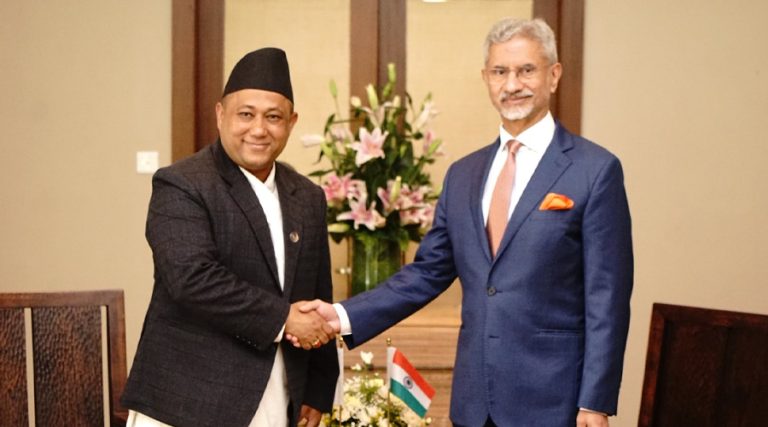
The culmination of these brewing tensions led to the abrupt cancellation of Indian Foreign Secretary Vikram Misri’s scheduled two-day official visit to Nepal, which was set to begin on May 11, 2026. Misri’s trip had originally been finalised following a sideline meeting between Nepal’s Foreign Minister Shishir Khanal and Indian External Affairs Minister S. Jaishankar in Mauritius back in late March.
The primary objective of the visit was to extend an official invitation to Prime Minister Shah for a state visit to India and to deliberate on various facets of bilateral relations. However, sources indicate that the trip was called off after Balen Shah declined to grant an audience to Misri.
This uncompromising posture by Prime Minister Shah does not appear to be exclusive to India. In April 2026, Sergio Gor, U.S. President Donald Trump’s special envoy for South and Central Asia, arrived in Nepal. Gor, who also serves as the U.S. Ambassador to India, is considered a close confidant of Trump. Yet, Prime Minister Shah refused to meet with him as well.
Before this, a similar incident had stirred discussion when U.S. Assistant Secretary of State Samir Paul Kapoor was also denied a meeting with Shah. While the Prime Minister’s secretariat cited a demanding schedule, observers interpreted the snub as the assertion of a new, deliberate diplomatic protocol.
Amidst the standstill over the Prime Minister’s travel plans, the Foreign Minister’s scheduled trip to India was also derailed. Foreign Minister Shishir Khanal was set to depart for India on May 31; however, his visit was called off after the Indian government postponed the International Big Cats Alliance conference, which was slated for June 1. This summit was designed to run concurrently with the Fourth India-Africa Forum Summit.