
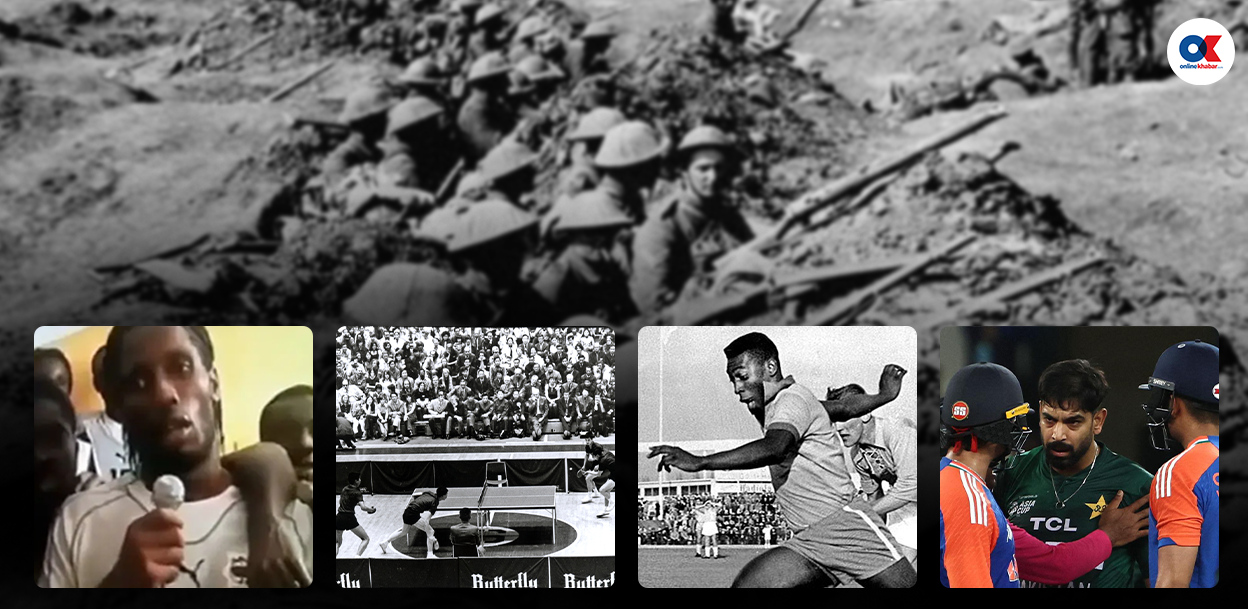
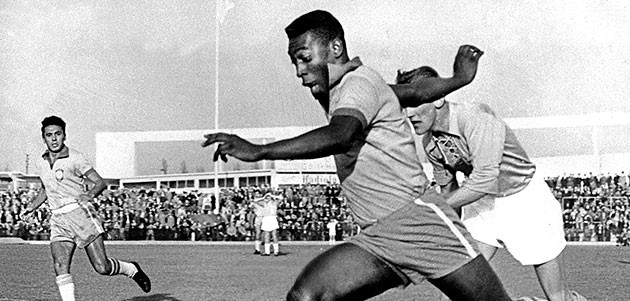
In the late 1960s, legendary footballer Pelé played for the famous Brazilian club Santos FC, which frequently toured the world for friendly matches.
During one such tour, Pelé’s team reached Nigeria, where a civil war was underway. To allow Pelé to play, both sides agreed to a 48-hour ceasefire. As a result, the friendly match was held peacefully in a region otherwise tense due to conflict, and spectators watched the game without fear.
In 1971, during the World Table Tennis Championship in Japan, American player Glenn Cowan mistakenly boarded a bus carrying the Chinese team. The Chinese players treated him warmly, prompting the Chinese government to invite the US table tennis team to visit Beijing.
Accepting the invitation, the American team travelled to China, played exhibition matches, toured the Great Wall of China, and interacted with Chinese students and factory workers. At a time when the United States and China had no diplomatic dialogue due to the Cold War, this episode helped initiate improvements in bilateral relations. The following year, then US President Richard Nixon visited China, paving the way for the normalisation of ties between the two nations.
In the Ivory Coast, a civil war had been ongoing since 2002, dividing the country between north and south and leaving citizens living in fear. The nation qualified for the FIFA World Cup for the first time in 2006, sparking nationwide celebration.
Star footballer Didier Drogba, who led the team to qualification, knelt before television cameras and appealed to the nation: if the country could unite for football, it could end the war. The video spread nationwide, encouraging both sides to enter talks and agree to a ceasefire.
Until a few years ago, despite political tensions, India and Pakistan continued to face each other on cricket fields in a friendly spirit. Players from both sides would shake hands and embrace like competitors from any other teams.
Pakistan even travelled to India to compete in the ICC Cricket World Cup. India, however, last toured Pakistan in 2008. Since then, matches between the two sides have been held only at neutral venues, and players often avoid even handshakes during games—contrary to the spirit of sportsmanship.
Encounters between the two teams now take place mainly in tournaments organised by the International Cricket Council and the Asian Cricket Council. Due to political disputes, players increasingly appear driven by hostility rather than friendly competition, and displays of sportsmanship have declined.
During the Asia Cup held last November, Indian and Pakistani players engaged in unsporting behaviour on the field. Pakistani player Sahibzada Farhan gestured as if firing a gun after scoring a half-century, while Haris Rauf mimicked shooting down an aircraft during fielding. Indian captain Suryakumar Yadav stated during the award ceremony and press conference that the victory was dedicated to the armed forces. All three later faced disciplinary action from the ICC.
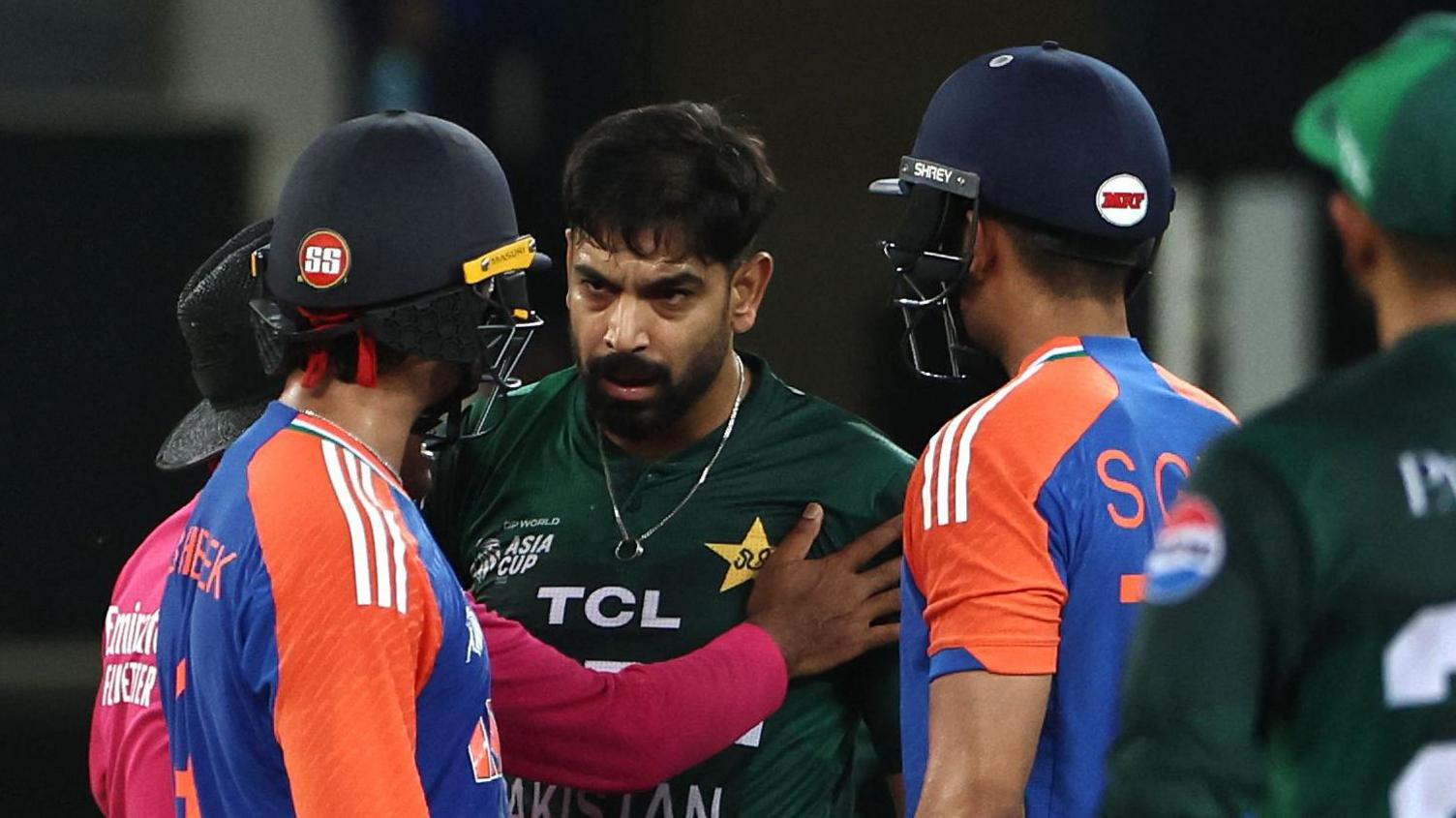
Former cricketer and international umpire Sanjay Gurung says it is unfortunate that even minor political disputes now prevent matches between the two countries. Political disagreements are not new, he notes, but refusing to tour each other’s countries undermines the spirit and protocol of the game, including basic gestures like handshakes.
Gurung stresses that governments should view sports separately from politics. In the past, sports were seen not just as contests of victory and defeat but as bridges to improve bilateral relations. He argues that games should not be cancelled over minor tensions.
Political disputes have also affected other sporting events. Bangladesh did not participate in the ICC T20 World Cup currently being hosted in Sri Lanka and India due to regional tensions. Pakistan had also taken a stance against playing in India. The Asian Football Confederation postponed a continental club championship playoff scheduled in the Middle East.
The postponements followed military strikes by the United States and Israel on Iran, forcing federations to suspend events. The FIFA World Cup is scheduled to be hosted by the United States, Canada, and Mexico next June–July, but rising security concerns and recent geopolitical tensions have created uncertainty over Iran’s participation.
Similarly, matches of the ICC World Cup League 2 that were scheduled to be held in Nepal have been postponed indefinitely due to tensions involving the United States, Iran, and Israel.
Until recently, many wars moved towards ceasefires because of sports diplomacy. In contrast, today, sports are often the first casualties when disputes arise between nations.
Foreign affairs expert Dr Nishchal Nath Pandey says sports are considered an important component of confidence-building measures. He notes that South Africa faced years of sporting boycotts due to apartheid, and the United States boycotted the 1980 Moscow Olympics following the Soviet invasion of Afghanistan.
Nevertheless, sports continue to be viewed globally as a vital tool for building trust between nations.