
Kathmandu, February 17
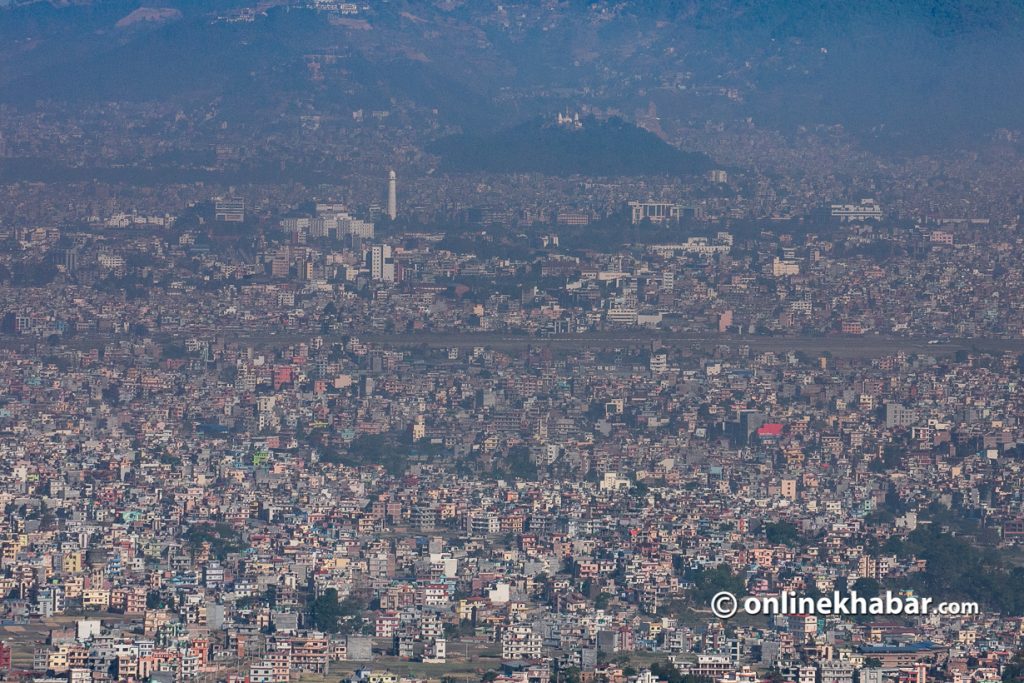
Air pollution levels in the Kathmandu Valley have increased, with the Air Quality Index (AQI) rising from 178 on Monday afternoon to 191 today. According to the US Environmental Protection Agency (US-EPA) standard, an AQI between 151 and 200 is considered unhealthy, meaning everyone may begin to experience health effects, while sensitive groups may face more serious impacts.
With the current AQI level, Kathmandu has been ranked the third most polluted city in the world. New Delhi tops the list with an AQI of 229, followed by Lahore at 203.
Director General of the Department of Environment, Gyan Raj Subedi, said pollution levels may rise further if rainfall does not occur. The prolonged dry spell has significantly contributed to the deteriorating air quality. He urged stakeholders to adopt sustainable and environmentally friendly measures to mitigate the impact.
Environmental expert Barsha Parajuli attributed the worsening pollution to the growing number of vehicles, emissions from diesel and petrol engines, dust from ongoing road and infrastructure projects, forest fires, and the continued lack of rainfall. She warned that failure to control the situation promptly could make it more difficult to manage in the future.
An AQI above 200 is considered very unhealthy, posing serious risks to public health.