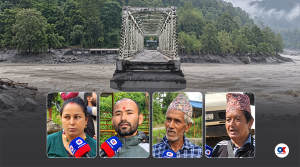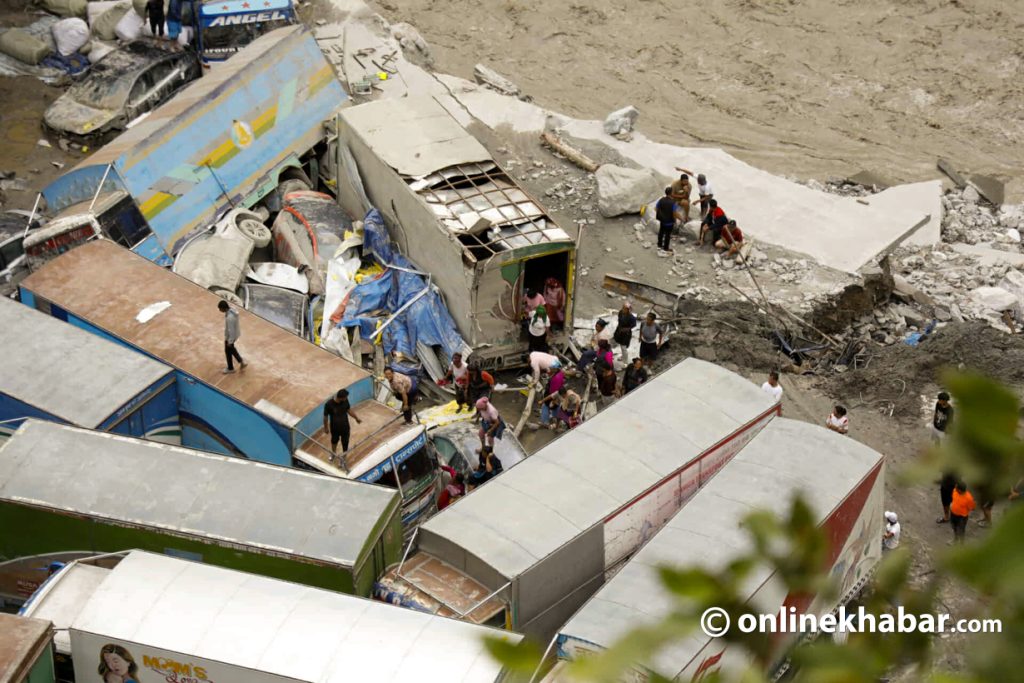

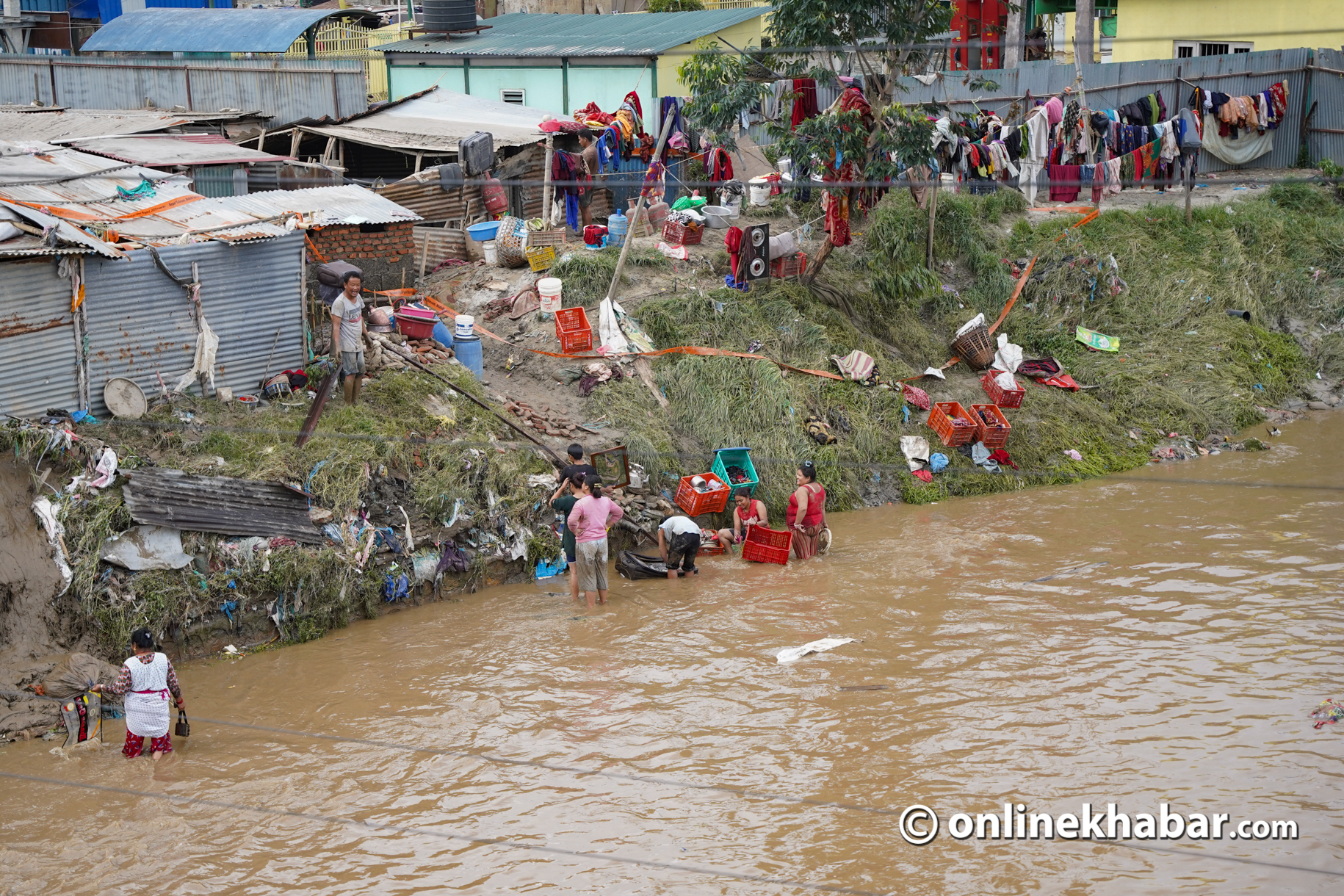
In September 2024, the Kathmandu valley experienced unprecedented rainfall and flooding. Some areas received up to 323.5 mm of rainfall in 24 hours, the highest on record in 54 years. The valley witnessed over 50 deaths, dozens of injuries, and damage to several public and private infrastructures.
“We had less than ten minutes to move our belongings to the top floor. The water rushed in so quickly that in a matter of a few minutes, the first floor was completely filled,” says Priyanjali Karn, recalling her experience during the flood in September 2024 at Bagdol, Lalitpur.
While the rainfall was exceptional, the speed and scale of destruction raised questions about why the city was so vulnerable.
Floods aren’t new to Kathmandu Valley. The recent uptick of flash floods here has been four decades in the making. Tom Robertson, an environmental historian, argues that this uptick isn’t just monsoon rains but a systemic human-made problem developed over decades. Rapid, unplanned urbanisation has led to the loss of natural water storage, such as wetlands, hillocks, and streams, while settlers have continued to encroach on land near the rivers.
Kathmandu’s perennial floods are often attributed to climate change, but they are also closely linked to rapid and unplanned urbanisation. Climate change has indeed increased the rate of rainfall and the unpredictability of floods. However, the growing urban sprawl, concatenated with river encroachment are equally important factor to understand the contemporary issue of urban flooding.
The annual floods of the Kathmandu valley have become menacing to individuals living close to its many river arteries. People settled in high-risk zones have accepted flood as an impending danger and an ordinary condition of urban life. This is due to the inadequate support from the state for people living on the edges of rivers, where, instead of the state finding alternatives for settlers, the people are simply asked to evacuate. On top of this, ineffective policies, some of which support the jacketing of the rivers for urban development, as well as the rampant rise of land prices in the valley, where owning land has been linked with a colossal life event, have made the situation even worse.
The impact of flooding goes beyond damaging infrastructure: it also displaces people and communities. In addition to loss of home, properties, and belongings, getting out of flooded areas is also extremely dangerous. Long-time Nakkhu resident Avalokiteshwar Thapa recalls he and his neighbours being forced to “walk from roof to roof” to get away from the flooded area. Such precarious experiences cause lasting impacts on the survivor’s emotional well-being. He added that he felt grateful because his loved ones survived largely unscathed, given that there were multiple casualties within the immediate one-kilometre radius. Despite this, he states that the aftermath of the flood was “psychologically taxing”, alluding to feelings of paranoia whenever it would rain, even after over a year since facing the treacherous event. Alongside the emotional effects, the aftermath of floods also brings health and sanitary concerns.
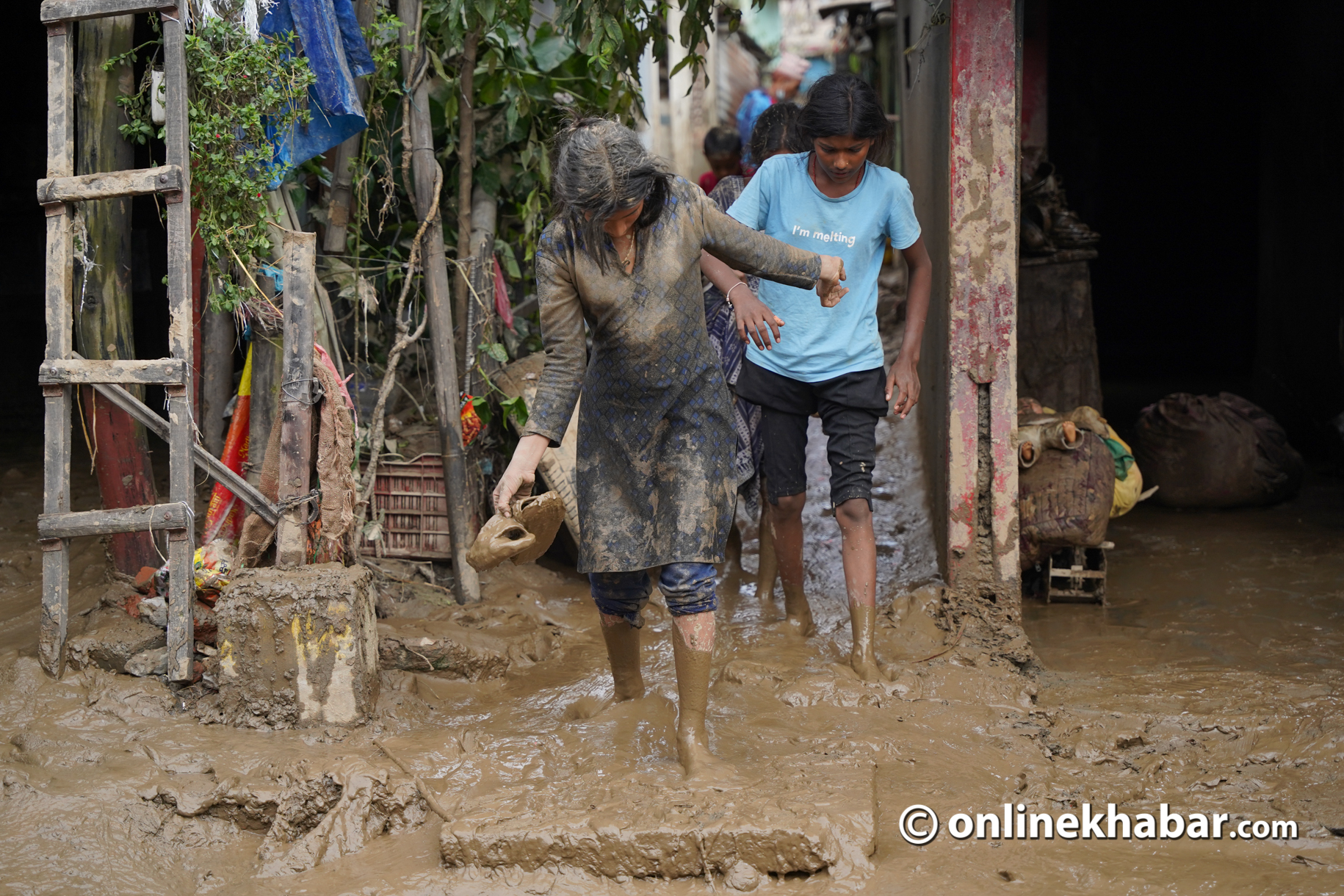
For Diksha Dhital, the flood and its damage caused her to miss work and face health and sanitary risks of having to live in a place filled with mud and water.
“I had to miss work for over a week, and couldn’t access my personal belongings,” says Dhital.
Every year, we hear stories about people like Thapa, Karn, and Dhital. Their stories are a testament to the extreme consequences of a poorly urbanised city. In the past, settlements were sparse and shallow. Later, roads were constructed close to rivers, and in many places, rivers were narrowed to accommodate road and building infrastructure. While this might have been convenient for transport and services, it was not for natural water flow.
Madhukar Upadhaya, senior watershed expert, explained that one critical but often overlooked issue in Kathmandu is river jacketing. “When river channels are narrowed, the force and speed of water increase.”
Compared to the past landscape, river jacketing has drastically reduced water travel time in the hydrological system. Upadhaya cited an example, “water that once took around 10 minutes to reach Teku now arrives in just 6–7 minutes, increasing flood levels in areas such as Teku and Tinkune even with the same amount of rainfall. In extreme cases, water can travel from Shivapuri to Teku in as little as six minutes.” Along with the decrease in travel time and increase in the speed of rivers, the metropolitan areas of Kathmandu and Lalitpur are also highly susceptible to flooding due to limited natural drainage points. Furthermore, between 1990 and 2020, built-up areas have increased by 386%, and forests have reduced by 28%. This increase in built-up areas and decrease in forests disrupts water processes, increases surface runoff, and overwhelms drainage systems.
While statistics are useful to understand the hydrological and environmental consequences of flooding, it is also necessary to understand the shifting human-and-land relationship in the Kathmandu valley as an important element in making the flood story. Being able to own land in Kathmandu holds a deep symbolic meaning in contemporary Nepali society. Since the Rana rule, owning a house in the valley held social significance.
Kriti Kusum Joshi, an engineer and urban planning expert, says, “Powerful people started residing in Kathmandu Valley, which made living here a symbol of social status.”
During the Rana era, giving away land to people close was of high regard. However, after the conflict period in Nepal, people sought safety in the capital. Many houses were built in the valley during the decade of conflict. He added, “Earlier, people used to buy land and keep it. Land was abundant back then. But recently, as settlements grew and land prices soared, land became an investment.”Joshi further mentioned that this links to the flooding issue as no land’s waste or useless, even riverbeds. He says, “Every inch has become valuable due to the shortage. Previously, people could be choosy. Now, since you can’t even get land by being choosy, land in the middle of a riverbed has become valuable. If there is land in Kathmandu, that’s enough for people, regardless of where it is,” said Joshi.
The overlap between climate change and rapid urbanisation has been creating devastating impacts, suggesting the urgent need for improved urban planning, sustainable policies built through household-risk assessment, and locally-tailored early warning systems. While recognising the effects of climate change on increased flooding risks, it is also important to bring attention to the real and long term consequence that fuels fire to the changing climate. It requires addressing the encroachment of river banks with policies that aim to avoid massive disasters in the future. Moreover, we need policies that strictly prohibit the destruction of the environment in favour of profit. Upadhyaya advocates for solutions based on community surveys, hearing people’s stories, and centring policies around the affected.
A climate-centric view in discussing urban flooding is necessary. However, it is limiting as it discards the sociohistorical context of owning houses and the psychological affinity towards owning and hoarding land. It is only when we fix human-made issues that Kathmandu will be safe from devastating annual floods.