
Kathmandu
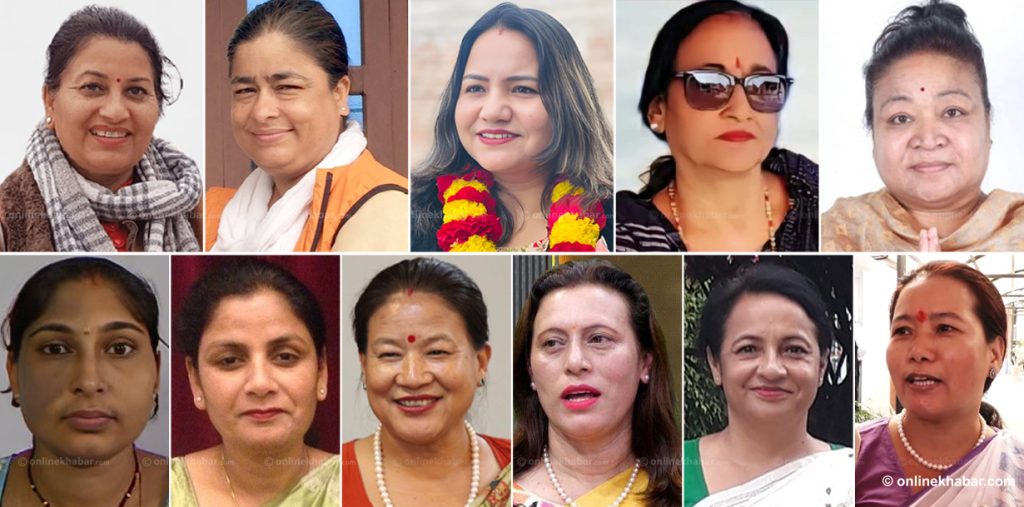
The Nepali Congress has fielded candidates in all 165 constituencies across the country under the first-past-the-post system for the upcoming House of Representatives elections. Among the 165 direct candidates contesting in the election scheduled for 21 Falgun, 11 are women.
The Central Working Committee, selected from the party’s second special general convention held last Poush, nominated seven women leaders well known in national politics and four who have been active primarily at the local level.
Among nationally recognised figures, former Joint General Secretary Mahalaxmi Upadhyay ‘Dina’ is contesting from Makwanpur-1; central member Sarita Prasai from Jhapa-2; Kiran Yadav from Mahottari-2; Sushila Thing from Sindhuli-2; Sapana Rajbhandari from Kathmandu-8; Nanu Bastola from Kathmandu-9; and Kusum Thapa Magar from Rukum East.
At the local level, Mandhara Chimariya is contesting from Jhapa-5; Chandrakala Kumari Yadav from Siraha-4; Meena Kumari Kharel from Chitwan-2; and Basana Thapa from Dailekh-1.
These women candidates are competing against heavyweight leaders from opposition parties, including former prime ministers and former ministers who have already held key positions in state power.
Mandhara Chimariya
Chimariya is contesting in Jhapa-5 against former Prime Minister and CPN-UML Chair KP Sharma Oli. Balendra Shah, a former mayor of Kathmandu Metropolitan City and a candidate proposed by the Rastriya Swatantra Party as a potential future prime minister, is also in the race. Chimariya is the central vice-chair of the National Women’s Rights Forum and has established a children’s home in Damak. She has long been active in social service and women’s rights.
Kusum Thapa Magar
In Rukum East, Congress leader Kusum Thapa Magar is competing against former Prime Minister and CPN (NCP) Coordinator Pushpa Kamal Dahal ‘Prachanda’. She is a Central Working Committee member elected through the special convention and previously served as a proportional representation lawmaker and chair of the Agriculture, Cooperatives and Natural Resources Committee in the dissolved House.
Meena Kumari Kharel
In Chitwan-2, Congress leader Meena Kumari Kharel is contesting against former Home Minister and Rastriya Swatantra Party Chair Rabi Lamichhane. Active in Chitwan politics, Kharel holds a master’s degree in sociology and previously led the Nepal Student Union at Birendra Multiple Campus. She has served as a district working committee member of Congress in Chitwan and as a General Convention representative, receiving national and international recognition for her social work.
Sarita Prasai
In Jhapa-2, Congress has fielded Sarita Prasai against former Speaker Devraj Ghimire and former Deputy Speaker Indira Rana. A former central committee member, she served as a proportional representation lawmaker in the dissolved House and has been elected twice to the House of Representatives and once to the National Assembly. She also served as State Minister for Agriculture and as the chief whip of Congress in the National Assembly in 2074 BS.
Chandrakala Kumari Yadav
Congress has fielded Chandrakala Kumari Yadav from Siraha-4, marking her first parliamentary contest. She faces three former ministers — Dharmanath Prasad Sah from UML, Ayashankar Nayak from NCP, and Rajkishor Yadav from Janata Samajbadi Party Nepal — along with Tapeshwar Yadav from RSP.
Kiran Yadav
In Mahottari-2, Congress has nominated Kiran Yadav against Sharad Singh Bhandari, one of the country’s most frequently appointed ministers. She was elected from the constituency in the second Constituent Assembly election and previously served as a proportional representation member in the first Constituent Assembly.
Nanu Bastola
Congress has fielded central committee member Nanu Bastola from Kathmandu-9. She is contesting her first parliamentary election against former minister and RSP Vice Chair Dol Prasad Aryal and former Bagmati Province Minister for Internal Affairs and Law Ajaykranti Shakya from UML.
Sapana Rajbhandari
In Kathmandu-8, central committee member Sapana Rajbhandari is contesting her first direct election. A former proportional representation lawmaker, she faces Rajesh Shakya from UML, Suman Sayami from NCP, and Viraj Bhakta Shrestha from RSP, who won the seat in the previous election and previously served as deputy parliamentary party leader and Minister for Youth and Sports.
Sushila Thing
Congress has nominated Sushila Thing from Sindhuli-2 for her first direct parliamentary contest. A former proportional representation lawmaker and party whip in the dissolved House, she faces Manoj Jung Thapa from UML, Lekhnath Dahal from NCP, and Ashish Gajurel from RSP.
Basana Thapa
In Dailekh-1, Congress has fielded Basana Thapa in her first parliamentary race. She is competing against former lawmaker Amba Bahadur Thapa from NCP, Rabindra Raj Sharma from UML, and Nand Kishor Basnet from RSP.
Mahalaxmi Upadhyay ‘Dina’
Congress has nominated former Joint General Secretary Mahalaxmi Upadhyay ‘Dina’ from Makwanpur-1 for her fifth electoral contest. She lost the 2079 BS election in the same constituency to Rastriya Prajatantra Party’s Deepak Bahadur Singh and has previously contested elections since 2048 BS, facing multiple defeats. She served as a proportional representation member in the first and second Constituent Assemblies and as State Minister for Water Resources.
Sita Gurung denied ticket
Sita Gurung, the only Congresswoman elected under the first-past-the-post system in the 2079 election, has not been granted a ticket this time. Although she aspired to contest again, the district committee in Tehrathum did not recommend her name. Some local leaders accused her of taking disciplinary action against party members close to former party president Sher Bahadur Deuba. After the district excluded her, the Koshi Provincial Committee added her name before sending recommendations to the centre, but the district had recommended only former General Secretary Gagan Kumar Thapa.
In the previous election, 225 women candidates from various parties contested under the direct system, with nine winning seats. Of the nine directly elected women in the dissolved House, at least five are unlikely to return to the upcoming Parliament, either by choice or due to internal party disputes and denial of tickets.