Chitwan, November 13
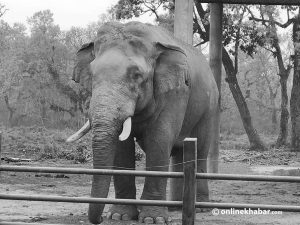
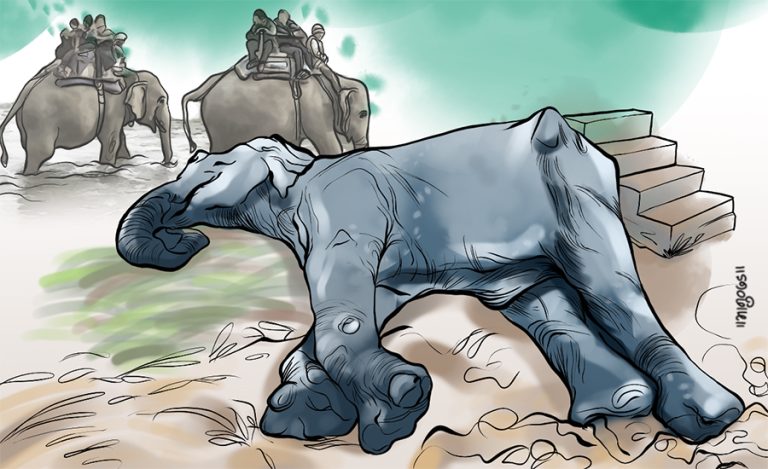
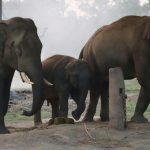
A power struggle is intensifying among wild male elephants for control of the Sauraha Elephant Breeding Centre after the death of ‘Ronaldo’. The well-known 45-year-old male elephant died on September 19 after chewing an electric wire laid at a Nepali Army post near Bishahajari Lake in the Barandabhar area.
Since Ronaldo’s death, competition over who will take his place has grown at the centre. Govinde took control of the center for nearly two months after Ronaldo died. Another male elephant, Subedigaj, is now taking Govinde’s place, said Manpuran Chaudhary, chief of the breeding centre.
“No male elephant could stand up to Ronaldo. Now that he is gone, the competition over who will hold the centre has intensified,” Chaudhary said. “Three male elephants are fighting, and Dhrube has yet to show up.”
According to Chaudhary, a male elephant named Bhimgaj also came to the centre for a few days about a month ago. Subedigaj has since replaced him. The wild elephant was named Subedigaj after it attacked and injured Hem Subedi, a game scout at the Janakpur post, two years ago. Subedi was seriously hurt when the male elephant suddenly appeared and attacked him while he was searching for a missing female elephant.
Chaudhary said Govinde succeeded in mating with two female elephants during his two months at the centre.
“He does not match Ronaldo’s performance, but he is trying. We understand that two elephants are pregnant,” Chaudhary said. “Subedigaj, who has come now, is trying but has not succeeded yet.”
The Khorsor centre in Sauraha, the country’s only elephant breeding centre, currently has nine adult females and seven calves. More than 69 calves have been born at the centre so far.
Elephants are used for the conservation and patrolling of Chitwan National Park. The female elephants at the breeding centre are bred by wild male elephants.
Calves born from mating with wild elephants are trained and deployed to protect the national park. Elephants born here have also been sent to national parks and reserves in other parts of the country. Last year, elephants born at the centre were sent to Qatar as a gift.