As Nepal gradually embraces electric mobility beyond passenger vehicles, the construction equipment sector is also beginning to shift toward cleaner and more cost-efficient technologies. Chinese construction equipment manufacturer SDLG, in collaboration with Panchakanya Group, has introduced EV wheel loaders in Nepal, aiming to tap into the country’s growing hydropower, mining, and infrastructure sectors.
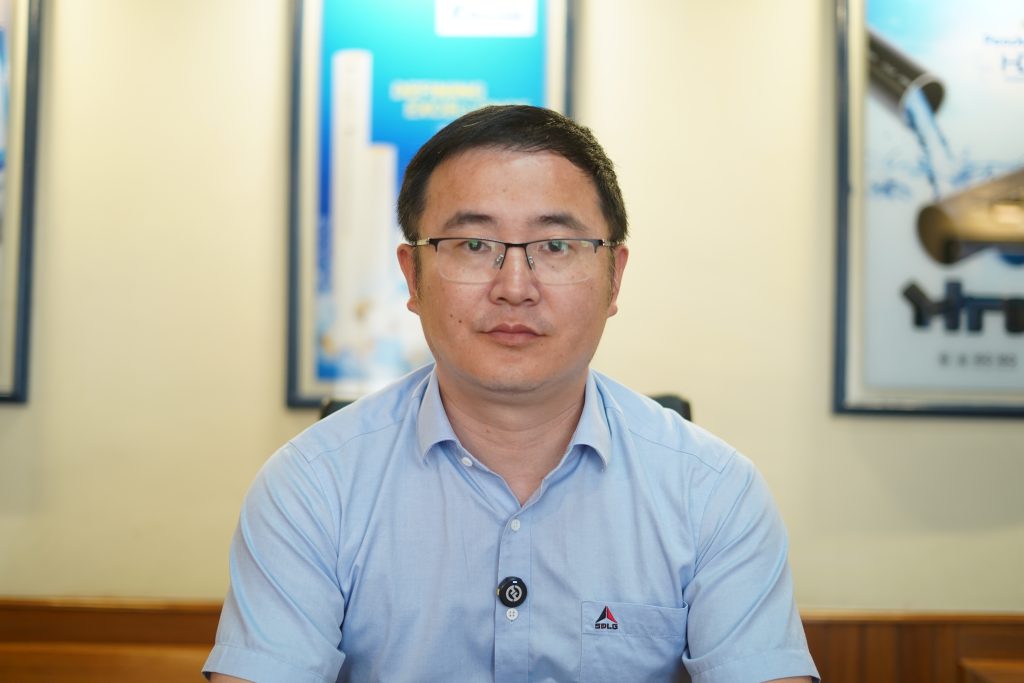
In this conversation with Onlinekhabar, SDLG Managing Director Walker Fang speaks about the company’s long-term vision for Nepal and South Asia, the future of EV machinery, the advantages of electric loaders over traditional diesel machines, and why he believes Nepal could become a key market for next-generation construction equipment.
Excerpt:
What motivated SDLG to collaborate with the Panchakanya Group?
Because we are very good partners with Panchakanya Group, and they have very strong capabilities in customer service and support.
We are very confident that if we introduce EV products here, our partner will be able to support customers very well.
How do you see the future of EV machinery in Nepal?
In the Nepal market, I am very confident that in the future, EV wheel loaders will achieve more than 50 percent market penetration. We will also introduce EV products in other categories as well
Many people still believe that diesel loaders are more powerful and efficient. How do you compare modern EV loaders with diesel loaders in real working conditions?
Yes, I fully understand the concerns and perceptions customers currently have. But according to our experience, this mindset will change very quickly.
Compared to diesel machines, EV products move very fast, which means they are highly efficient. And as I mentioned earlier, EV products provide significant cost savings compared to diesel machines.
After 8,000 to 10,000 operating hours, they can greatly reduce costs for customers.
How is PKG preparing its service team and technical support system for EV machines in Nepal?
We are focusing on three things. The first is training. We invite engineers from Nepal to our factory in China for training, and we also send our trainers to Nepal to train the local team.
The second is maintaining a strong spare parts stock. Both teams are working together to manage a good inventory level for parts.
The third is that we have a very good IT system to support problem-solving and technical support.
Do you think EV loaders are suitable for hydropower, tunnel, and mining projects in Nepal?
Yes, I am very confident because we have already introduced these products in many markets such as China, India, and Southeast Asia. We know this is the right product for these kinds of markets.
Beyond EV loaders, what future technologies and machines can Nepal expect from PKG and SDLG?
I see two important developments.
First, besides EV wheel loaders, we also plan to introduce EV excavators because some market segments are very suitable for these products.
Second, apart from EV technology, we also plan to introduce hybrid machines.
The reason for introducing hybrid machines is that in some remote areas, the electricity infrastructure may not be very strong. With hybrid machines, even if customers use diesel for operations, fuel costs are still lower than with traditional machines.
Could you tell us more about SDLG’s vision for the coming years?
For the coming years, if we look at the strategic direction, our focus will be on internationalisation. In the future, more than half of SDLG’s sales revenue is expected to come from overseas markets. That is our strategy.
Over the next five to ten years, we will introduce more EV products. This means we will focus on new technology products. The reason why we brought the EV loader to the Nepal market is that we truly see the benefits for customers.
Actually, this product was introduced in China more than six or seven years ago, and over the years, it has developed very quickly. Many customers adopted this product because it really helps them, especially in terms of cost savings.
At around 8,000 operating hours, the diesel machine and the EV machine reach the break-even point. After 8,000 hours, the more you use it, the more savings you see. This is the real benefit for customers.
We also found that Nepal has a very good electricity infrastructure. That is another reason why this is the right market for EV products. With good infrastructure and clear customer benefits, we decided to introduce this product to Nepal.
Finally, how is the partnership between PKG and SDLG shaping Nepal’s construction equipment market?
We are working together to introduce two important things. First, we are bringing good products with advanced technology and strong customer benefits.
Second, we are working together to provide very good service and support for customers.
With these advantages, we are very confident that we can contribute positively to Nepal’s construction equipment market.