By Surabhi Sharma
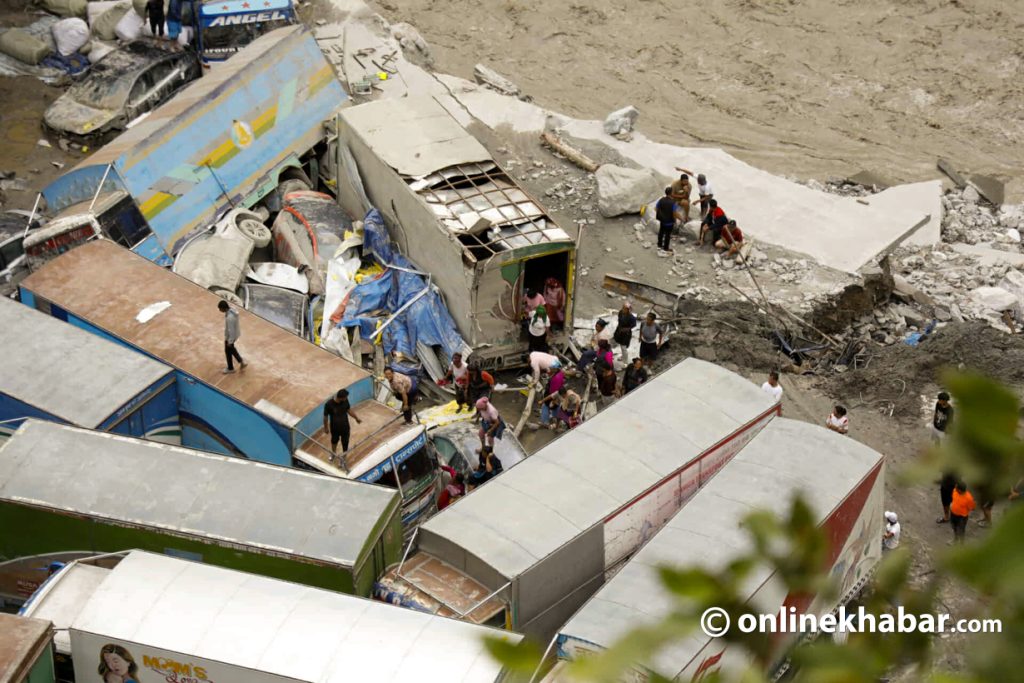
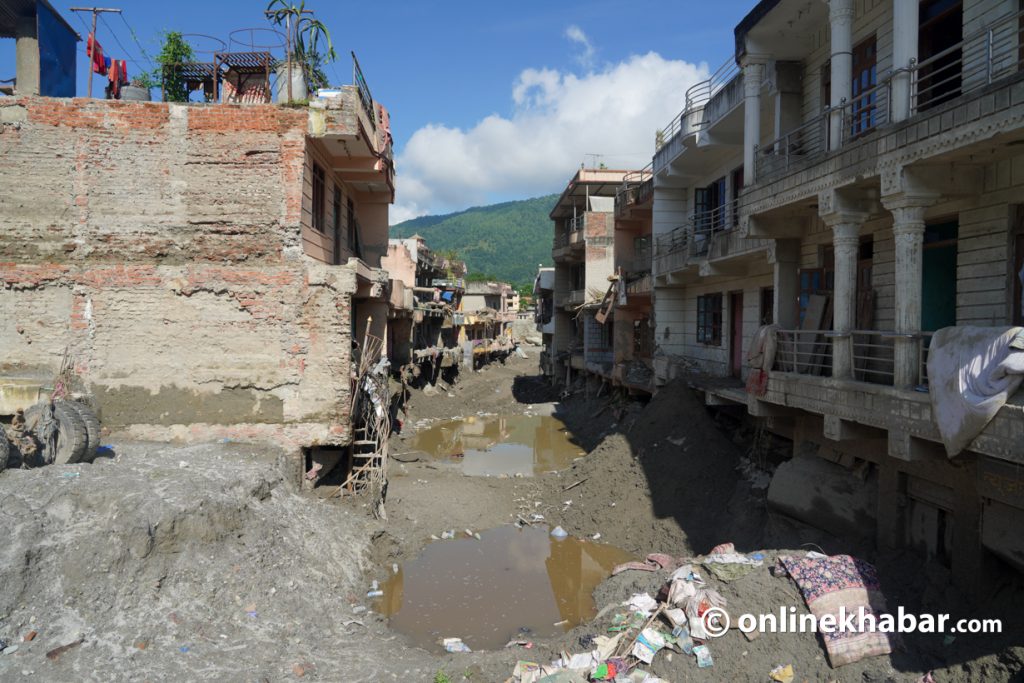
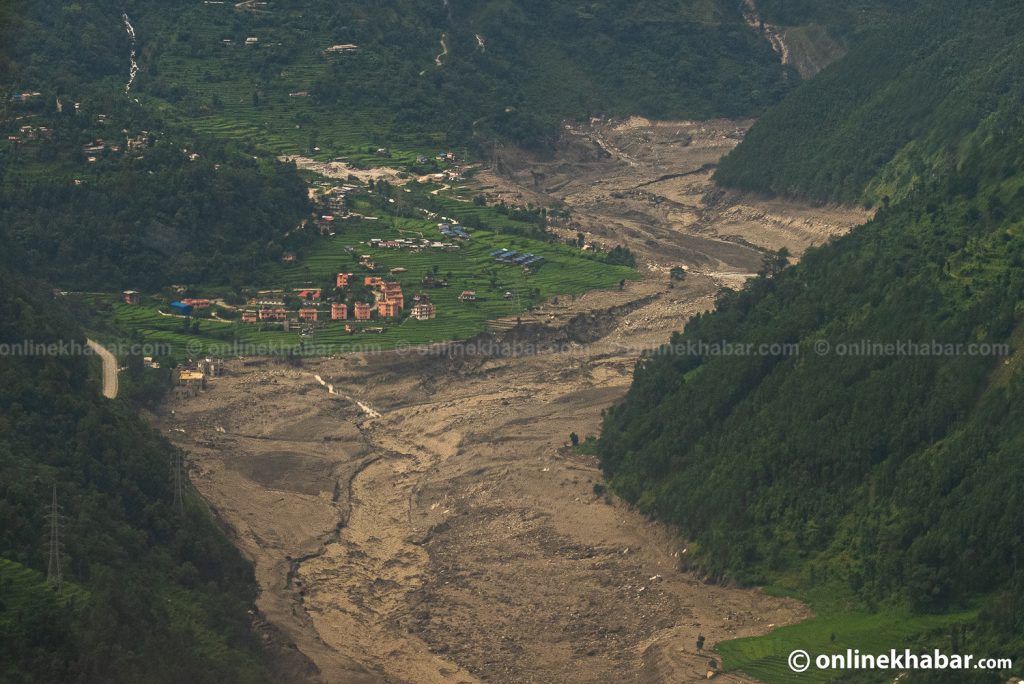
The Bhotekoshi flood has left Nepal confronting one of its harshest human tragedies. A massive rock-and-ice avalanche unleashed a devastating surge through the Bhotekoshi–Trishuli river system, destroying lives, homes and critical infrastructure within minutes. The catastrophe has become a powerful symbol of the new and unequal climate risks confronting Himalayan countries.
But Nepal cannot stop at condolences, relief and emergency assistance. Those are necessary in a crisis, but they are not enough. Nepal must now raise a louder, clearer and far more forceful voice for climate justice in international forums.
Countries like Nepal, which have contributed very little to global greenhouse-gas emissions but face some of the most severe consequences of climate change, cannot be expected to keep paying the price for a crisis they did little to create.
Nepal should not be asking for sympathy. It should be demanding justice.
Climate justice is about responsibility
Climate change is no longer simply an environmental problem. It is a humanitarian, economic and justice crisis. It threatens lives, health, homes, food, water and human security. It destroys infrastructure and livelihoods, erodes development gains and forces vulnerable countries to repeatedly spend scarce public resources responding to disasters.
At the heart of climate justice is a simple principle. Those who have contributed least to climate change should not be forced to bear the heaviest burden of its consequences.
Nepal contributes only about 0.1 percent of global greenhouse-gas emissions, yet it is among the countries highly exposed to climate-related hazards. Nepal’s emissions were approximately 58.8 million tonnes of CO₂e in 2024, an extremely small or negligible share of global emissions.
The imbalance is difficult to ignore.
And yet the countries least responsible for the climate crisis are often the ones being asked to rebuild after climate-related disasters, borrow money to recover and divert scarce development resources towards coping with risks they did not create.
That is not climate justice.
Climate justice must therefore be guided by the Polluter Pays Principle (PPP). First articulated by the OECD in 1972, the principle establishes a straightforward idea: those responsible for environmental damage should bear an appropriate share of the costs of preventing, managing and remedying that damage.
Applied to the climate crisis, the logic is clear. Countries and corporations that have contributed disproportionately to historical greenhouse-gas emissions should accept greater responsibility for the costs imposed on vulnerable countries.
Nepal is not begging for charity. It is not asking the world’s wealthier countries for generosity.
It is demanding that those who have contributed most to environmental destruction and the climate crisis fulfil their responsibilities and help pay for the losses and devastation suffered by countries such as Nepal.
This is not charity. It is accountability.
The Polluter Pays Principle should not be limited to compensation after a disaster. It should also contribute to the costs of climate adaptation and resilience, disaster recovery and reconstruction, relocation and rehabilitation, protection of glaciers and ecosystems, early-warning systems, scientific monitoring, climate-related health services and compensation for irreversible losses, including loss of life, cultural heritage and ecosystems.
The international climate-finance system must reflect this responsibility.
For countries such as Nepal, climate finance should be adequate, predictable, accessible and additional to development assistance, with grants—not additional debt—given priority. Vulnerable countries should not be pushed into borrowing to recover from a crisis they did little to create.
A loan that deepens the debt burden of climate-vulnerable least developed countries like Nepal cannot reasonably be presented as climate justice.
You cannot call it justice if the victim is asked to pay the bill.
Nepal is on the frontline of a changing Himalaya
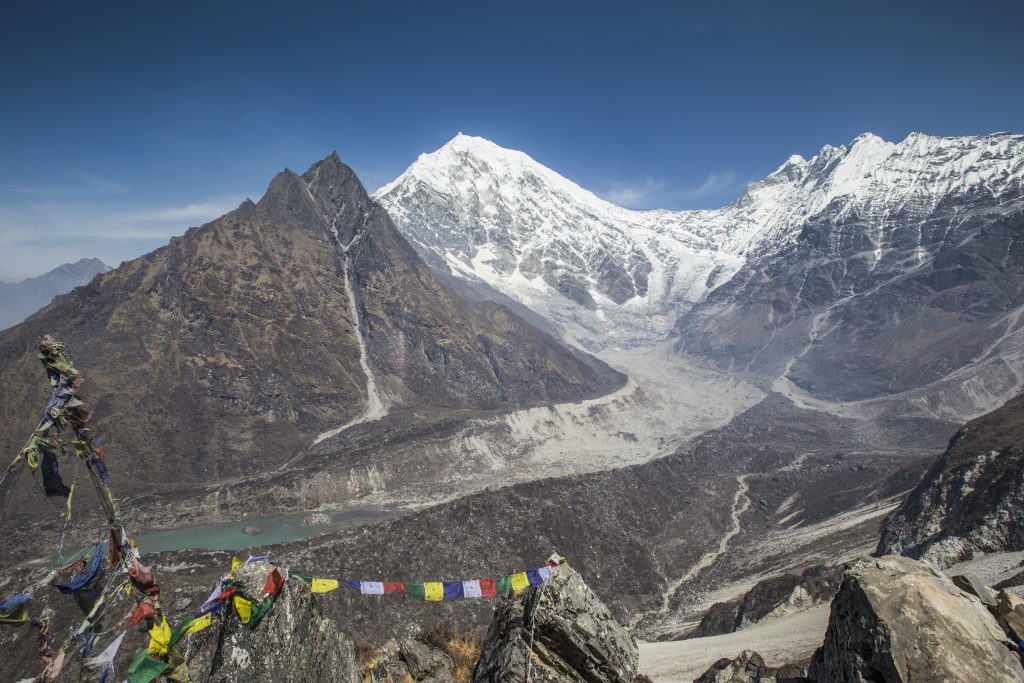
Nepal stands on the frontline of a changing Himalaya, where the majestic beauty of snow-capped peaks is increasingly overshadowed by the growing threats and vulnerabilities unleashed by a warming climate.
Nepal’s vulnerability is particularly profound because the Himalayas are threatening the entire world rapidly.
Nepal is home to more than 3,000 glaciers and more than 2,000 glacial lakes. These glaciers and snowfields sustain major river systems, providing water for millions of people, agriculture, ecosystems and hydropower.
The Hindu Kush Himalaya Water, Ice, Society and Ecosystems (HI-WISE) Report 2023 found that Himalayan glaciers lost ice 65 percent faster during 2011–2020 than during the previous decade. Glacier retreat, declining snow cover and permafrost thaw are accelerating, while expanding glacial lakes increase the risk of glacial lake outburst floods.
These are not distant scientific projections sitting in research papers. They are increasingly becoming realities experienced by mountain communities.
The Himalayas are not merely a scenic landscape or a tourism destination. They are a critical life-support system for millions of people across Asia. Their glaciers, rivers and ecosystems are connected across national borders. A disaster originating in the mountains can rapidly affect downstream settlements, infrastructure, economies and communities.
The international community therefore has a shared interest in protecting the Himalayas. But shared interest must mean shared responsibility.
Climate disasters are development disasters
Nepal’s climate vulnerability also has profound economic consequences. Climate-related disasters can destroy roads, bridges, hydropower facilities, agricultural production, tourism infrastructure and settlements. UNDP estimates that Nepal could face climate-related losses exceeding 2 percent of GDP by 2050 without urgent climate action.
Every major disaster can erase years of development gains, as the recent Rasuwa floods have so painfully demonstrated, potentially pushing communities and the country’s development progress back by decades.
This is where the injustice becomes particularly stark.
Nepal should not be expected to rebuild the same roads, bridges, settlements and infrastructure again and again with limited domestic resources while the world’s largest emitters continue activities that intensify climate change. A country cannot build its way out of a crisis if every disaster destroys what it has just built.
At this critical moment, when the devastating impacts of climate change are drawing unprecedented attention from global climate leaders, that attention must translate into action.
Climate finance must become faster, simpler and genuinely accessible to countries facing climate-induced disasters.
It must not only fund new infrastructure. It must also protect, retrofit and climate-proof existing infrastructure, so that hard-won development gains are not repeatedly destroyed by disasters that vulnerable countries did little to cause.
The Mountain Tsunami: A warning the world must hear
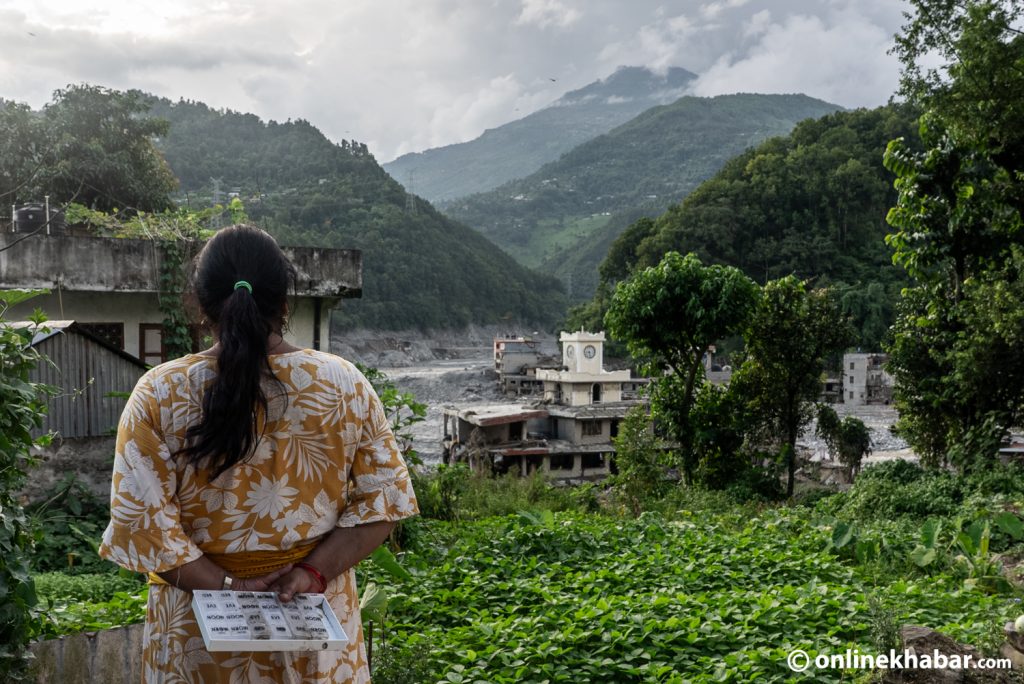
The Bhotekoshi–Rasuwa catastrophe of August 26 demonstrated how rapidly climate-sensitive mountain hazards can become humanitarian disasters. The rock-and-ice avalanche and resulting flood devastated communities along the Bhotekoshi–Trishuli river system, leaving thousands dead or missing and exposing the extraordinary vulnerability of Himalayan communities.
The tragedy should therefore be understood not simply as a natural disaster, but as a stark warning about the intersection of climate change, fragile mountain environments, human vulnerability and global inequality.
The world should not look at Bhotekoshi–Rasuwa as another isolated Himalayan disaster.
It should see it as a warning.
Nepal has warned the world before
Nepal has repeatedly raised its voice about the climate risks facing the Himalayas.
In December 2009, Nepal’s political leadership held a Cabinet meeting at Kala Patthar near Everest to draw international attention to the impacts of global warming on the Himalayas, particularly the accelerating loss of glaciers and snow, just days before the Copenhagen climate summit.
More than 15 years later, Nepal again brought the Himalayan voice to the global stage through the Sagarmatha Sambaad, held in Kathmandu in May 2025 under the theme “Climate Change, Mountains and the Future of Humanity.” Its call for action demanded urgent climate action, stronger international cooperation and greater support for vulnerable mountain communities.
Scientists warned us. The mountains warned us. Communities living on the frontline warned us through their suffering. Yet the world has still not acted with the urgency and scale required. The Bhotekoshi–Rasuwa disaster has made the consequences impossible to ignore.
What should Nepal demand at UNGA and COP31?
The upcoming United Nations General Assembly and COP31 provide Nepal with an important opportunity to move beyond statements of concern and make a clear political demand for justice.
Nepal’s highest political leadership should speak with one strong and united national voice.
The message should be simple. Nepal is not asking for sympathy. Nepal is demanding climate justice.
Nepal should demand international recognition of the Himalayas as a critical global climate-risk and water-security region. The protection of human life, dignity and the survival of vulnerable countries must be placed at the centre of international climate policy.
Most importantly, Nepal should call for the Polluter Pays Principle to become a practical foundation of international climate finance and loss-and-damage arrangements.
Those with the greatest historical responsibility must bear a fair share of the costs.
Nepal should demand:
- Adequate, predictable and grant-based climate finance for adaptation, resilience, loss and damage, disaster recovery and climate-affected communities;
- Direct and simplified access to international climate finance for vulnerable countries and local communities;
- Recognition that climate finance must not become another source of unsustainable debt;
- A stronger international mechanism for permanent scientific monitoring of glaciers, glacial lakes, permafrost, snow and unstable mountain slopes;
- Internationally supported early-warning systems and transboundary disaster preparedness, including real-time information sharing and coordinated response;
- Greater support for climate-resilient infrastructure, hydropower, settlements and ecosystems;
- Long-term support for communities displaced or affected by climate disasters, including health care, psychosocial support, education and livelihood recovery;
- Accelerated emission reductions by historically high-emitting countries and an end to continued fossil-fuel expansion;
- Greater access for vulnerable countries to technology, scientific knowledge and capacity-building; and
- A permanent international diplomatic agenda for the protection of the Himalayas and the communities that depend upon them.
Nepal should also build a stronger coalition with other climate-vulnerable countries, including least developed countries, small island states, mountain nations and some developed countries facing desertification, floods and extreme heat.
Nepal cannot afford to approach international climate negotiations only as a vulnerable country seeking assistance.
Vulnerability is not weakness.
Nepal has a legitimate moral, environmental and humanitarian claim.
The country has repeatedly demonstrated its commitment to climate action despite its very small contribution to global emissions. It is protecting ecosystems, adapting communities, managing disasters and investing in resilience while confronting risks generated largely beyond its borders.
That gives Nepal not just a reason to speak, but a responsibility to speak more forcefully.
Climate justice should therefore become a central pillar of Nepal’s foreign policy and international diplomacy.
The time for condolences is over
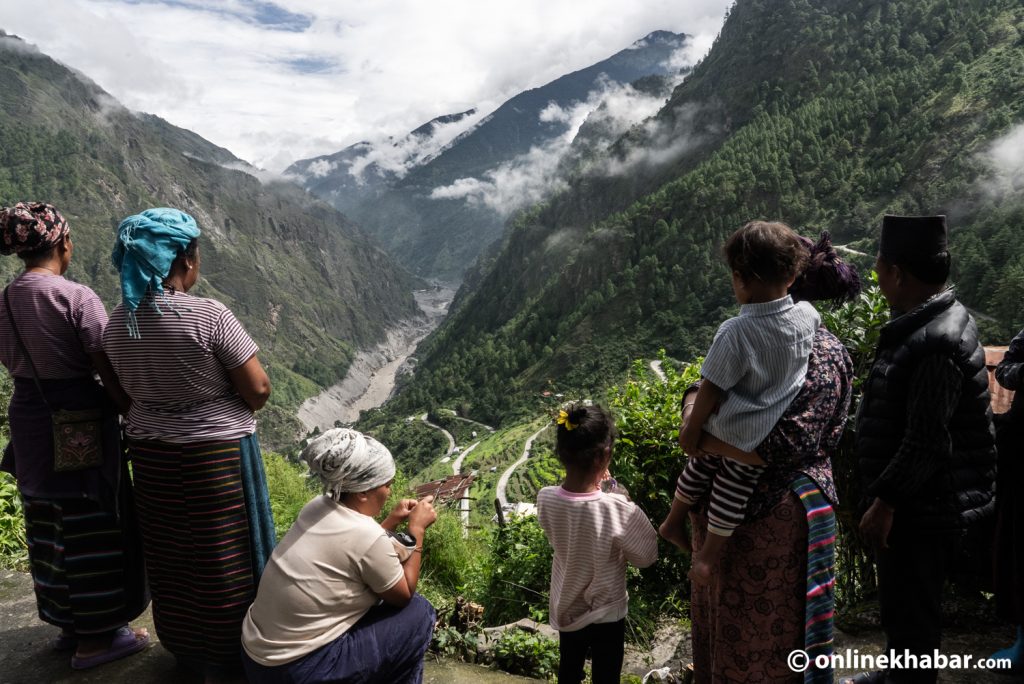
The question is no longer whether Nepal is vulnerable to climate change. The Bhotekoshi–Rasuwa disaster has shown the consequences in the most painful way possible. The question is whether the international community is prepared to accept its responsibility.
For decades, Nepal and other vulnerable countries have warned the world. The glaciers have retreated. Glacial lakes have expanded. Climate-related disasters have intensified. Communities have paid the price.
Still, the response has too often been predictable: condolences after disaster, promises during summits and inadequate action in between. That cannot continue. Climate justice is not charity. It is not generosity. It is not a favour. It is responsibility. It is accountability. It is fairness. And it is increasingly a matter of human rights and human dignity.
The world has heard warnings from the Himalayas for decades. It has seen the evidence. It has heard the scientists. It has witnessed the suffering of mountain communities.
After the Bhotekoshi flood, condolences alone are no longer enough. Nepal must raise its voice—loudly, clearly and collectively—at UNGA and COP31.
And that voice should carry one unmistakable message: Climate justice now. Polluter pays. Nepal will not pay for a crisis it did not create.