
Kathmandu, September 8
A year ago, Nepal was governed by a coalition between the Nepali Congress and the CPN-UML, the country’s two largest parties in the House of Representatives. By conventional parliamentary arithmetic, the government appeared difficult to dislodge.
That calculation changed dramatically after the afternoon of September 8, 2025.
A Gen Z-led protest against the social media ban, corruption and other grievances turned violent, leaving 21 people dead and many protesters and security personnel injured. Within 24 hours, the government that had appeared secure on paper collapsed.
Angered by the state’s crackdown on unarmed protesters, demonstrators on September 9 set fire to and vandalised major state institutions, including Singha Durbar, the federal parliament building and the Supreme Court, as well as party offices and the homes of political leaders.
Nepal’s politics has since moved through an interim government, dissolution of the House, a fresh election and the rise of a new political force.
September 8: A protest turns deadly
The Gen Z movement began from Maitighar in Kathmandu on September 8, with protesters demanding an end to the social media ban and corruption.
The situation spiralled after clashes between protesters and security personnel in the New Baneshwar area.
Police firing killed 19 people in Kathmandu. Two more people died in Sunsari on the same day.
Then-home minister Ramesh Lekhak resigned that evening, taking moral responsibility for the deaths. Before submitting his resignation at a Cabinet meeting, he had told a Nepali Congress office-bearers’ meeting that he should take responsibility for the incident.
September 9: The Oli government falls
The protests became more violent the following day.
Government buildings, including Singha Durbar, the parliament building and the Supreme Court, were attacked and set on fire. Party offices and the homes of political leaders were also targeted.
Police stations in several parts of Kathmandu were torched. Protesters seized police weapons and attacked security personnel, while police officers deployed on duty also lost their lives.
As the unrest reached its peak, then-prime minister KP Sharma Oli was forced to resign. He was evacuated by a Nepal Army helicopter to Chanaun Barracks near Hetauda in Makwanpur.
President Ram Chandra Paudel accepted his resignation but asked the outgoing Cabinet to continue running the government until a new one was formed.
Sushila Karki and the interim government
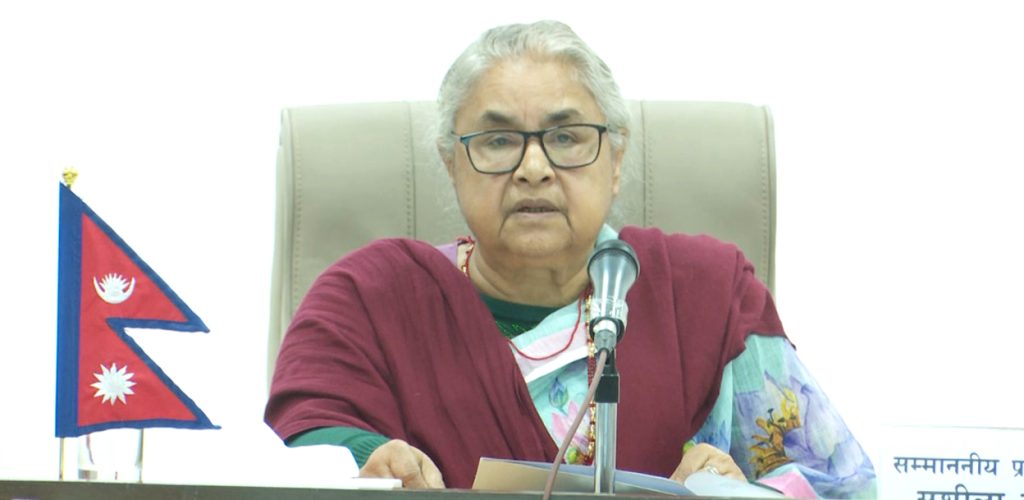
To manage the political vacuum and transition following the Gen Z uprising, former chief justice Sushila Karki was appointed prime minister.
Karki took charge of the interim government on September 12.
Her government was tasked with restoring normal state operations and holding a fresh election.
It declared those killed during the Gen Z protests martyrs, provided relief to their families and formed a high-level commission to investigate the violence.
House dissolved, election announced
The formation of the interim government opened the way for dissolution of the House of Representatives and a fresh popular mandate.
An election for a new House was scheduled for March 5, 2026.
Although some leaders of the major political parties opposed the dissolution, preparations for the election proceeded without major disruption. Voting was held peacefully across the country on March 5.
The dissolution, however, triggered a constitutional debate.
Political parties approached the Supreme Court arguing that dissolving an elected House was unconstitutional. The issue was particularly contentious because the Supreme Court had previously overturned House dissolutions.
Some argued that the political force generated by the uprising had effectively become greater than conventional constitutional mechanisms.
Former lawmakers from the Nepali Congress and UML separately filed petitions seeking restoration of the House.
But the Supreme Court itself had been damaged during the uprising, disrupting judicial services and delaying regular hearings.
Eight former Nepali Congress lawmakers filed a petition for restoration on December 9. The Constitutional Bench issued a show-cause order on December 17.
Former UML lawmakers also approached the Supreme Court after the party formally authorised then-chief whip Mahesh Bartaula and whip Sunita Baral to take the issue to court.
A total of 18 petitions seeking restoration of the House were filed. They remain under consideration at the Supreme Court.
March 5: A new mandate
The March 5 election marked the clearest electoral expression of Gen Z’s dissatisfaction with the established political parties.
The Rastriya Swatantra Party (RSP) won 125 of the 165 first-past-the-post seats, giving it a near two-thirds majority in the House.
The Nepali Congress won 18 constituencies, the UML nine and the Nepali Communist Party eight. The Shram Sanskriti Party won three seats, the Rastriya Prajatantra Party one, and an independent candidate also won.
No Madhesh-based party won a constituency. The Nepal Workers and Peasants Party and Rastriya Janamorcha also failed to send representatives to parliament.
The election also exposed deep problems within the Nepali Congress, which had been the largest party in the previous House.
The party held a special general convention to change its leadership, arguing that voters would not trust it to contest the election under then-president Sher Bahadur Deuba.
The change failed to rescue the party electorally. Congress president Gagan Thapa lost to RSP candidate Dr Amaresh Kumar Singh.
UML chair Oli was defeated by RSP senior leader Balendra Shah, popularly known as Balen, by a huge margin.
Balen Shah becomes prime minister
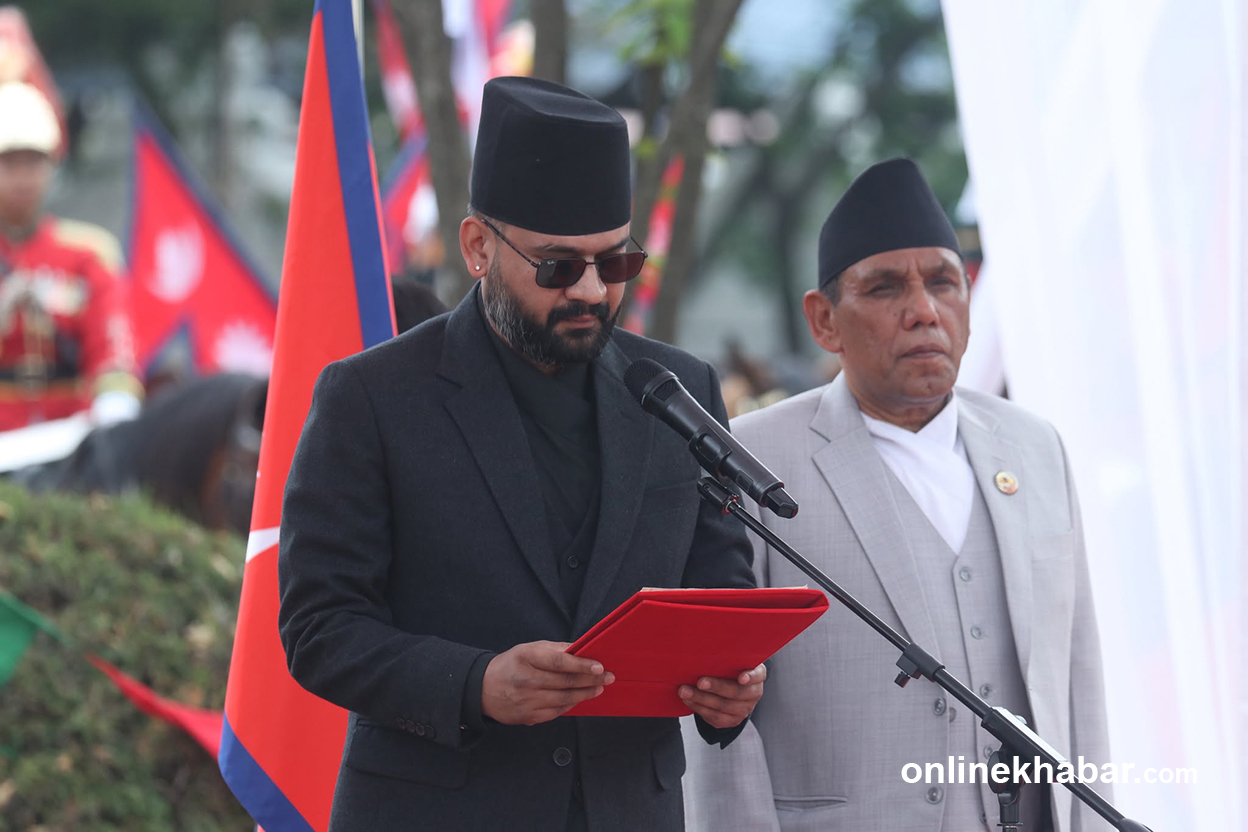
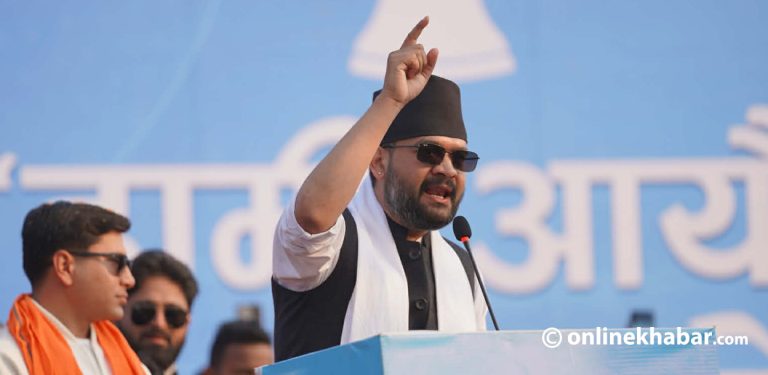
Balen resigned as mayor of Kathmandu Metropolitan City in the first week of February and entered the parliamentary election.
After the election, the RSP chose him as its parliamentary party leader. President Paudel appointed him prime minister on March 27.
He became prime minister as the leader of the party commanding a majority in the House under Article 76(1) of the Constitution.
At 36, his rise was widely seen as the most significant political consequence of the new political mood created by the Gen Z uprising. He also became the first person from the Madhesi community to serve as prime minister.
But translating the support generated by the movement into effective governance has proved difficult.
Pressure from parliament, within his own party and from public opinion has confronted the government from its earliest days.
Home Minister Sudan Gurung resigned on April 22, less than a month after the government was formed, amid controversy over his business partnership with Deepak Bhatta, who was being held in connection with investigations into the source of share investments and money laundering.
The government later accepted a committee report into the matter and reappointed Gurung as home minister on June 9.
Earlier, on April 9, Prime Minister Shah had dismissed labour, employment and social security minister Deepak Kumar Sah on the recommendation of the RSP.
RSP chair Rabi Lamichhane had accused Sah of abusing his position by arranging for his wife to serve as a member of the Health Insurance Board and participate in its regular work despite the board having been inactive for a long period.
Questions over the Gen Z investigation
The government also formed a judicial inquiry commission led by Gauri Bahadur Karki to investigate the Gen Z uprising.
The commission recommended action against the then government and security leadership over the September 8 violence.
But questions had been raised about the commission’s impartiality from the beginning because of social media posts Karki had written on Facebook and X while the movement was underway. Its report therefore failed to become free of controversy.
The National Human Rights Commission also conducted its own study and recommended action against those responsible. Its report attracted significant attention even before the full text was released.
The government formed amid public anger against the old political parties and expectations that “the new” would govern better has consequently become the centre of political debate.
Reform first, but questions remain
The Balen government made governance reform one of its central priorities from the outset.
At its first Cabinet meeting, it introduced a 100-point governance reform agenda, setting targets for administrative reform, results-based performance, measurable service delivery and greater accountability within the state machinery.
In its review of the first 100 days, the government claimed 87.2 percent progress on the agenda.
Independently assessing that claim, however, gives a less clear picture. The reform agenda was a significant starting point, but its real success will ultimately be judged by results.
The government has also highlighted measures including an investigation into the assets of high-ranking officials, the cancellation of political appointments, recovery of public property and investigations into financial crimes.
It has pushed digital services to reduce the need for citizens to visit government offices, including expanding the Nagarik App, making certificates available online, decentralising some land administration services and introducing digital driving licences.
The government has also sought to distinguish itself through faster decision-making. It has moved quickly on policy decisions, legal amendments, administrative restructuring and service delivery.
But that “fast-track” approach has itself attracted criticism, particularly where institutional procedures, Parliament’s role and constitutional norms have appeared to be sidelined.
Despite having a near two-thirds majority, the government has used ordinances to advance important matters, including issues related to the Constitutional Council and cooperatives. Opposition parties and critics accused it of attempting to govern by bypassing Parliament.
Prime Minister Shah’s social-media-driven style has also generated controversy.
One prominent example was the three percent equity fee imposed in the education and health sectors. Following widespread criticism, Shah announced on social media that the fee would not be implemented immediately.
Critics pointed out, however, that because the charge had been introduced through the Economic Act, a Facebook announcement alone could not overturn it and that a formal legal process was required.
His parliamentary role has also come under scrutiny.
When President Paudel was presenting the government’s policies and programmes at a joint sitting of Parliament, Shah left the meeting. Opposition parties subsequently questioned his absence during discussions and his response to the policy programme.
Critics argue that the prime minister is not merely the leader of the government but also the centre of parliamentary accountability, making his presence in the House more than a matter of political convenience.
Squatter settlements and press freedom
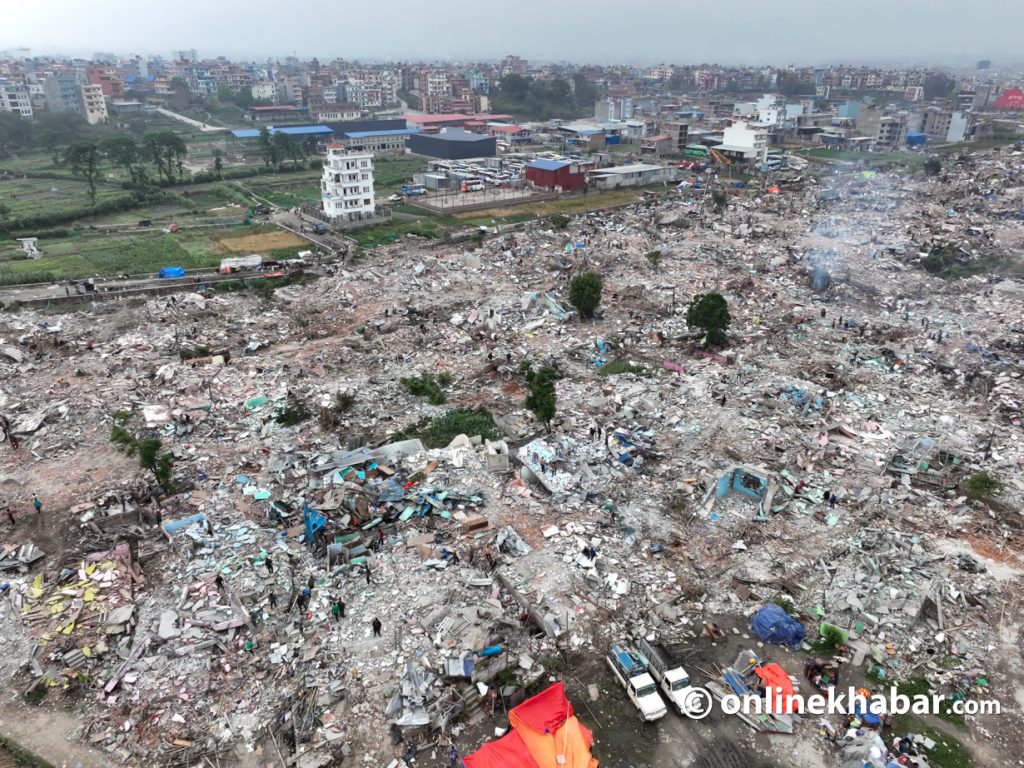
The government has taken a hard line on removing squatter and informal settlements along the Bagmati river.
While the need to control encroachment and protect the river is widely recognised, the government has been criticised for removing settlements without a clear alternative housing or rehabilitation plan.
The issue became particularly contentious when settlements were cleared without a visible management or resettlement plan soon after the government took office.
Its relationship with the media has also raised concerns.
A government circular seeking to limit state advertising to government-owned media, warning statements by ministers and online pressure on journalists from groups supporting the government have prompted questions over press freedom.
The Supreme Court has also questioned the constitutional implications of the advertising circular in relation to freedom of communication and the press.
Gen Z leaders: The spirit of the movement remains unmet
The Gen Z uprising changed the government. But whether it has addressed the issues that brought young people onto the streets remains an open question.
Gen Z leaders who gathered in New Baneshwar on Tuesday to mark the first anniversary said they were not entirely disappointed with the government, but believed it had fallen short of expectations.
Gen Z leader Kiran BK said the government had not completely moved away from the spirit of the movement, but had “mishandled” some issues.
“The government has not been able to grasp the spirit of the Gen Z movement exactly as it was. But it has not gone completely off track either,” Kiran told Onlinekhabar. “Overall, the government is moving in a positive direction, but not in an exciting way. It is moving at a satisfactory pace.”
He described the government’s approach as a “loyal medium approach”, saying it appeared to be gradually moving towards the movement’s agenda.
Activist Kishori Karki said the government must do more for young people injured during the uprising and the families of those killed.
The movement, she said, had sought an end to corruption and “nepo kids”, the reopening of social media and greater youth participation in changing the country. But violence and repression had permanently altered the lives of many young protesters.
“We came onto the streets united, wanting to change the country, end corruption, stop the ‘nepo kids’ trend and reopen social media,” she said. “But the situation became such that the movement caused massive destruction. Younger brothers and sisters lost their lives and limbs at an age when they should have been learning and growing.”
Karki said the government should guarantee education, healthcare and employment for those injured.
She acknowledged that the Balen government could not be accused of having done nothing, especially since it had been in office for less than a year. But because it had emerged from the political mood created by Gen Z, she said it should give the movement’s demands greater priority.
Gen Z Muslim coordinator Mohammad Nayim Rain said the movement’s central demands had still not been fulfilled.
“Our position was clear. We came to the streets with slogans against corruption, nepotism and favouritism, and demanding accountability,” he said. “Even today, we have not achieved full success on those demands.”
He also questioned why those killed and injured during the movement had yet to receive justice and why the inquiry commission’s report had not been made public.
Rabi Kiran Hamal said the uprising should not be understood simply as a movement to change the government.
“The government has changed in one year. Nothing else has changed. There is still work to do, and we will continue working for it,” he said.
He described the movement as an ongoing political and social process aimed at raising political consciousness and building the nation.
Hamal also said both sides must take responsibility for the violence—the state for its crackdown and protesters for allowing the movement to become violent.
A test for the new political order
Political analyst Krishna Pokharel said the Gen Z uprising delivered a major political blow to leaders of the established parties.
“The Gen Z movement, in a sense, gave political punishment to the parties and leaders against whom young people were angry for exploiting the state,” Pokharel said.
He said the movement could ultimately be considered successful if the new leadership avoids repeating the mistakes of the old parties and delivers at least part of what voters expect.
The new leadership, he said, is still being tested for its political judgement, strategic skill and ability to govern.
There have not yet been many achievements that make people say “wow”, he said. But one important point is already visible.
“So far, they do not appear to have moved towards exploiting the state. For now, that itself is an important achievement,” Pokharel said.
That leaves Nepal’s political transition at a delicate point.
The Gen Z uprising changed who holds power. It broke the dominance of political figures who had occupied the centre of Nepali politics for decades and opened the door for a new generation.
But whether that amounts to a genuine change in politics—not merely a change in political faces—will depend on what the new guard does with the power it has inherited.