


Kathmandu, November 2
The government says it has no knowledge when police detain journalists. It says the same when vehicles are parked across the gates of media houses. Yet even when such incidents take place within the capital, the Home Ministry has made no effort to establish who ordered them.
The pattern was repeated on Friday, when several journalists were detained. A large section of the ruling establishment remained silent. Some Rastriya Swatantra Party (RSP) lawmakers spoke out, and the party issued a statement. Party chair Rabi Lamichhane also warned that no one was above the Constitution or democracy.
But even Lamichhane’s intervention appeared to have little effect. Beyond issuing a statement, the RSP has done little to push for an investigation or demand accountability. Instead, Lamichhane has continued to shift responsibility towards the government, while taking a more active interest in matters directly concerning him, including appointments and decisions related to his own interests. Statements by his supporters within the party have further reinforced that impression.
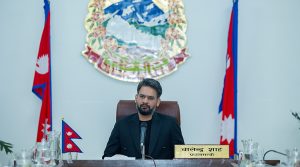
The government, meanwhile, has managed to distance itself from the incident through explanations from Communications Minister Bikram Timilsina and Prime Minister’s press adviser Deepa Dahal. Reports also emerged that Prime Minister Balen Shah had promptly instructed authorities to release the detained journalists. Shah’s office and advisers have maintained that neither the prime minister nor his secretariat was involved in the arrests.
However, Shah has offered no further explanation about what happened. Instead, on Sunday evening, he commented on a Facebook post by his chief political adviser, Kumar Ben, writing: “If people who go to Kupandole (Ben’s residence) are journalists— are the others artists?”
The prime minister’s response, Ben’s post, the silence of ministers and most lawmakers, and the conduct of several RSP supporters holding advisory positions in government, who have been busy offering advice to the opposition, have added to an emerging crisis.
On Sunday evening, Shah issued another warning through Facebook, writing: “Once the right time comes, everyone’s bad time will come. No one should dream that one or two people will escape.”
It remains unclear whom Shah was referring to. But the timing of the post gives the impression that it may have been intended to divert attention from the arrests of journalists. Home Minister Sudan Gurung has been conspicuously absent from the public discussion of such a serious incident. Yet he wasted little time sharing Shah’s Facebook post.
A raid on newsrooms

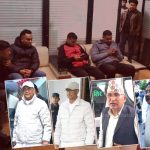
The events of Friday began with police entering media houses and detaining journalists. Police arrested Bishwamani Subedi of Nepal Press, Dhiraj Basnet of DNA Khabar and Shobharaj Baral of Motivate Online. Officers then went to the offices of Naya Patrika and Diyopost.
The police teams were there to arrest journalist Navaraj Mainali at Naya Patrika and editor Sudeep Bishwakarma at Diyopost. Following strong protests, however, the officers withdrew.
Prime Minister’s press adviser Dahal and Communications Minister Timilsina subsequently issued statements on social media.
Dahal said the prime minister and his secretariat had no involvement in the arrests and had not been informed about them in advance. She wrote: “It is clarified that the Right Honourable Prime Minister, his secretariat and the Prime Minister himself had no involvement in the incident in which journalists were arrested, and had no prior knowledge of it.”
She added that, as soon as he learnt of the incident, the Prime Minister had instructed the concerned authorities to release the detained journalists immediately and refrain from entering newsrooms or carrying out any form of harassment.
Timilsina also announced that the detained journalists had been released and reiterated the government’s commitment to press freedom.
“The government is fully committed to press freedom. Press freedom and responsible journalism are the pillars of democracy,” he wrote.
While several figures from the ruling side have spoken about the need for responsible journalism, Shah himself has remained silent about the incident. On Saturday, he chose instead to write about the digital significance of games such as Ludo and Call Break, while making no public comment on the use of state agencies to undermine freedom of expression and press freedom.
Shah, who rose to prominence through Facebook pages, is now facing criticism from the opposition and sections of the public over allegations that state power is being used to intimidate journalists and suppress questions. Critics say the government’s conduct is creating an atmosphere of fear.
Ram Prasad Dahal, general secretary of the Federation of Nepali Journalists (FNJ), says it is not enough for the prime minister to claim that he knew nothing about what happened at media houses.
“State terror has been unleashed at media houses in violation of international and domestic laws,” he says. “The prime minister cannot simply say he did not know. This must be resolved. An independent judicial committee should be formed and those responsible must face necessary action.”
Dahal has also called for an immediate end to the repeated attacks on the press.
“We once told Balen, who became prime minister on the slogan ‘Let us speak, government’, that we wanted to speak. Now we are saying, ‘Let us write, government’,” he says. “The government is behaving irresponsibly. It must return to the constitutional track as soon as possible.”
The arrests have also drawn comparisons with the period of King Gyanendra Shah’s coup, when restrictions on the press were imposed.
Senior journalist Rajendra Dahal considers the recent detentions even more alarming than what happened on 19 Magh and during the Panchayat era.
“Arresting journalists was not unusual during the Panchayat era. Officials would summon them for questioning under laws related to censorship, sedition and public security. Chief district officers and zonal commissioners, who were civilians, would call them in,” he says. “Even at a time when there was no press freedom, the police did not arrest journalists in this manner.”
Dahal says the government’s attempts to reach journalists’ sources through arrests should be treated as a serious matter.
“Even an editor does not directly ask a reporter to reveal their source. They try to verify the facts. Journalists are not obliged to disclose their sources even to the court,” he says. “The government is trying to extract information that journalists would not reveal even if their sources were dead. This is alarming.”
A pattern of pressure on the press
Friday’s incident was not the first time the press has faced intimidation during Shah’s seven months as prime minister.
In late July, vehicles were parked across the gates of several media houses in an incident that overshadowed the case involving Ganesh Nepali’s self-immolation.
On July 13, vehicles were placed across the entrances to the offices of Onlinekhabar, Himalaya Television and Kantipur. The government’s response to that incident was also unsatisfactory. Although the vehicles were confirmed to be associated with individuals linked to the RSP, no action was taken. The traffic police said the matter did not fall within their jurisdiction, while the police maintained that an investigation was under way. No further progress has been reported.
The police also crossed constitutional boundaries when journalist Kishor Shrestha was arrested on August 12. Shrestha had been detained following a complaint over a published news report. Police searched his home and the office of Jana Aastha, the publication of which he is editor.
The seizure of computers and other materials from the Jana Aastha office was an incident that, according to critics, had not even occurred during the Panchayat era. Nepal’s Constitution, adopted in 2015, guarantees full press freedom in its preamble and provides protection against the confiscation of media materials.
Article 19(2) of the Constitution specifically provides that media materials cannot be seized. Nevertheless, police arrested Shrestha in what has been described as an abduction-style operation, repeatedly searched his home and confiscated equipment from his office.
A government relying on arrests
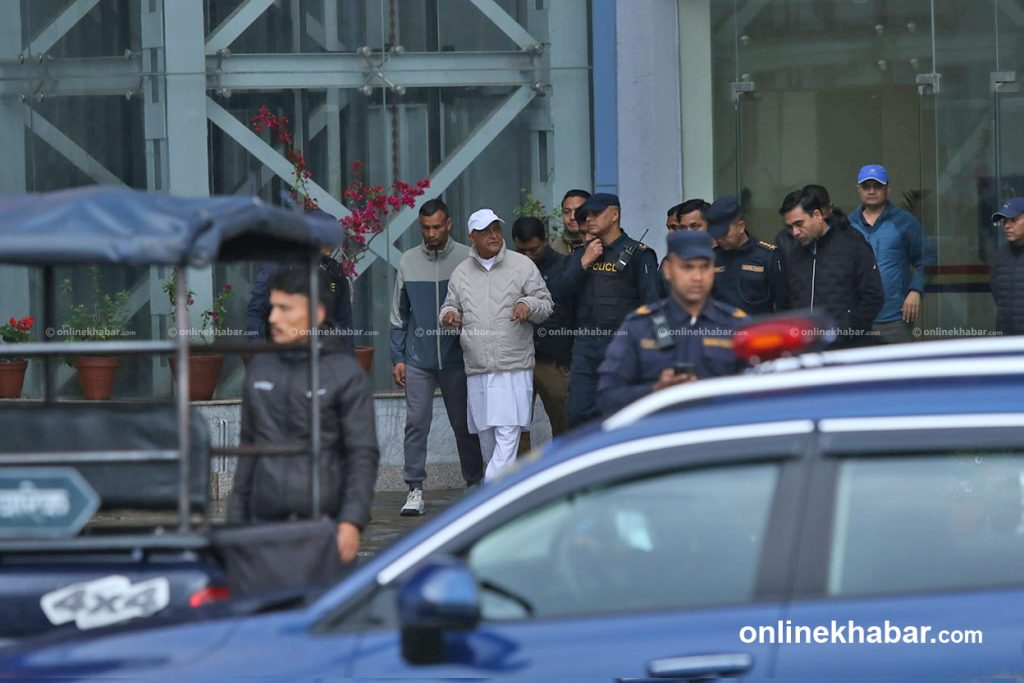
The use of arrests to intimidate journalists is part of a wider pattern of government action against political figures, businesspeople and others. Shah, who became prime minister following the Gen Z movement, made arrests his first major decision in office.
On the evening he was sworn in, Shah decided to arrest former prime minister KP Sharma Oli and former home minister Ramesh Lekhak, citing the report of the Karki Commission. Home Minister Sudan Gurung personally oversaw the operation. Police worked through the night of March 27 and arrested Oli and Lekhak at dawn the following morning. Gurung appeared to treat the arrests as an achievement, even counting his “good mornings” in reference to the people taken into custody.
The two were released on April 12 after the Supreme Court refused to extend their detention. The court had not ordered that charges should not be filed. However, the government did not move the case forward and instead released them, creating the impression that keeping them in custody for 13 days had itself been the objective.
That pattern of arrests followed by court-ordered releases has continued. Looking at the cases involving political figures, it is difficult to dismiss allegations that the government is acting out of political retaliation.
Two days after Shah became prime minister, on March 29, Lumbini provincial assembly member Rekha Sharma was arrested. Sharma had been accused of violence against a minor girl. The attorney general under Oli’s government had previously decided not to prosecute her. At the time, Shah was Kathmandu mayor and had publicly advocated on behalf of the girl. However, Sharma was released by a court order a week after her arrest, on April 5.
Former Kathmandu chief district officer Chhabi Rijal was also arrested on April 1. He was released almost immediately, without even having his detention extended, after pressure from chief district officers across the country.
Former finance minister Bishnu Prasad Paudel was arrested in Surkhet on June 22. The UML described his arrest as an act of political retaliation. Paudel, who had been preparing to travel to Kathmandu the following day, was brought to the capital by road in a hired microbus and kept in custody for three weeks. He was released on ordinary bail by a court on July 17. The case against him involved a claim of Rs 209 million.
Meanwhile, Home Minister Gurung, who resigned on April 22 after allegations emerged over his links with Bhatta, did not face what critics considered a satisfactory investigation. The investigation report was not made public, and Gurung was reappointed home minister on June 9.
Former minister Deepak Khadka was arrested after money was reportedly found at his home when it was burned during the Gen Z movement. Arrested on March 29, he was released by the Supreme Court on April 16. The court ruled that he could remain outside custody while an investigation into a money-laundering case continued, but barred him from leaving the country.
The government’s actions have repeatedly drawn criticism because arrests have been made before cases are sufficiently established, only for courts to release those detained. The government has secured court approval for only a few of these detentions. Deepak Bhatta, arrested on April 2, is among the accused who remain in custody.
Even the police have no clear answers
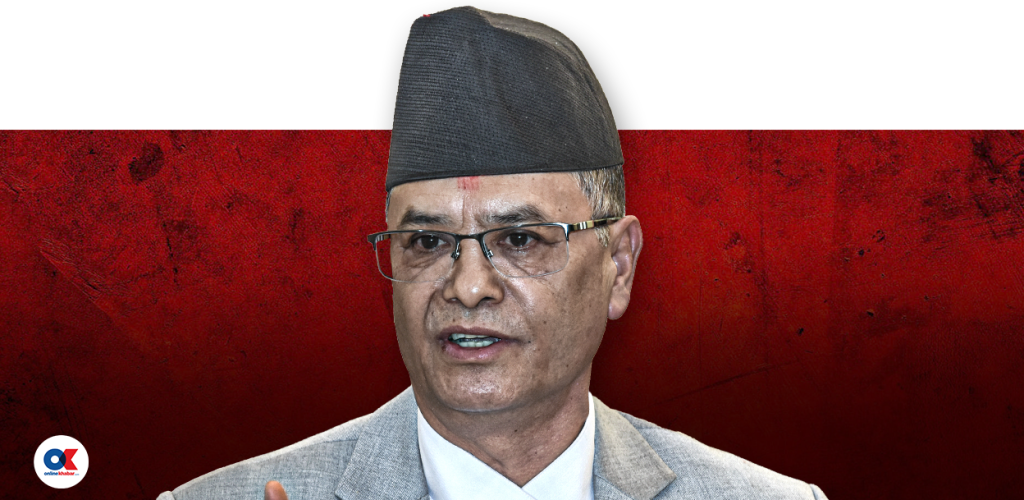
The government’s approach of treating the detention of high-profile individuals as an achievement has continued. In several cases, even the police have struggled to provide clear explanations for their actions.
One such incident took place on the night of September 27, when former chief justice Cholendra Shumsher Rana was taken to a police office. The police said Rana himself had sought protection and that officers had taken him to their office for his safety.
“We did not arrest him. We brought him to the office for his security. After making the necessary security arrangements, we released him,” said Santosh Khadka, Senior Superintendent of Police at the Crime Investigation Office.
It was the first time a former chief justice had been taken into police custody or brought to a police office in such circumstances. The incident raised questions about the government’s willingness to exercise power without regard for the balance between state institutions.
A similar controversy emerged over the alleged pressure placed on officials of the Commission for the Investigation of Abuse of Authority (CIAA), including Chief Commissioner Prem Kumar Rai.
Reports emerged that Rai and other officials had been summoned to the Prime Minister’s Office and pressured to file a case over a passport-printing contract.
The chief of the Department of Passports, Tirtharaj Aryal, was subsequently prosecuted and detained. However, the court halted the action taken by the Prime Minister’s Office and ordered the company from which the contract had been sought to be withdrawn to continue the work.
Ministers in the government, meanwhile, have openly issued threats against those they accuse of failing to do their jobs. Physical Infrastructure Minister Sunil Lamsal publicly warned that the legs of contractors who failed to complete their work would be broken. Following his instructions, police detained several construction entrepreneurs for questioning.
According to the Federation of Contractors’ Associations of Nepal, more than three dozen contractors were taken to the ministry by police in what it described as an abduction-style operation.
The federation objected to the use of arrests and intimidation without an adequate understanding of the domestic and international challenges facing construction projects. It reached a point where the organisation considered launching a protest. The federation said that having a minister’s personal assistant question contractors with the help of police amounted to state terror.
Police officials, for their part, have defended the actions of their organisation, presenting them as being in the interests of the government, the police and society. They have also argued that the police had no improper intentions in the case involving journalists.
“Calling some media personnel to the office by the Nepal Police Cyber Bureau to obtain general information about the truth, factuality and legal basis of publicity is an action carried out with the right intention as part of police duties,” says police spokesperson DIG Abi Narayan Kafle. “Taking this into consideration can help create conditions in which the public contributes to building a safe society.”
Former AIG Uttam Raj Subedi, however, says that following orders that go beyond constitutional limits can damage public trust in the police.
“Recent developments suggest that the police have been working under considerable pressure. Regardless of who directed these actions, they negatively affect the public’s perception of the police,” he says. “People begin to question the police’s actions. This can weaken the organisation and raise serious questions about its effectiveness.”
CIB’s credibility under scrutiny

The repeated arrests and subsequent court-ordered releases have also put the Nepal Police’s Central Investigation Bureau (CIB) under scrutiny.
The CIB is responsible for investigating major crimes, financial offences and cases that other police units have been unable to resolve. But a series of its decisions has been overturned by the courts, raising questions about the bureau’s credibility.
On May 12, the CIB arrested Jyotiprakash Pandey, chief executive officer of Nepal Investment Mega Bank, over allegations that a decision related to an auction had caused losses to the state. On May 15, the court ordered his release on a personal recognisance bond.
The bureau had also arrested former president of the Federation of Nepalese Chambers of Commerce and Industry (FNCCI) Shekhar Golchha and Shankar Group chair Shankarlal Agrawal. Golchha, arrested on April 23, was released by the Supreme Court on May 4. Agrawal, who was arrested on April 4, was released just three days later.
The repeated release of high-profile detainees has raised concerns among security experts that public confidence in the CIB could suffer. A former AIG who worked at the bureau believes the police may have carried out some of these arrests under pressure and without adequate preparation.
“Not everyone who is arrested is necessarily charged, and not everyone goes through a trial while in custody,” he says. “But the way people are being released by courts one after another suggests that the police conducting the investigations may be under pressure.”
Other police units have also been involved in operations that raise questions about the use of state power.
On May 15, the Kathmandu Valley Crime Investigation Office in Teku raided 95 education consultancies across the Valley. A total of 69 people were detained, but charges were filed against only 25.
Even larger numbers of people were arrested in operations described as sweep operations. Most were subsequently released without charges. The repeated arrest and release of Durga Prasai has, in effect, become a public spectacle.
Senior journalist Rajendra Dahal says the country is moving towards a dangerous situation as the government increasingly relies on fear as a tool of governance.
“Employees working on projects worth more than a billion rupees are being picked up in abduction-style operations. A situation is being created in which no one can speak,” he says. “The country is being pushed towards jungle rule. This is a serious matter.”