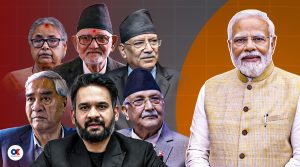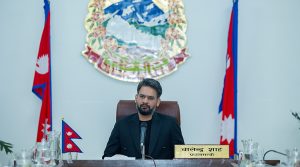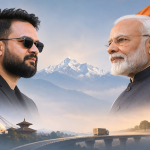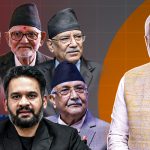


Prime Minister Balendra ‘Balen’ Shah is scheduled to make his first official bilateral visit to India on November 22 and 23. The visit is expected to last approximately 25 hours, making it considerably shorter than the multi-day visits undertaken by previous prime ministers. During his stay in New Delhi, Shah will hold a 30-minute one-on-one meeting with Indian Prime Minister Narendra Modi, pay a courtesy call on President Droupadi Murmu and participate in limited delegation-level talks.
The condensed itinerary, in itself, is neither necessarily a reflection of the serious, no-frills leadership style that emphasises efficient, results-oriented diplomacy and shuns prolonged diplomatic courtship, as government supporters might like to portray it, nor is it necessarily a sign of weakness or an inability to engage with leaders across different sectors.
It has its merits and shortcomings, and it is up to the leadership to shape public perception to its advantage. However, the significant reduction of the schedule from an earlier three-day plan to a trip lasting just over a day, with few public engagements, leaves room for speculation that the government was unable to secure agreements or concessions on many of the proposals it had initially put forward.
This is not Shah’s first foreign trip as prime minister. In September, he travelled to New York to attend the United Nations General Assembly (UNGA), where he delivered a notable address proposing a Himalayan Climate Resilience Mechanism involving Nepal, India and China. He also thanked both neighbours for their assistance with flood relief. However, this is his first official bilateral foreign visit. His trip to New York was not a bilateral visit to the United States but an opportunity to present Nepal’s national concerns on the UNGA platform.
That said, Balen’s first official bilateral visit to India is consistent with diplomatic tradition and the expectations of India’s diplomatic establishment. In South Asian diplomatic practice, particularly in relations between India and Nepal, the first bilateral visit of a newly appointed prime minister carries particular weight as a signal of priority and intent. This tradition has acquired even greater significance with China’s growing global prominence and its increasingly active engagement in South Asian trade, commerce and politics.
Only on a few occasions in the past has this convention been broken, notably by Pushpa Kamal Dahal, who chose China in 2008, and KP Sharma Oli, who did the same in 2024 after failing to receive an invitation from India. In both instances, India’s diplomatic establishment did not take the decision lightly. In that regard, the Balen government appears unwilling to create an unnecessary and entirely avoidable hurdle for itself in the conduct of governance.
The politics of accommodation
In fact, the Balen government appears more concerned with the other end of the bilateral equation. From the outset, the Rastriya Swatantra Party (RSP) and the Balen government have appeared keen to remain in India’s good graces. This has been evident in high-level visits by RSP leaders and other ministers, as well as the prime minister’s conciliatory, if not self-recriminating, remarks that have downplayed the territorial disputes that strained his predecessor Oli’s relationship with India.
The prime minister’s visit, coming almost nine months after the formation of the government, is the culmination of sustained engagement by the Balen government and his party with the Indian political establishment. Shah’s initial reluctance to grant one-on-one meetings to foreign envoys, including India’s, did little to facilitate the establishment of bilateral relations. The Balen government, born out of the Gen Z uprising, either had to work exceptionally hard to convince the Indian government, which remains wary of the possibility of similar unrest at home, of its commitment to long-term cooperation, or it wanted to secure significant achievements to showcase during the prime minister’s first visit to India. Either way, these considerations may help explain why the preparatory work took several months.
Both possibilities, however, present their own complications. In the first scenario, India’s willingness to engage closely with a government born out of a youth uprising could send unintended signals to its own Gen Z constituency, potentially appearing to endorse the legitimacy and political success of such a movement. In the second, without tangible evidence of progress in bilateral relations to show for the prolonged diplomatic effort, the prime minister risks facing a backlash in the months ahead.
Engagement has, in fact, been building through a series of high-level interactions. A few months after the formation of the government, Rabi Lamichhane, chairman of the ruling RSP, made a substantive visit to India in June 2026, during which he met Prime Minister Modi, Home Minister Amit Shah and External Affairs Minister S. Jaishankar. The engagement was framed less as a matter of diplomatic protocol and more as a signal of party-to-party relations and renewed development cooperation, marking the beginning of a renewed friendship after a rather cold decade in bilateral relations.
Similarly, Nepal’s home minister visited India for a BIMSTEC meeting, during which he held bilateral talks with his Indian counterpart, Amit Shah, and also met External Affairs Minister Jaishankar. Finance Minister Swarnim Wagle’s earlier outreach to New Delhi focused on reconstruction financing needs arising from the devastating floods. Foreign Minister Shisir Khanal coordinated the diplomatic preparations, while Indian Foreign Secretary Vikram Misri’s November visit to Kathmandu helped finalise the agenda and deliver Modi’s formal invitation. All of this suggests that whatever early friction and distrust may have existed between the two governments is gradually giving way to a more conventional rhythm of engagement.
As mayor of Kathmandu Metropolitan City, Balen Shah was once able to harness the imagination of an ultranationalist segment of the public by displaying the Greater Nepal map, which includes a large swathe of territory Nepal lost following the Sugauli Treaty and which is presently part of India. For much of his tenure as mayor, he cultivated an image of assertive sovereignty and generational rupture with the political habits of the past.
With changed political circumstances and his sudden elevation to the position of prime minister, he has retained his firebrand stance against traditional political parties and their practices. However, along the way, he seems to have lost some of his ultranationalist edge, perhaps for practical reasons. After all, he is no longer a municipal leader.
This change in posture has become increasingly palpable, most notably through his controversial remark in Parliament that India is not the only country encroaching on Nepal’s territory, as Nepal has also encroached on Indian land. While many condemned the statement, a considerable number of his supporters dismissed it as a slip of the tongue by an inexperienced but well-intentioned leader. Similarly, his finance minister’s statement at a forum in India, which appeared to diminish the significance of Nepali nationalism, reinforced the position of voices within India that routinely equate Nepali nationalism with anti-Indianism.
Furthermore, upon closer scrutiny, the finance minister’s earlier remarks on the concept of a “South Asian Monroe Doctrine”, however academically articulated, appear to undermine Nepal’s national interests. From his current position as a minister representing Nepal, a country that would have to accept India’s suzerainty under such an arrangement, the idea was particularly problematic, however vaguely or intellectually it might have been presented.
The public, meanwhile, has been remarkably restrained and willing to give this government the benefit of the doubt regarding its capacity and intentions. Nevertheless, the general perception is that the government is going out of its way to accommodate India’s concerns and ease bilateral tensions.
Beyond symbolic deliverables
After all these efforts, several things will have to fall into place for the prime minister’s visit to be considered a success. The government appears to have invested considerable political capital in normalising and strengthening relations with India. If New Delhi recognises this and genuinely creates an environment in which the Balen government can demonstrate tangible and meaningful progress, both the government and the prime minister’s visit will have achieved their purpose.
However, the likelihood of things not going smoothly remains considerable. Past high-profile engagements with India have, for the most part, been characterised by public disappointment over stalled and delayed progress, from Tanakpur and Pancheshwar to the more recent EPG report, various hydropower projects and power export targets. Widespread anti-Indian sentiment in Nepal is not merely a product of exploitation by old political party leaders, as the finance minister rather simplistically portrayed it. While political leaders may have exploited and amplified certain situations, there has also been a persistent tendency within the Indian political establishment to treat the concerns and needs of the Nepali people without sufficient seriousness.
The present political establishment in India appears willing to adopt a more businesslike approach to dealing with Nepal at the highest level. However, the same cannot necessarily be said of the bureaucratic machinery and local political establishments responsible for implementation. From my perspective, however well-intentioned and practical proposed arrangements may look on paper, India is bound to disappoint Nepal and its people unless it begins acting like a country that carries the legacy of a civilisation thousands of years old, with a grand history and a dignified presence, rather than getting caught up in petty bargains and the wounded ego of an insecure giant.
The asymmetry of power, the mismatch in landmass and economic strength, and Nepal’s landlocked geography have given Indian power centres a sense of invincibility and unquestionable dominance. This arrogance somehow finds expression in bilateral dealings, whether at a local checkpoint or during high-level diplomatic meetings. It is true that over the past decade, political players have been consciously cautious about appearing overbearing. Yet that period was also the coldest in bilateral relations, characterised by very little high-level engagement.
Whether a more respectful exchange can be maintained through the active, high-level engagement that the Balen government hopes to establish remains to be seen. That will require India to genuinely listen to Nepal’s concerns, whether they relate to territory, the economy or trade. The Balen government has already risked being perceived as excessively accommodating of Indian sensibilities and overly eager for engagement.
If the prime minister’s short but high-stakes visit fails to initiate, or at least lay the groundwork for, bilateral engagement on issues of long-term consequence, such as border disputes, water-sharing sensitivities surrounding projects like Pancheshwar and Koshi, and persistent trade asymmetries, and instead produces nothing more than an aid package, however generous, the Nepali public will likely view it as a return to traditional dependence and an unequal bilateral relationship.
Some of the deliverables expected to be showcased as achievements during the prime minister’s visit reportedly include improved air connectivity for underutilised Nepali airports, primarily Bhairahawa Airport, for which some form of leasing or operational agreement is rumoured. Other possibilities include expanded electricity trade and transmission between the two countries, as well as a potential Janakpur-Ayodhya railway service arrangement that could serve as a symbolic reaffirmation of the partnership.
Despite several visits by high-level ministers, it remains highly unlikely that structural issues requiring sustained institutional engagement, such as border management, the full spectrum of water resources cooperation and long-term trade asymmetries, will make it onto the core agenda. It would be a missed opportunity for India not to establish a framework for addressing issues of enduring importance with the Balen government, which has already put so much of its political capital at stake to maintain practical and cordial relations with New Delhi.
China is still in the equationa
Nepal has long advocated and worked towards balancing its relations with India and China. For a country as heavily dependent on India as Nepal, however, the use of the word “balancing” to describe its relationship with China has often been a misnomer. From the era of King Mahendra to the final government of KP Sharma Oli, Nepal has consistently attempted, with varying degrees of intensity, to reduce its overwhelming dependence on India for trade and transit routes.
The last nine months under Balen have marked a pause, if not a reversal, in Nepal’s gradual movement towards China. In fact, with the inclusion, or even the rumoured inclusion, of pro-Tibet elements in the government, the Balen administration is widely perceived as moving away from Beijing.