
Kathmandu, November 22
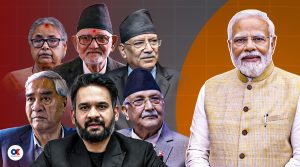
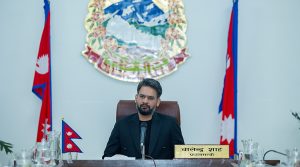
As Prime Minister Balendra Shah begins his much-anticipated visit to India on Sunday, Nepal’s aviation sector will be closely watching whether Kathmandu can make progress on one of its longest-standing bilateral demands — additional international air routes through Indian airspace.
Nepal has been seeking additional air entry points for more than 15 years. However, India’s reluctance to approve the proposal has left the country not only landlocked but also heavily dependent on a limited number of international flight corridors.
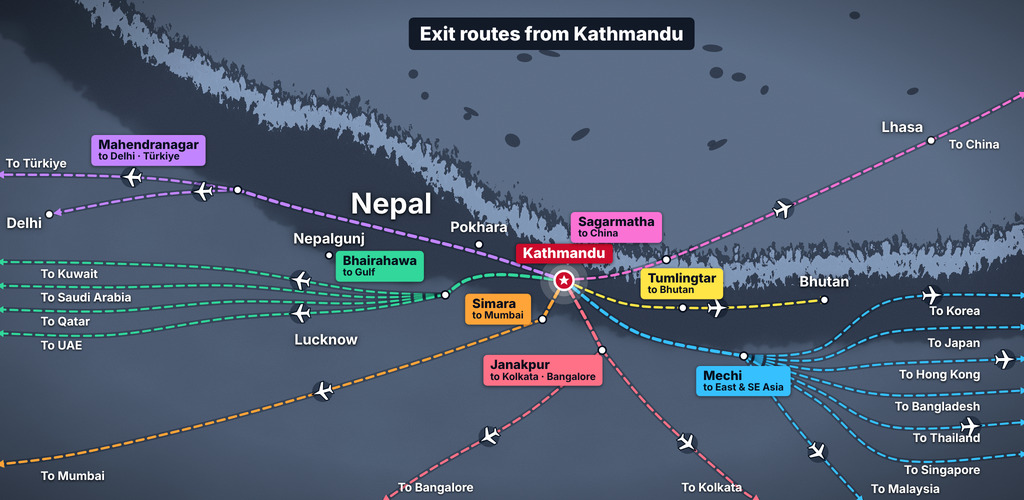
Nepal currently handles around 100 to 115 international flights a day, although the number fluctuates depending on the season. International aircraft use seven designated exit points — Mahendranagar, Bhairahawa, Simara, Janakpur, Biratnagar, Kakarbhitta and Tumlingtar.
However, the country has only three entry points for international flights.
Aircraft from Bhutan enter through the Mechi-Tumlingtar corridor, while flights from China enter through the Sagarmatha region, also known as the Lhasa route.
Almost all other international flights must enter Nepal through Simara after passing through Indian airspace.
This includes flights arriving from eastern destinations such as Bangladesh, Malaysia, Singapore, Thailand and Hong Kong, as well as Indian cities including Delhi, Mumbai and Bengaluru. Aircraft arriving from Gulf countries such as the UAE, Qatar, Saudi Arabia and Kuwait, and from Turkey, also have to use the Simara entry point.
As a result, Nepal’s international aviation network remains heavily dependent on a single corridor. Data from the Civil Aviation Authority of Nepal (CAAN) for the past two years show that around 88 per cent of international flights enter the country through Simara.
This concentration of air traffic has created three major challenges for Nepal’s aviation sector.
The first is congestion. When air traffic builds up around Tribhuvan International Airport in Kathmandu, several aircraft have to be kept in holding patterns over the relatively narrow airspace around Simara. An additional entry route would provide more flexibility in managing incoming traffic and create more room for aircraft to manoeuvre.
The second problem concerns flights to Gautam Buddha International Airport in Bhairahawa and Pokhara International Airport.
Even aircraft arriving from Delhi, Mumbai or Gulf destinations to Bhairahawa must first enter Nepal through Simara before making a U-turn towards their destination.
Flights approaching Bhairahawa from western destinations have to cover approximately 190 nautical miles, or around 300 kilometres, of additional distance. Aircraft heading to Pokhara face a detour of around 145 nautical miles.
For larger aircraft, this can mean more than 20 minutes of additional flying time.
The longer routes increase fuel consumption and operating costs, particularly at a time when aviation fuel prices remain high. Allowing aircraft to enter Nepal directly through Mahendranagar would significantly shorten the journey for flights approaching from the west.
The third issue is revenue. Nepal earns revenue when foreign aircraft fly through its airspace. However, under the existing arrangement, the country collects charges only for the relatively short stretch between Simara and Kathmandu. Allowing international aircraft to enter through points such as Mahendranagar or Nepalgunj would increase the portion of Nepal’s airspace used by those flights and potentially generate additional revenue.
India does not necessarily need to provide separate air routes for both Bhairahawa and Pokhara. In the case of Bhairahawa, an agreement allowing aircraft to use Indian airspace is also necessary. For Pokhara, however, flights could operate more conveniently through either Mahendranagar or Bhairahawa.
For this reason, Nepal has been prioritising permission to use the Mahendranagar entry route.
Kathmandu has sought permission for aircraft to enter Nepal at altitudes above 30,000 feet. India had previously indicated its willingness to allow aircraft to use the route at lower altitudes, but that arrangement would not adequately serve Nepal’s requirements.
Large commercial aircraft generally cruise above 30,000 feet. Bringing them down to around 14,000-15,000 feet at Mahendranagar before they enter Nepal would not be economically or technically practical.
Nepali and Indian aviation officials have held several rounds of technical discussions on making the Mahendranagar route operational in both directions.
In 2018, India proposed allowing two-way movement only for aircraft flying at lower altitudes, an arrangement suitable mainly for smaller aircraft such as ATRs. The proposal did not meet Nepal’s requirements for international aviation and was never formally implemented.
In 2023, India indicated that it could consider allowing aircraft flying between 15,000 and 24,000 feet to use the route. However, no formal agreement was reached.
Nepal needs approval for aircraft flying at higher altitudes to benefit from the arrangement, as larger aircraft consume less fuel when operating at their optimal cruising altitudes. Higher-altitude access is also important for international airlines that fly through Nepali airspace without landing in the country.
Bhairahawa airport’s dependence on Indian airspace

While an additional entry route through Mahendranagar would make western approaches easier, Bhairahawa International Airport presents a separate set of technical and security challenges.
Aircraft approaching Bhairahawa need to use an approach path that extends into Indian airspace. This requires an agreement between Nepal and India on the use of Indian airspace. Without such an arrangement, Nepal would have to seek permission for every individual flight, making regular operations more complicated.
The issue is particularly important because Bhairahawa is prone to fog, which can affect visibility during landing. The airport is equipped with an Instrument Landing System (ILS) to help aircraft land safely when visibility is low.
Located around five kilometres from the Nepal-India border, Bhairahawa’s ILS coverage extends into Indian airspace. The system’s signals can reach 15 to 20 nautical miles, guiding aircraft towards the runway during landing and take-off.
Aircraft may also need to enter Indian airspace when carrying out a missed approach, circling or other manoeuvres during emergencies.
International Civil Aviation Organization regulations require that a country’s aviation systems and equipment should not interfere with another country’s air traffic and communication systems. Where such interference or overlap is possible, the countries concerned must reach an agreement.
The existing safety zone associated with Bhairahawa’s landing system also extends into Indian airspace. India has linked the issue to its security concerns regarding the Air Defence Zone at Gorakhpur, where the Indian Air Force operates a military station.
Nepal has repeatedly requested permission from India to facilitate the smooth operation of the system.
Aircraft do not normally enter another country’s airspace without authorisation. However, adverse weather conditions and flight safety requirements can sometimes force them to deviate from designated routes. There have been instances of aircraft from both Nepal and India entering each other’s airspace when necessary. Such situations are generally managed through coordination between the respective air traffic control authorities, advance notification and established procedures.
Why has India been reluctant?
Nepal’s aviation relationship with India dates back to 1949, when an aircraft carrying the then Indian ambassador landed at Gauchar Airport, opening the door to air services in Nepal.
The first commercial flight to Nepal also came from India, while Nepal’s first aircraft operated its maiden flight to India. For a long time, India remained both the primary source and destination of Nepal’s international air traffic.
India therefore played a significant role in the development and expansion of Nepal’s aviation industry.
As long as Nepal had only one international airport and relatively low air traffic, the Simara entry route was sufficient. However, the need for additional routes emerged after the government moved ahead with plans to build international airports in Bhairahawa and Pokhara.
Nepal first raised the issue of additional entry routes in 2009, following its decision to develop the two airports.
The matter gained prominence during Indian Prime Minister Narendra Modi’s visit to Nepal in 2014. The two prime ministers directed their respective authorities to hold discussions and reach a conclusion within six months.
Since then, the issue has featured in almost every high-level bilateral engagement. It was raised during prime ministerial meetings in 2016, 2018, 2022 and 2023, alongside discussions between foreign ministers and technical officials from both countries.
A meeting between the civil aviation authorities of Nepal and India on June 16, 2018, had agreed to conduct technical safety assessments to make Mahendranagar, Janakpur and Biratnagar available for two-way air traffic.
Yet, as of 2026, no concrete agreement has been reached on any additional international entry route.
Why has India continued to delay approval?
According to Nepali officials, India has repeatedly cited security concerns related to its military base in Gorakhpur, where the Indian Air Force operates fighter aircraft alongside a civilian aviation terminal.
Nepali officials argue that the technical obstacles could be addressed if a firm political understanding were reached between the two governments.
Some analysts also point to India’s strategic concerns over Chinese involvement in Nepal’s infrastructure projects.
Pokhara International Airport was built with a loan from China’s Exim Bank, while a Chinese contractor was involved in the construction of Bhairahawa International Airport. Some observers believe India’s reluctance to grant additional air routes is partly linked to its concerns over China’s growing presence in Nepal.
The issue also has a regional infrastructure dimension. India is developing major airports close to Nepal’s border, including Bagdogra Airport in West Bengal, around 20 kilometres from Kakarbhitta.
India is investing more than 15 billion Indian rupees in the development of the airport, which is expected to handle up to 10 million passengers annually. The project is targeted for completion in 2027.
Located in the strategically sensitive Siliguri Corridor, the airport also has a military base nearby. India intends to develop Bagdogra as a regional aviation hub serving its northeastern states, eastern Nepal, Bangladesh and Bhutan.
For that purpose, India has already proposed using Nepal’s eastern airspace for certain flights operating from Bagdogra.
Similarly, India is upgrading an old airport in Raxaul, directly across the border from Birgunj. Originally built during the 1962 war with China, the airport is undergoing expansion with substantial investment. India has reportedly spent more than 2 billion Indian rupees on land compensation alone.
The airport is expected to have potential military applications, and its development could create competition for Nepal’s proposed Nijgadh International Airport.
Will additional air routes make the airports viable?

Nepal has invested around half a trillion rupees in its two new international airports through government spending and international loans, while the private sector has also invested a comparable amount in anticipation of increased economic activity.
Pokhara International Airport cost around Rs 22 billion, financed through a loan from China’s Exim Bank.
Construction of Gautam Buddha International Airport in Bhairahawa cost around Rs 7 billion, excluding land compensation. More than Rs 22 billion was spent on compensation for the land acquired for the project. The government secured loans from the Asian Development Bank for its construction.
The lack of regular international flights has raised questions about the justification for spending tens of billions of rupees on the two airports.
Allegations of irregularities in the construction of Pokhara International Airport have also led to corruption cases being filed against former minister Gyanendra Bahadur Karki and several others.
At a time when fuel prices are rising, operating flights to Bhairahawa and Pokhara through longer routes via Simara has become increasingly expensive.
Nepal estimates that the proposed shorter routes could reduce flight times to Gautam Buddha International Airport by around 23 minutes and to Pokhara International Airport by approximately 18 minutes.
Shorter routes would reduce fuel consumption, operating expenses, airfares and emissions while making the two destinations more commercially attractive to international airlines.
However, obtaining additional entry routes alone will not guarantee the success of the airports.
The government has introduced several incentives to attract international airlines to Bhairahawa and Pokhara. Airlines operating regular international flights from the two airports have been offered a 100 per cent exemption on landing, parking and navigation charges and a 50 per cent discount on ground handling charges until mid-September 2028.
Earlier, the government had also offered concessions on passenger service charges and aviation fuel.
The Civil Aviation Authority of Nepal even attempted to create incentives for airlines by reducing the number of flights they could operate from Kathmandu.
A separate action plan was also approved to expand services at both airports, including labour permits, immigration, customs, quarantine and health screening facilities, targeting Nepali migrant workers travelling abroad.
Despite these efforts, the airports have struggled to attract sustained international operations.
The fundamental reason is that airlines must find it commercially viable to operate from an airport. Profitability depends on passenger numbers, available facilities, market demand and several other factors.
Additional entry routes are therefore one of the immediate measures Nepal can pursue to improve the operating environment for the two airports.
International flights are already operating from both Bhairahawa and Pokhara. However, many of these services have been promotional or facilitated through government intervention rather than driven by regular commercial demand.
For Nepal, securing additional air entry routes from India could remove a major operational obstacle. But turning that opportunity into sustainable international aviation services will require more than a diplomatic breakthrough.
As Shah heads to New Delhi, the long-running air route dispute is once again expected to feature prominently in bilateral discussions. However, the two sides have yet to reach common ground, with disagreements continuing over the proposed entry route and the altitude at which international aircraft would be permitted to enter Nepal.
For Nepal, the outcome could have implications beyond aviation. It could influence the commercial future of its two new international airports, the competitiveness of its tourism industry and the country’s ability to make better use of its airspace. Whether this visit produces a concrete agreement or another round of technical discussions remains to be seen.