

Hundreds of hands work simultaneously inside a wool-processing factory in Dhobighat, Lalitpur. Some workers are shaping wool, others are making flowers, toys and decorative items. There is no deafening noise from machines. Here, the only tools for creation are hands, skill and patience.
These handmade products adorn homes in more than 40 countries around the world, including the United Kingdom, the United States, Canada, Japan and the Netherlands. Nepali handicrafts embody not only Nepal’s originality but also the labour, dreams and dignity of thousands of Nepalis.
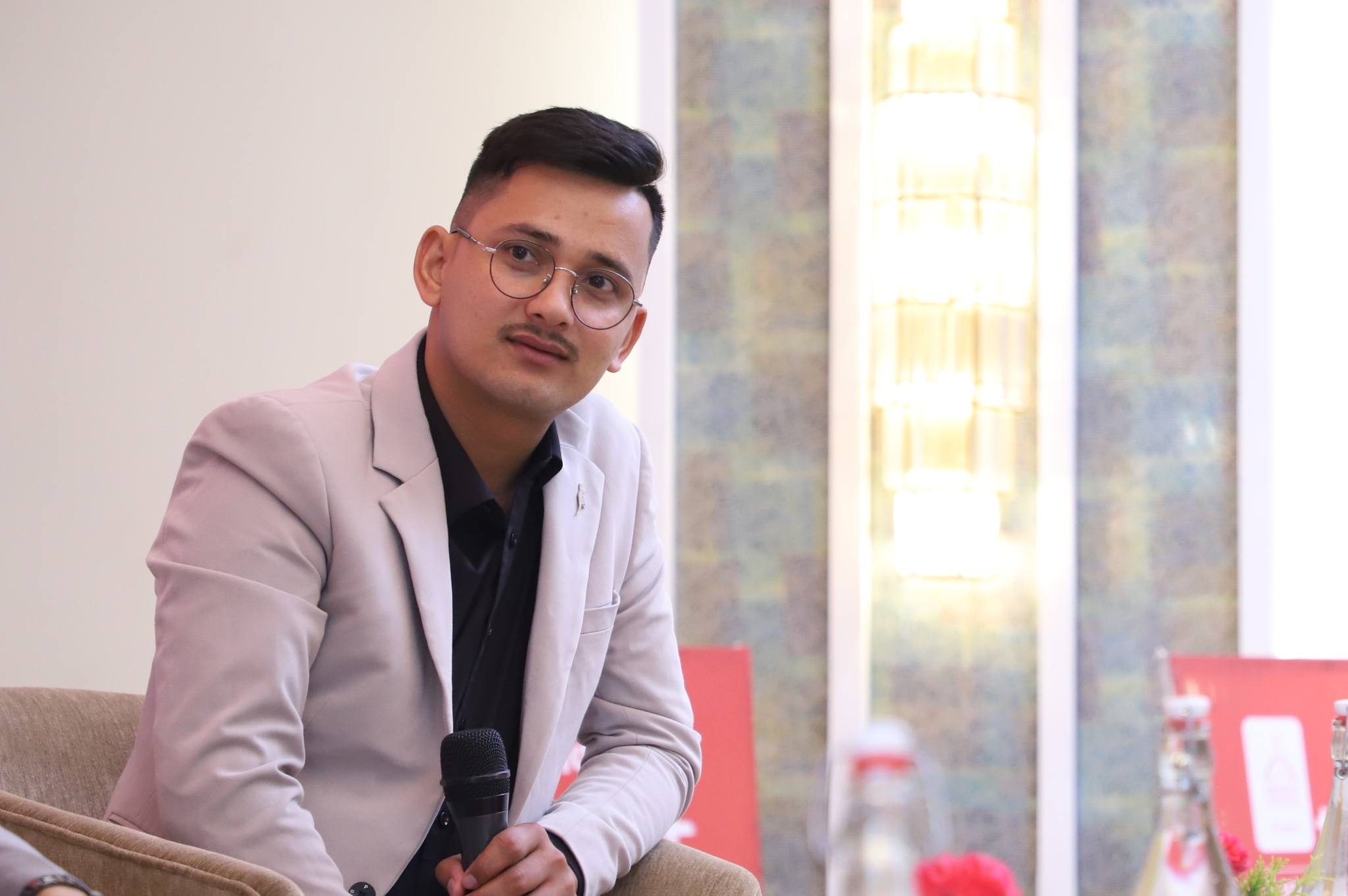
Thirty-four-year-old Meghraj Budhathoki is the chairperson and chief executive officer of Om Sairam Felt Product Pvt. Ltd. Currently residing in Kirtipur, Meghraj’s business has gained recognition not only in Nepal but also internationally.
What began in a small room has now grown into one of Nepal’s leading handicraft export businesses under his leadership. The company has been listed among the country’s top handicraft exporters for five consecutive years and has now become the country’s largest handicraft exporter.
However, Meghraj prefers to define his identity not by the size of his business but by the employment it provides. “My greatest asset is not the company; it is my team,” he says.
Born in 2048 BS in Mayankhu village of Udayapur, Meghraj spent his childhood there. When he was in Grade 3, his family moved to Sarlahi. After completing his SLC (School Leaving Certificate, now SEE), he came to Kathmandu and began studying at Janamaitri Campus.
While studying at the plus-two level, most of Meghraj’s friends were busy getting passports and visiting consultancies, preparing to go abroad. But Meghraj’s mind was drawn elsewhere. His elder brother worked as a technician in a handicraft industry. While visiting various factories and workshops with his brother, he saw women weaving a variety of woollen products by hand. Having been interested in drawing and creative activities since childhood, he was fascinated by what he saw.
Around 2065/66 BS, he embarked on the risky journey of handicraft production with a team of three or four people, a small investment and a small flat. In the early days, he himself would sit on the floor and make woollen products.
At the time, they did not have their own brand. They made products and supplied them to large exporters. They also handled the packaging themselves. From delivering the goods to maintaining accounts, they had to shoulder every responsibility. Their capital was small and their experience limited, but their dream was big. “We kept working and kept learning. Our own factory became our university,” he says.
The international door opened by the earthquake
Soon after the devastating earthquake of 2015, Meghraj opened a small showroom in Thamel. A British customer who visited the showroom placed a small order. After Meghraj fulfilled the order honestly and on time, the customer’s trust grew, and the orders began to increase.
The international relationship that began with that customer has continued to expand, and today the company’s products are reaching more than 40 countries around the world.
Sheep wool brought from New Zealand is transformed into artistic products by the hands of Nepali women at the Lalitpur factory and exported to developed countries such as the United Kingdom, the United States, the Netherlands, Canada and Japan. Through this process, Meghraj’s business has continued to expand.
A source of livelihood for a thousand women
Meghraj’s factory is not merely a place for making profits. At present, up to 1,500 workers are employed on a regular or need-based basis, more than 1,000 of whom are women.
Women from marginalised communities and disadvantaged backgrounds, in particular, are learning skills here and earning an income with dignity. Even during major crises such as COVID-19, the blockade, the earthquake and floods, he did not shut down the factory or allow his workers to lose their livelihoods.
He has also provided employment at his factory to 15–20 young people who were cheated while seeking foreign employment or who returned home due to health problems.
Many of the women working with him had never previously ventured outside their homes for work. Now, many have educated their children with their own earnings, some have built houses, while others have reduced their financial dependence on husbands working abroad.
When he stopped his wife from going abroad
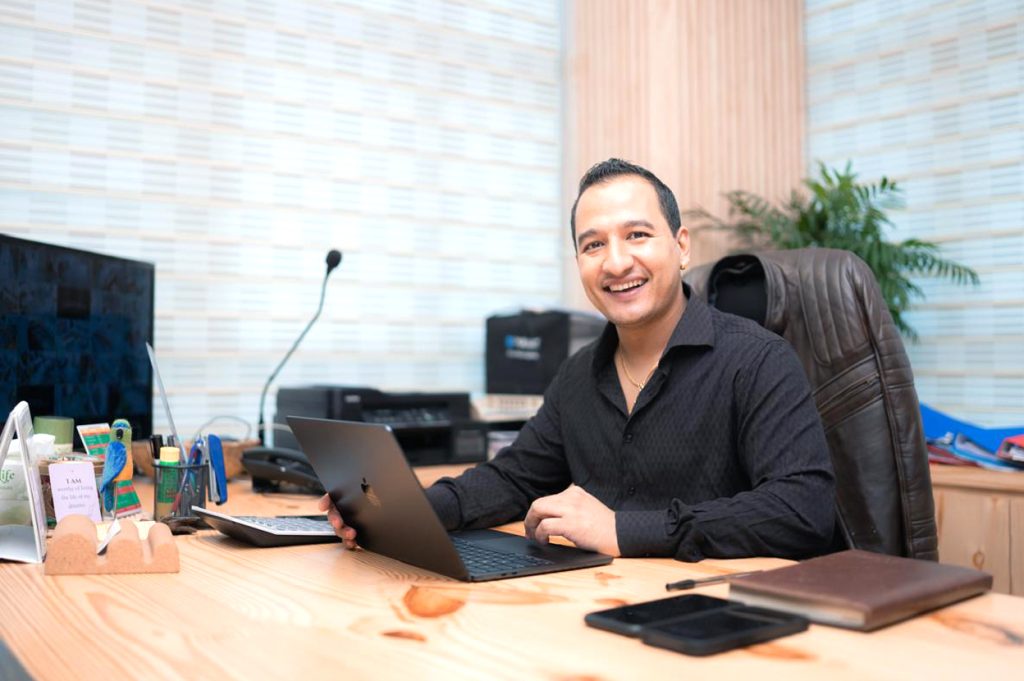
It is common for disagreements to arise when businesspeople struggle to find time for their families. In Meghraj’s case, however, his entire family is devoted to the same business.
He married Anuja, who is from Kathmandu, in 2068 BS. At the time, going abroad was a popular choice among young people. After getting married, Anuja also thought, “Most people are getting married and going abroad. Should I take the IELTS and go abroad too?”
But Meghraj persuaded her, saying, “Instead of going to another country to do the same work, let’s do it here in our own country. If we have a platform here, let’s not look for another one elsewhere.”
Anuja did not reject her husband’s request. Instead, she has been working alongside him for the past 15 years. Not only Anuja but other members of Meghraj’s family are also involved in the business.
Branding and quality audits
At a time when cheap, machine-made plastic products are dominating the market, Meghraj sees an even brighter future for Nepali handmade products. As environmental awareness grows around the world, foreign consumers are choosing organic and natural products made from 100 per cent wool, even if they are more expensive.
To meet international standards, Om Sairam Felt Product does not compromise on quality. The company has a separate quality-control unit. According to Meghraj, the company has successfully passed ISO testing and stringent international audits related to social responsibility every year. Foreign customers now visit the factory directly. The company also connects with customers through its website and international trade fairs.
However, the handicraft industry is run by people, not machines. It takes years to train workers in the required skills. But with the increasing trend of people going abroad, retaining skilled workers has become difficult. “The workers we spend years training leave for foreign countries. Then we have to train new people all over again,” he complains.
Challenges and state neglect
Running a business is not without challenges. In the past four or five months alone, the price of raw materials, wool, has nearly doubled due to the policies of the New Zealand government and the war in the Middle East, while transportation costs have risen sharply.
Ironically, there is no effective state policy to encourage export-oriented industries. The government even levies VAT on raw materials imported by industries that export 100 per cent of their products, while the refund process is highly cumbersome. The export incentive grants promised by the government have also been withheld. “Nepal’s indigenous sheep produce coarse wool, so it is not suitable for felt. But if the government and businesses work together to crossbreed improved sheep breeds and produce wool in Nepal, we can become self-sufficient in raw materials as well,” Meghraj says.
He says export-oriented industries need clear policies, tax incentives, measures to reduce energy costs and a long-term plan to produce quality wool within Nepal. “We have the market and the skills. What we lack is policy and facilitation.”
Creating jobs for Nepali youth in Nepal
Meghraj considers himself more of a social entrepreneur than a successful businessman. He arranges industrial visits for school students, provides free consultations to new entrepreneurs and conducts skills training at his company. He has also arranged for trainees to receive remuneration from their very first day of training.
His business journey, which began with a team of three or four people, has now reached the global market. But for Meghraj, this is not the final destination. He continues to pursue his dream of establishing Nepali handicrafts as a world-renowned identity.