
Throughout the years, I have had the privilege of spending time with various animals. The three leopards cramped in our zoo; Rangila, the rescued dancing bear; snakes that were defanged and exhibited during Shivaratri; tigers imprisoned in Sauraha; the dog who saved my life on a cold December day; the old crow who died next to my tree; the calf who died on my lap; caterpillars in my backyard; and countless others with stories of their own, trying very hard to survive and share this planet with humans, with us. However, no one comes closer when connections are built, when moments are shared, when the sheer presence of these animals challenges your own existence, than the mighty elephants.
I have spent silences and sounds with elephants, the wild and the captive, both holding secrets of humanity, or rather, lessons on how humans need to embody what they preach. After all, what are religion and spirituality but mirrors of how we act without expecting anything in return? And what can be more selfless than embodying the principle of non-violence? On the contrary, those who speak of religious philosophies often deviate from their sanctity and compromise them for comfort. Renowned as Lord Ganesha, elephants have adorned our altars, temples, jewellery, and tote bags since antiquity. Known as Bignaharta, elephants have been immortalised as stone idols, ornaments, water-resistant paintings, and gifts for our NRN relatives. Revered as symbols of Tantrism, elephants appear in music videos, paraded toward Boudha with prayer flags, mandalas, and man-made celebrations. Projected as tokens of tourism, elephants have been traded for diplomacy, broken for profit, bred for commerce, and eventually abandoned as expendable. Therefore, please excuse my tone when I say that religiously and spiritually, we have proven ourselves hypocritical and trite.
Speaking of trite, one of the most overdone, over-explained, and endlessly justified spectacles is the “Elephant Festival,” organised each year under a welfare-washed model. This year, too, it is all set to awe audiences while abused and overworked elephants are forced to participate in a human circus. The elephants are adorned with paint and art; they move, run, and dance while mahouts remind them of the cost of rebellion, the hook and the stick. Every year, without fail, the United Elephant Owners’ Association offers unapologetic justifications through press conferences, claiming how much they love their elephants, how they have paid crores for them, and therefore how no one, least of all animal rights activists, can love these elephants more than they do. They reduce elephants to commodities they have purchased, like expensive watches worn once and then locked away in boxes, except elephants are not inanimate objects. They are among the most intelligent and sentient animals known, with complex emotions and personalities. They form bonds, develop relationships, curate experiences, and actively shape forests and ecosystems.
This “business-as-usual” worldview argues that elephants have always been abused for centuries and continue to be abused today, so why raise objections now? The answer lies in the moment an elephant is born. The practice of Phajaan is also business as usual. Phajaan literally translates to “breaking the spirit” and refers to the brutal process through which a young calf is “trained” to submit to human control. The baby elephant is separated from its mother, beaten, starved, and scarred until the immense spirit within its small body finally breaks. This is how a “submissive” elephant is created, while the mother cries and yearns for her child. This industry functions quite literally on the broken backs of elephants.
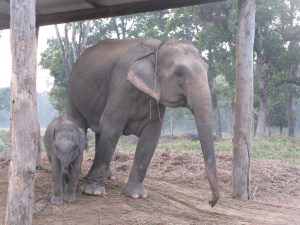
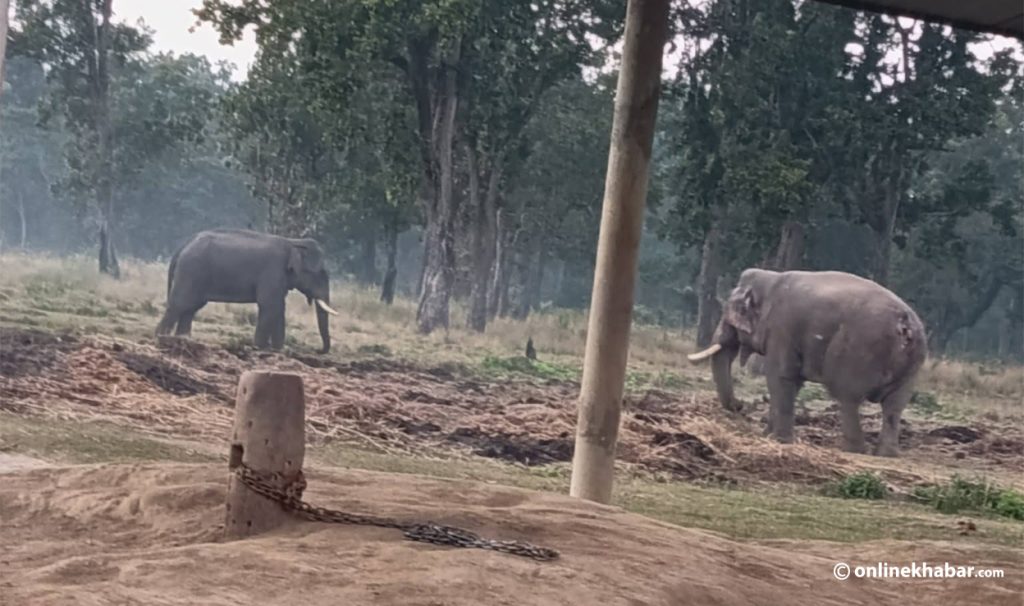
Over the years, these elephants have been chained when not overworked, forced to walk long distances and carry heavy howdahs, and further exploited by entitled tourists, all without the freedom to explore, eat according to their biological needs, or receive the care they deserve. Visit any facility offering elephant rides, baths, or feeding, and you will see elephants chained, swaying their heads from side to side. Many mistake this for joy, assuming they are dancing, but this is a clear sign of psychological distress. And after all, when we choose selective ignorance, no sign truly matters, does it?
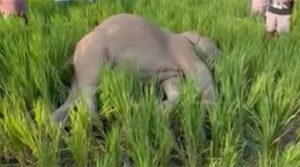
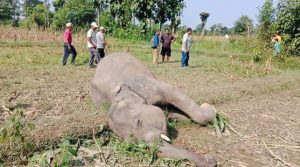
Kajol Kali, who collapsed and died a painful death because she could no longer work. Ramu, chained for countless years, was sold and resold until his spirit retaliated. Pawankali, a solitary elephant in our zoo, is nearly blind, old, forced, and beaten. Champakali, made to carry ammunition during the Maoist insurgency, was fully aware of the weight yet unaware of the intent. Chanchalkali, whose trunk was severed in retaliation by criminals who remain unpunished to this day. Countless others were maimed, abused, disconnected, emaciated, hungry, sick, abandoned, smuggled, and forgotten. For anyone with even a fragment of conscience, these accounts should be enough to abandon the ego-driven desire to participate in this cruel industry. But conscience often disappears when money, greed, and ego take centre stage.
So why should we care about the largest land animals simply because they carry humans who weigh, in comparison, no more than butterflies? Eureka, that’s precisely it. Elephants can feel even a butterfly landing on their backs. Their sensitive spines, with prominent ribs, are not built to carry heavy loads. Over time, this causes spinal arching, arthritis, and chronic pain. Why should we care when this is a “traditional” practice meant to be preserved? Because traditions rooted in injustice and cruelty, like the Kamaiya system or slavery, must be dismantled. What will the owners do if their livelihoods depend on exploitation? They must find alternatives: sanctuary models, ethical tourism, and welfare-based systems. Solutions are plentiful if the intent is sincere. How will they afford to care for elephants? They must figure it out. These businesses profited from elephant exploitation; now they must take responsibility for those who form the identity of places like Sauraha, Bardiya, and Parsa. The entire industry, including the government-run Hatisaar, which openly displays chained elephants and the process of Phajaan on its walls, has benefited from abuse. Now it is time to change.
Furthermore, this is not about what owners or industries will do. Such questions are never asked when addressing child trafficking or drug cartels. So why frame them when animals are involved? The real question is what you, as an audience, spectator, and market, can do. Refuse. Refuse elephant festivals, rides, baths, and wedding spectacles, even those promoted by the Nepal Tourism Board. This is a demand-driven industry: as long as consumers demand cruelty, it will be supplied. Seek ethical sanctuaries that care for rescued elephants; few exist, but they do. Demand reform, welfare standards, transparency, retirement for elephants, and accountability. It is time for humans to honour our side of the unspoken treaty between humans and animals, signed at the very conception of our species.
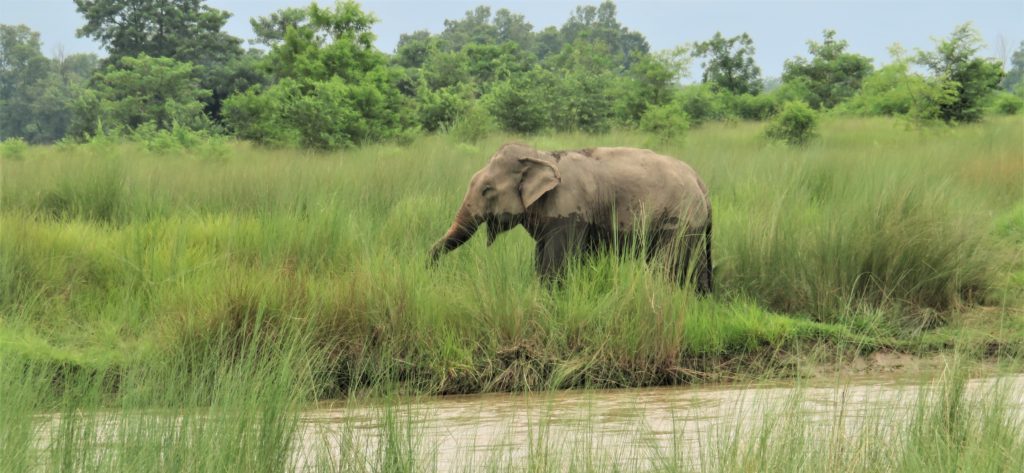
Elephants are majestic beings. They live in families where matriarchs pass wisdom across generations. They have nannies, grandmothers, and aunts who nurture the young. They communicate through complex vocal codes and frequencies. They traverse vast distances for food and water, guided by ancestral memory. They anticipate droughts, understand their ecological roles as forest architects, and practise empathy and care. When encountering fallen nests, they step around them to protect fragile eggs. They mourn their dead and live rich lives, dispersing seeds and sustaining ecosystems as remarkable pollinators. Above all, they are sentient beings who feel, love, and connect just as deeply as we do. They do not deserve chains, punishment, starvation, or abuse under any justification. The next time you encounter an elephant subjected to captivity, cruelty, and apathy, look into their eyes, apologise, and say: “Never again.”