Dhunche, August 31
A rescue team working at the Trishuli-3A hydropower project has been unable to enter the tunnel leading to its underground powerhouse, with mud and water continuing to block the way.
The team discovered a cable access tunnel on Sunday and had hoped to reach the powerhouse from there. But Nepal Electricity Authority Deputy Executive Director Madan Timsina said rescuers were still unable to enter the tunnel on Monday after finding it filled with water and mud.
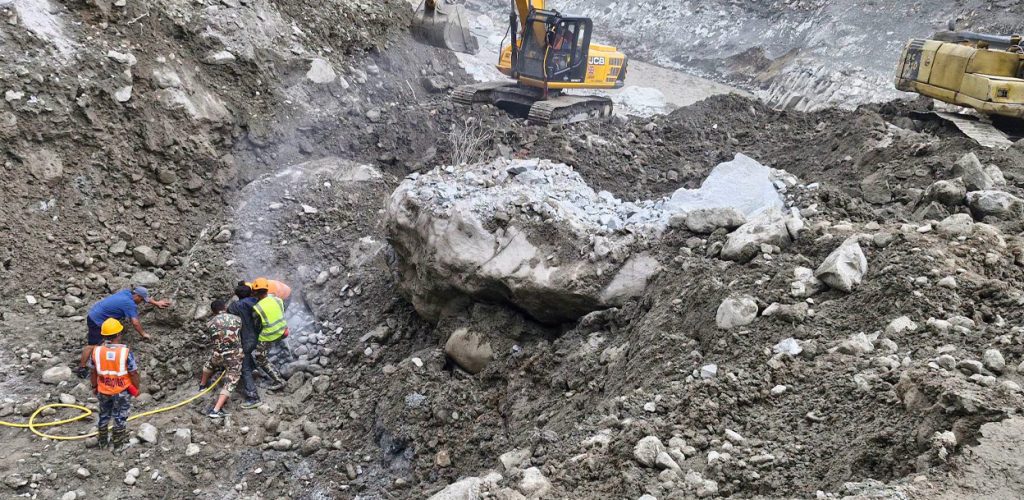
Water has been seeping from the tunnel as rescuers excavate, while mud continues to accumulate inside. This has forced the team to cut further through the tunnel wall before it can proceed.
“We are working at the access tunnel, and the powerhouse is 183 metres inside from the point where we are cutting. If the employees are alive, we hope to find them in the powerhouse. That is why we are making every possible effort to enter,” Timsina said.
Seepage is common in underground powerhouses, with water normally pumped out to prevent damage to the facility. But after the flood shut down electricity generation at the project, the pumps stopped operating, allowing water to accumulate and flow out.
“We are continuing maximum efforts because we believe there is still a possibility of rescuing people alive,” Timsina said.
An official involved in the rescue said the operation was initially delayed because rescuers could not get sufficient equipment and manpower to the site.
“We could not initially bring an excavator from elsewhere. We repaired two excavators that were found nearby but had broken down and started work with them. The Army finally brought a third excavator on Monday,” the official said.
Other equipment also reached the site only after delays. The official said there is now no major shortage of equipment needed for the operation and expressed hope that rescuers could enter the tunnel soon.
He said the work could have progressed faster if more excavators had been available from the beginning.
The rescue team had been working continuously for three days before finding the cable access tunnel on Sunday.
Rescuers have attempted to use the tunnel to restore electricity and look for signs from anyone trapped inside. So far, however, no signs have been detected, according to sources involved in the operation.
The fact that water from the seepage is still flowing out of the tunnel has offered a small measure of hope. Sources involved in the rescue said people trapped inside could have access to water if they have survived.
“If the mud has not entered and buried the powerhouse, there is greater hope that people could still be rescued alive. There is enough oxygen in the powerhouse for around 15 days, and if they have been able to get water, there is a possibility they could still be alive,” a source said.
The source added that if there is not a large amount of debris inside, rescuers are hopeful of clearing the passage by Tuesday.
40–42 engineers were working inside
The 60MW Trishuli-3A project was already shut down for a complete overhaul when the flood hit.
Around 40 to 42 highly skilled engineers were working inside the underground powerhouse as part of the overhaul work.
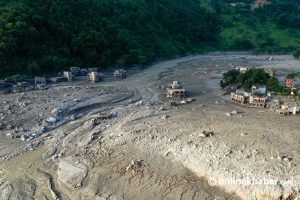
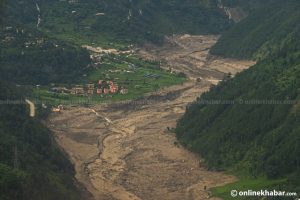
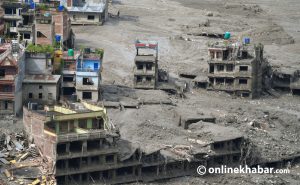
The flood subsequently buried both the upper and lower tunnels of the project.
Rescuers are now attempting to reach the underground powerhouse through the cable tunnel used to carry electricity cables out of the powerhouse.
The search continues amid uncertainty over the fate of those who were inside when the flood struck.