Every year on October 4, the world marks World Animal Day. It is a day to celebrate animals. It should also be a day to remember how much of our own story they carry, and to ask what we owe them in return.
Long before we built cities, wrote laws or drew borders, we shared our fires with animals. Wolves that drifted towards human camps became our first domesticated companions at least 15,000 years ago, before we had even learned to farm. Around 10,000 years ago, goats, sheep and cattle turned wandering foragers into settled farmers, and with them came villages, surplus and civilisation itself. Horses, donkeys and, on the high plateaus, yaks carried people, goods and ideas across mountains and continents.
The relationship did not only change how we lived. It changed who we are. Many human populations evolved the ability to digest milk well into adulthood, a genetic trace of thousands of years spent alongside cattle, goats and buffalo. Dogs, in turn, evolved a small facial muscle that lets them raise their inner eyebrows, the “puppy eyes” that wolves barely have, and extra copies of a gene that helps them digest the starchy leftovers of our meals. We did not simply use animals. We evolved together.
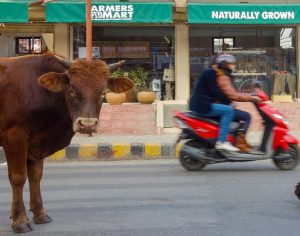
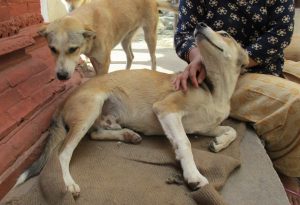
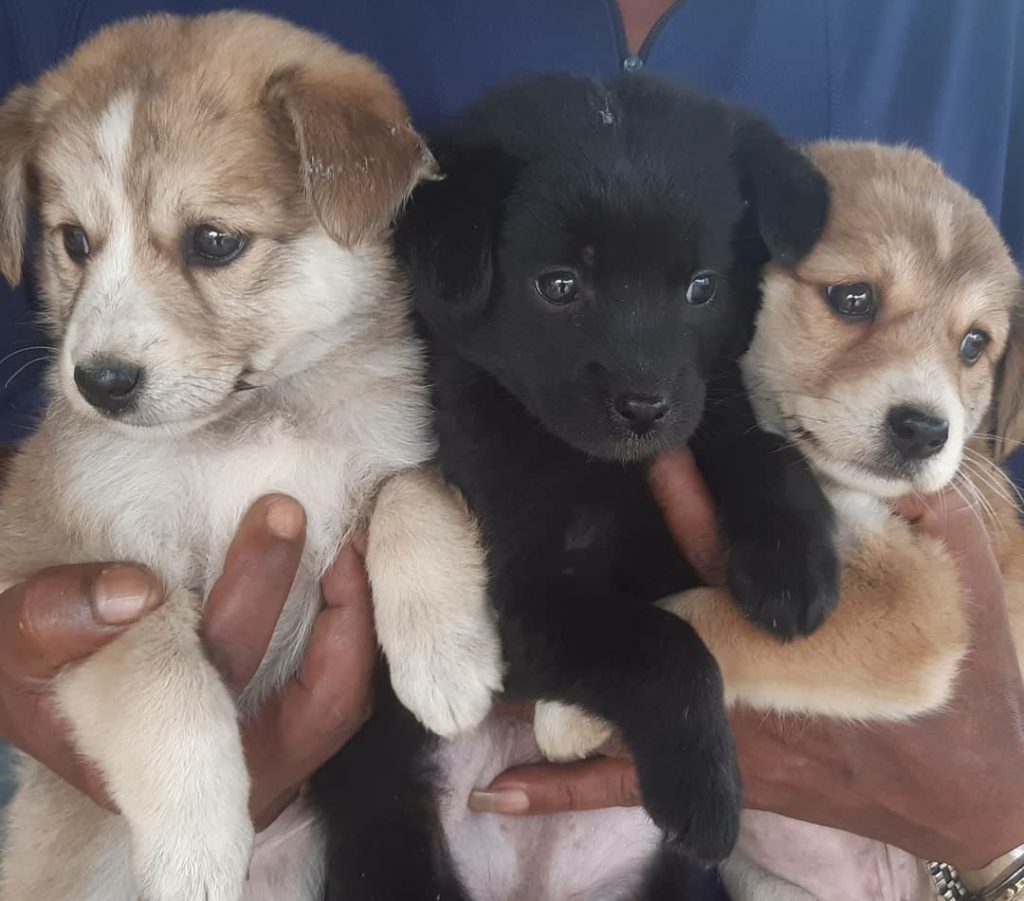
Nowhere is this clearer than in Nepal. The ox ploughs the terraced hillside. The buffalo feeds the household. The mule and the donkey carry bricks, rice and gas cylinders to places no road can reach. The chauri and the yak make life possible in the high Himalaya. And the dog waits at the doorstep of almost every home.
Gods who ride animals
Our faith knows this too. In the Hindu tradition that shapes so much of Nepali life, almost every deity is accompanied by an animal. Ganesh rides a mouse. Shiva has Nandi, the bull, who sits facing his shrine at Pashupatinath. Durga rides a lion. Vishnu flies on Garuda. Saraswati has her swan, Lakshmi her owl, Kartikeya his peacock, Indra the elephant Airavata, Yama the buffalo. Bhairav is followed by a dog. During Tihar we worship the crow, the dog, the cow and the ox, each on its own day.
Have we ever stopped to wonder why? Why would the divine choose to be carried by a mouse, a bull or a bird? Perhaps it was never only symbolism. Perhaps it was a lesson: that even the gods do not stand apart from the living world, that power is meant to be shared, and that the world belongs to all who live in it. Read this way, our traditions describe an ecocentric world, one where humans are part of a web of life and not its owners, and where loving and conserving the diversity of nature is a sacred duty.
Buddhism, born here in Lumbini, takes the same truth further and makes it a path. The Buddha’s teaching begins with the precept to avoid harming living beings and asks us to extend loving-kindness to all sentient beings, not just to our own kind. The Jataka tales tell of the Buddha’s earlier lives as a hare, a monkey king and a deer. At Namo Buddha, a short drive from Kathmandu, we remember the story of a prince who gave his own body to a starving tigress so that she and her cubs might live. Emperor Ashoka, inspired by these teachings, recorded in his edicts that medical care should be provided for animals as well as for people.
Compassion for animals is not a foreign idea that Nepal must import. It is written into our temples, our festivals and our scriptures.
The pyramid we chose
And yet, somewhere along the way, we chose a different picture of the world. Instead of a circle of life, we built a pyramid, with humans at the very top ruling over animals, plants and the rest of the natural world beneath them. This is anthropocentrism: the belief that humans are the centre and measure of all things, and that everything else exists to serve us.
It is an egocentric illusion, and it shapes far more than our attitudes. It shapes our economy, our institutions and our laws. In the pyramid, a buffalo is not a being who can feel pain, fear and comfort. It is a unit of milk or meat. A donkey is a load capacity. A dog is a nuisance or a possession. Once animals are seen only as resources, their suffering becomes invisible, or, at best, a cost to be managed.
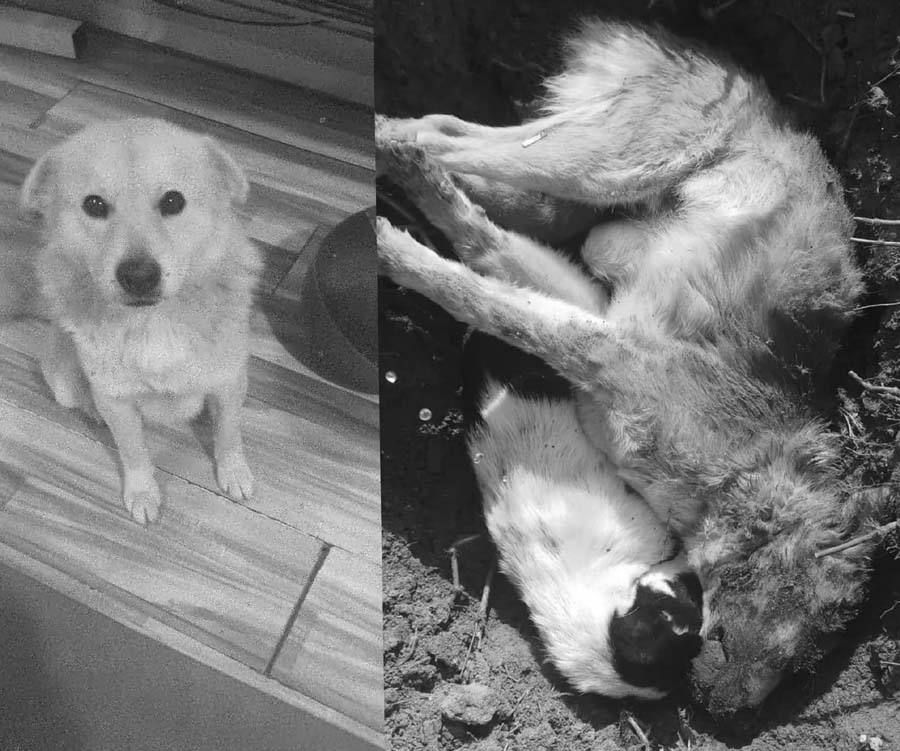
We garland dogs during Kukur Tihar and then look away when they are poisoned, beaten or left to die on the same streets the next week. We bow to Nandi at the temple gate and say nothing about bullocks overloaded on the highway or buffalo packed into trucks bound for slaughter with no water and no rest. The gap between what we worship and what we permit has never been wider.
An economy carried on animals’ backs
This gap is all the more striking because Nepal depends on animals so heavily.
The livestock sector contributes roughly 13 per cent of Nepal’s national GDP and around 24 per cent of agricultural GDP. Against a national economy of about USD 49 billion, that is roughly USD 6.4 billion, or more than NPR 850 billion, generated every year by animals.
Animal-related exports crossed NPR 15 billion in just the first seven months of the fiscal year. Wool carpets alone brought in NPR 6.4 billion and raw wool another NPR 3.4 billion. Animal feed earned NPR 2.5 billion. Chhurpi, the hardened yak and cow cheese now sold abroad as dog chews, earned NPR 2.3 billion, a fast-growing market built on the milk of Himalayan animals. Leather and leather products earned NPR 254 million, and dairy, honey, live animals, meat and fish added more.
At home, the numbers are larger still. Nepal produces more than 2.68 million metric tons of milk a year; raw buffalo milk alone accounts for over 7 per cent of agricultural GDP and cow milk almost 4 per cent. Net meat production stands at around 447,767 metric tons, led by buffalo and goat. Our hens lay some 1.64 billion eggs a year. And the manure of these animals fertilises our fields and fuels our kitchens.
Behind every one of these figures is a living, feeling animal. Our national income is, quite literally, carried on their backs. A country that earns this much from animals and does not legally guarantee their welfare is not just failing them. It is failing its own farmers, its consumers and its standing in international markets, where animal welfare is fast becoming a condition of trade, not a courtesy.
None of this is news to our leaders. For more than a decade, Animal Nepal and our partners in the animal welfare movement have asked for one thing: a standalone Animal Welfare Act that recognises animals as sentient beings and makes their welfare the purpose of the law.
We did not just ask. Around four years ago, together with some 20 organisations, we drafted Nepal’s first Shadow Animal Welfare Act, built through research, technical expertise and wide consultation, and submitted it to every relevant government body. We presented it to the Parliamentary Committee on Agriculture, Cooperatives and Natural Resources, which directed the Department of Livestock Services to prepare a draft law within six months. On July 2, 2025, we brought government, parliamentarians, experts and civil society together for a national consultation on the gaps in our laws and the need for a comprehensive Act.
Successive governments have nodded along. Ministers have acknowledged the importance of animal welfare in speeches and meetings. But when it came to action, very little followed.
A draft that misses the point
Then, recently, the government circulated its draft Animal Services and Animal Welfare Bill for comment by civil society. After years of waiting, it was a profound disappointment to us and to everyone who has worked on this issue.
The draft is not an Animal Welfare Act. It is, at its core, a law about animal production: livestock development, breeding, genetic improvement, animal health administration, disease control, commercial regulation and production management. Animal welfare appears as one chapter among many, an add-on to a law whose real purpose lies elsewhere.
This is the pyramid, written into legislation. It treats welfare as something that matters only insofar as it does not interfere with output. It places the duty to protect animals in the same framework designed to maximise their productivity, a conflict of interest that will always be resolved in favour of production. And after three years of consultations, recommendations and technical inputs from the animal welfare community, very little of what we offered is reflected in it.
That is why Animal Nepal has formally rejected this draft as a substitute for a standalone Animal Welfare Act.
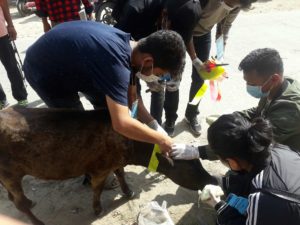
A genuine Animal Welfare Act would begin from a simple, scientifically settled truth: animals are sentient beings who can feel pain, fear and suffering, and who can also experience comfort and positive emotions. From that foundation, it would protect every animal whose life we touch: companion and street animals; farmed animals, in housing, nutrition, handling, transport and slaughter; working animals, with proper equipment, reasonable workloads, rest, water and veterinary care; captive wildlife and animals used in entertainment; and animals used in research, under ethical approval. It would set humane standards for transport, provide for rescue, rehabilitation and adoption, and include animals in disaster preparedness, something the floods and landslides of recent years have shown we can no longer ignore. And it would be enforced by trained animal welfare officers with powers of inspection and seizure, by meaningful penalties, and by education for schools, police, the judiciary and the public.
Animal welfare cannot be confined to one chapter. It must guide every chapter of the law.
The law we choose
On this World Animal Day, we ask the Government of Nepal to withdraw the current draft as the country’s animal welfare legislation, to sit down in good faith with the animal welfare community, and to enact a genuine, standalone Animal Welfare Act, one that reflects international best practice, modern science and the compassion our own traditions have taught for thousands of years.
Our gods chose to be carried by animals. Our economy is carried by them still. The least we can do is carry their welfare into law, not as a footnote or a single chapter, but as the purpose of the law itself.
The law we choose defines who we are. Nepal’s animals have waited long enough. Until they have the protection they deserve, we will not stop asking.