
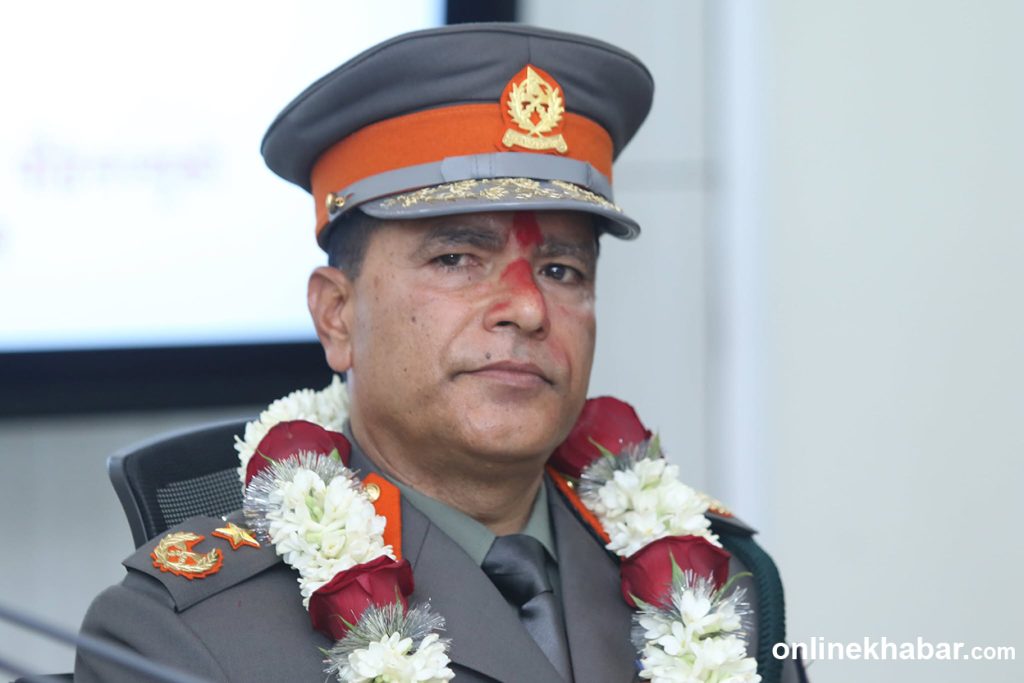
When Raju Aryal assumed command as Inspector General of the Armed Police Force, institutional disorder had already taken deep root within the organisation.
The practice of presenting transfer and promotion requests directly to the organisation’s chief, submitting grievances and formally seeking advancement based on merit, had almost disappeared. Instead, a troubling culture had remained dominant, where personnel bypassed the chain of command and approached power centres and political leadership to exert pressure and secure favourable decisions, even in transfers and promotions from lower to higher ranks.
Loyalty to power brokers rather than to the organisation’s leadership had begun weakening the institution. Practices such as “command-to-command” postings based on access to influence, transfers to desirable locations reserved for the well-connected, and promotions bypassing seniority had become widespread distortions.
After completing his four-year tenure and retiring on May 1, Aryal achieved a measure of success in dismantling these irregularities. He brought the drifting organisation back on track. Now, the responsibility of maintaining that restored credibility and momentum rests on the shoulders of the newly appointed IGP, Narayan Dutta Paudel.
To streamline operations, Aryal introduced and implemented 109 different procedures, directives, standards, standing orders, and action plans. A new Organisation and Management (O&M) survey was conducted to facilitate career development and promotions within the Armed Police Force.
Efforts were also made to make transfers, promotions, and postings more transparent and predictable, including publishing lists. Continuing this transparency and ensuring predictability in such decisions remains a key challenge for IGP Paudel.
Initiatives such as an online leave system and digital attendance in units were introduced, along with the establishment of a “Disciplinary Tracking and Action Unit” to ensure financial transparency. This unit investigates and takes action against personnel involved in financial irregularities. Questions remain about how effectively Paudel will keep such mechanisms active and impactful.
Border security has been tightened with increased surveillance and deployment of additional personnel. Issues such as revenue leakage, smuggling, criminal activities, and cross-border crime are on the rise, making border security a central responsibility of the Armed Police Force, and a major challenge for the new IGP.
During Aryal’s tenure, 182 strip maps of the Nepal–India border were obtained from the Survey Department and established at the Border Security Department (Border Resource and Research Centre, BRRC). Surveillance has been strengthened with the installation of 338 CCTV cameras at 110 locations.
Despite these efforts, Aryal had proposed implementing a “digital border” concept, enabling real-time monitoring of border activities from Kathmandu. This remains a significant project, and its execution now falls to Paudel.
There have also been recurring disputes regarding overlapping responsibilities between the Armed Police Force and Nepal Police. Such ambiguities have sometimes led to inefficiencies and operational friction. Resolving these overlaps and ensuring swift action is another challenge for Paudel. A proposed directive clarifying the deployment conditions of the Armed Police Force has yet to be approved by the Home Ministry.
A new Armed Police Force Act is also in the making. Although previously tabled in Parliament, it became inactive following the dissolution of the legislature. Issues such as retirement after 16 years of service, long demanded by lower ranks, remain to be addressed.
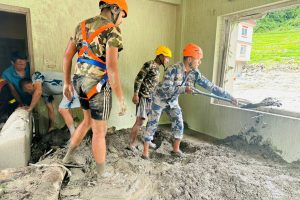
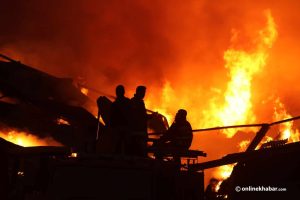
Other key challenges include disaster management and rescue efficiency, riot control, monitoring the increasingly complex open border, and maintaining financial transparency. Aryal’s success is largely attributed to financial discipline and a spirit of collective leadership. How Paudel advances this collective leadership approach will also be closely watched.
Under current regulations, Paudel is expected to lead for around 23 months. Ensuring transparency in transfers, promotions, and internal operations will be a critical test during this period.
Public procurement controversies have historically embroiled IGPs, and avoiding such disputes is another challenge ahead. Strengthening infrastructure, adopting technology-driven security systems, reducing political interference, increasing peace mission quotas, and expanding welfare programs are additional priorities.
At present, with no major security crisis, former AIG Ravi Raj Thapa suggests that continuity of Aryal’s reforms and a focus on border security should be the new IGP’s priorities.
“IGP Aryal did commendable work. It is important to continue those efforts, boost personnel morale, ensure internal cleansing within the organisation, and strengthen border monitoring,” Thapa says to Onlinekhabar.