

Murals created by the Kathmandu Metropolitan City at a cost of millions of rupees have started deteriorating due to a lack of preservation and maintenance. In collaboration with the Nepal Academy of Fine Arts, the metropolis had commissioned murals in public spaces during the fiscal year 2023/24 to enhance urban aesthetics.
The murals were painted at several locations, including the wall on the right side of the road from Maitighar to Babarmahal, Exhibition Road, outside the international airport, the wall of the Social Welfare Council in Lainchaur, the Sundhara area, Padma Kanya Campus, and Tripureshwor.
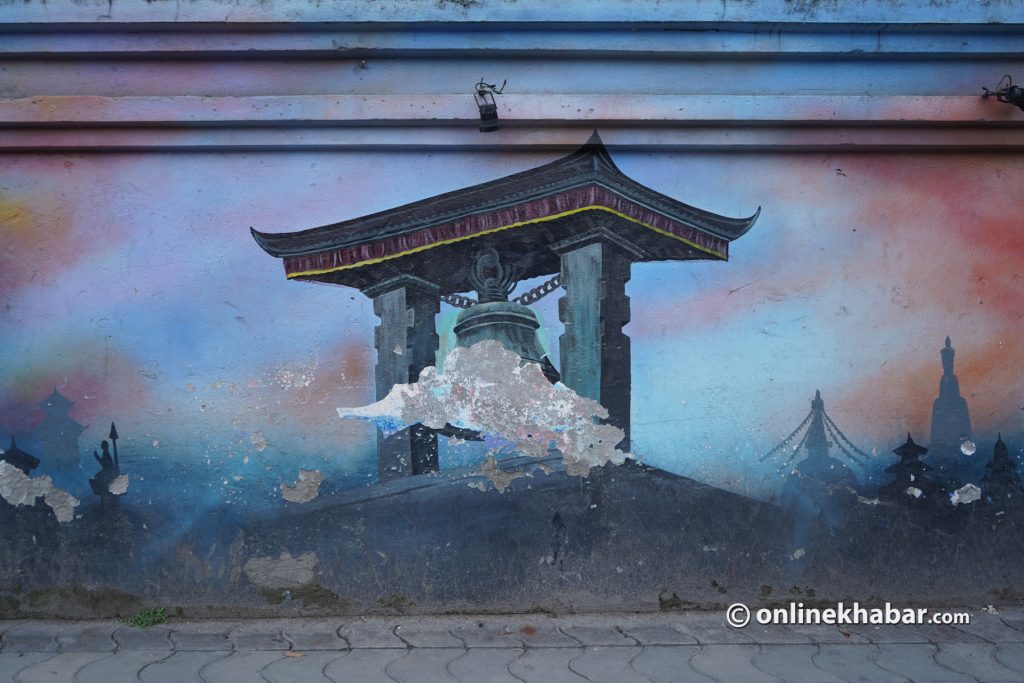
However, many of these murals are now fading and peeling. Dust from ongoing road, drainage, and footpath construction has covered the artworks, while some have been damaged by people spitting paan and gutkha on the walls. In several places, walls have cracked and peeled off, damaging the paintings, while others have been vandalised with scribbles.
The murals at Sundhara appear to have suffered the most damage. Most of the paintings created in front of the Nepal Telecom building have become unsightly as the walls beneath them have started crumbling, affecting the beauty of the area.
No one willing to take responsibility for preservation
Kathmandu Metropolitan City had provided Rs 5 million to the Nepal Academy of Fine Arts to create murals at various public spaces under its jurisdiction. The academy was responsible for signing agreements with individuals and organisations, issuing work orders, conducting evaluations, making payments, and ensuring accountability.
However, the academy now claims that preserving the damaged murals does not fall under its responsibility. Speaking to Onlinekhabar, the academy’s information officer, Surendra Gautam, said the agreement signed with the metropolis in February/March 2024 did not mention maintenance responsibilities.
Metropolitan spokesperson Nabin Manandhar, however, argued that the academy should also be responsible for preservation, saying maintenance should follow once the artwork is created.
Gautam stated that the academy lacks sufficient funds to maintain the murals. He added that restoration could be carried out through renewed collaboration with the metropolis.
Meanwhile, spokesperson Manandhar said the metropolis has stepped back from plans to create additional murals.
Poor maintenance for rapid deterioration of public murals
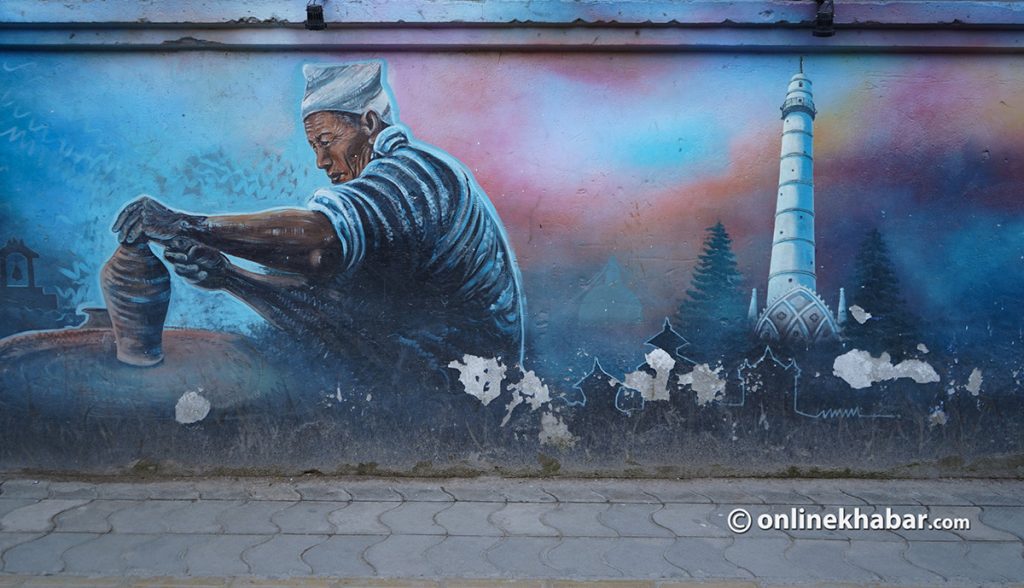
Artist DB Bhandari, who was directly involved in creating murals in the Sundhara area, said it was unusual for the paintings to deteriorate so quickly. He said he personally visited the site after the damage was reported and concluded that the poor quality of the walls was the primary reason behind the deterioration.
“It seems water is seeping through the walls,” he said. “The colours of the paintings have not faded, but the walls themselves are peeling off.”
Bhandari said it pains an artist to see their work in such condition. He believes both the metropolis and the academy should take responsibility, adding that the walls and locations should have been properly studied before the murals were painted. Otherwise, murals can normally last for many years, he said.
“It felt as though the metropolis simply provided the funds and considered the work finished, while the academy completed the paintings and moved on,” Bhandari said. “There was no effort to preserve the murals by cleaning them, applying protective measures, or renovating damaged sections.”
Similarly, murals painted earlier on the walls of Padma Kanya Campus had also been deliberately vandalised. Portraits of different ethnic communities created by artist Saugat Tamang were scribbled over, damaging the faces in the paintings.
Tamang told Onlinekhabar that he personally renovated the murals at his own expense because he could not bear to leave them damaged. According to him, the metropolis took no action against those responsible for vandalising the artworks, despite the murals being commissioned by the city itself. The restored murals can now be seen at the site.
Some mural artists also claim that the academy’s poor working methods contributed to the current condition of the artworks. They allege that ordinary paint was used on low-quality walls.
“Even though it was known that the Sundhara walls were weak, murals were still painted on them,” said one artist, who requested anonymity. “In such conditions, the walls are bound to deteriorate within a few years. Protective coating could have been applied before painting, but that does not seem to have been done.”