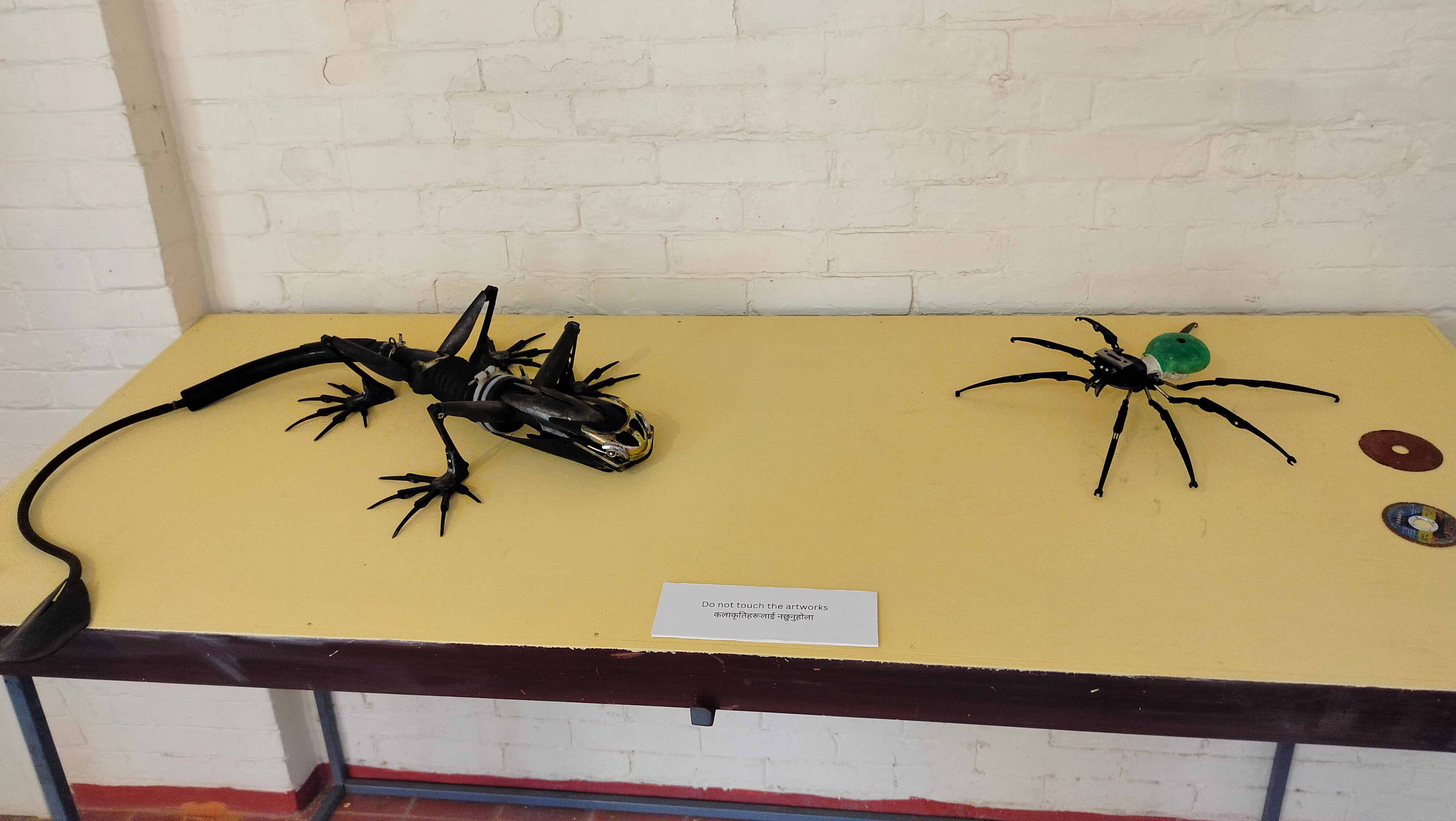

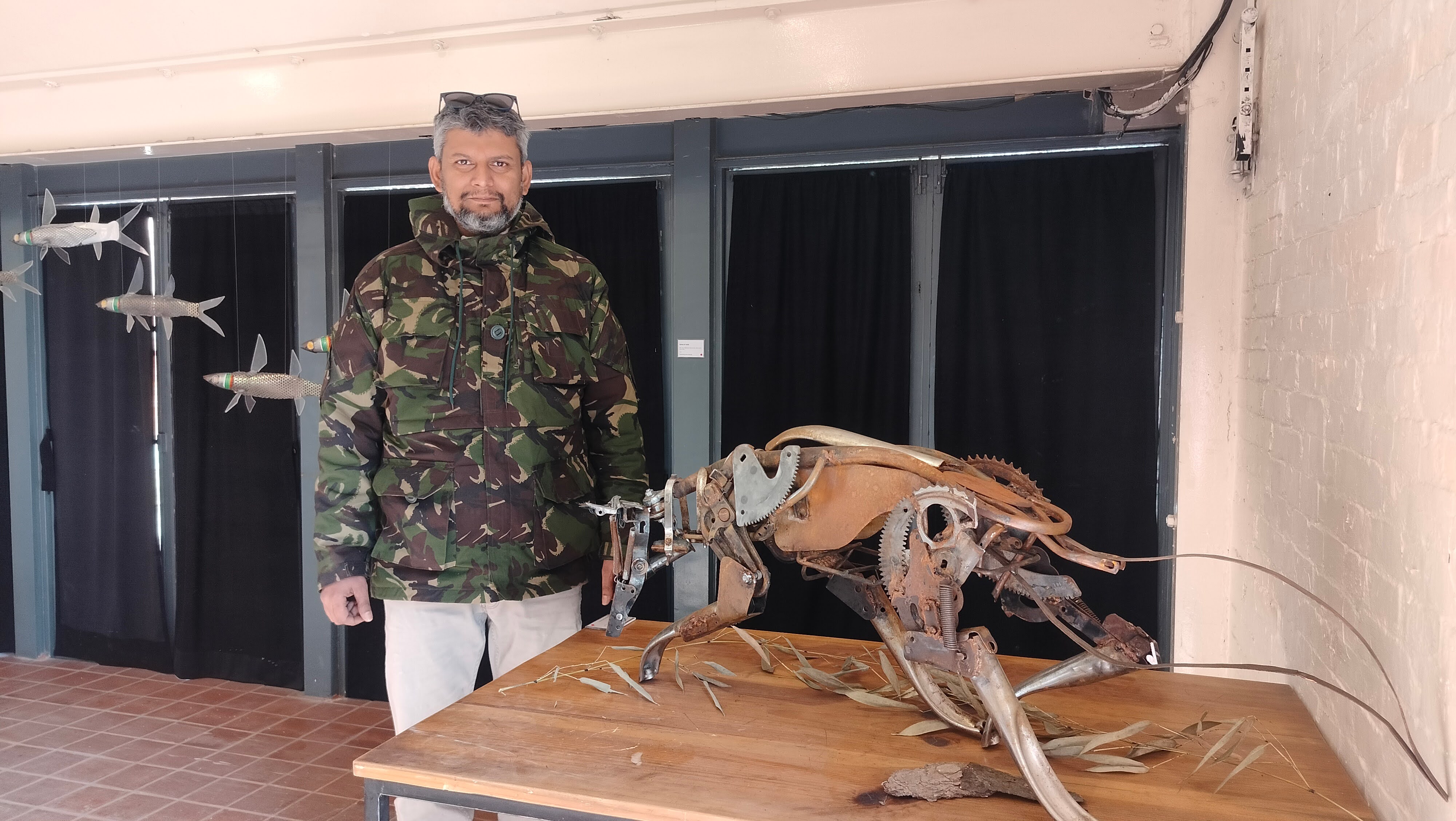
Amid the frenzy of an election season, when public attention is fixed on power shifts and the anticipation of the next prime minister, the exhibition Metamorphosis at Taragaon Next offers a quiet pause. In Boudha, a place shaped by layers of history and living culture, the exhibition invites visitors to reflect on a deeper truth that the land we proudly call ours is not ours alone, but a shared home with the habitats that surround and sustain us.
Artist Saurab Koirala weaves together the past and the present to evoke a sense of shared belonging, urging viewers to think about a future shaped by what we choose to protect or neglect. Through this dialogue between memory and modernity, the exhibition becomes a gentle but powerful reminder of what may be lost if these habitats disappear.
Magical world of creation
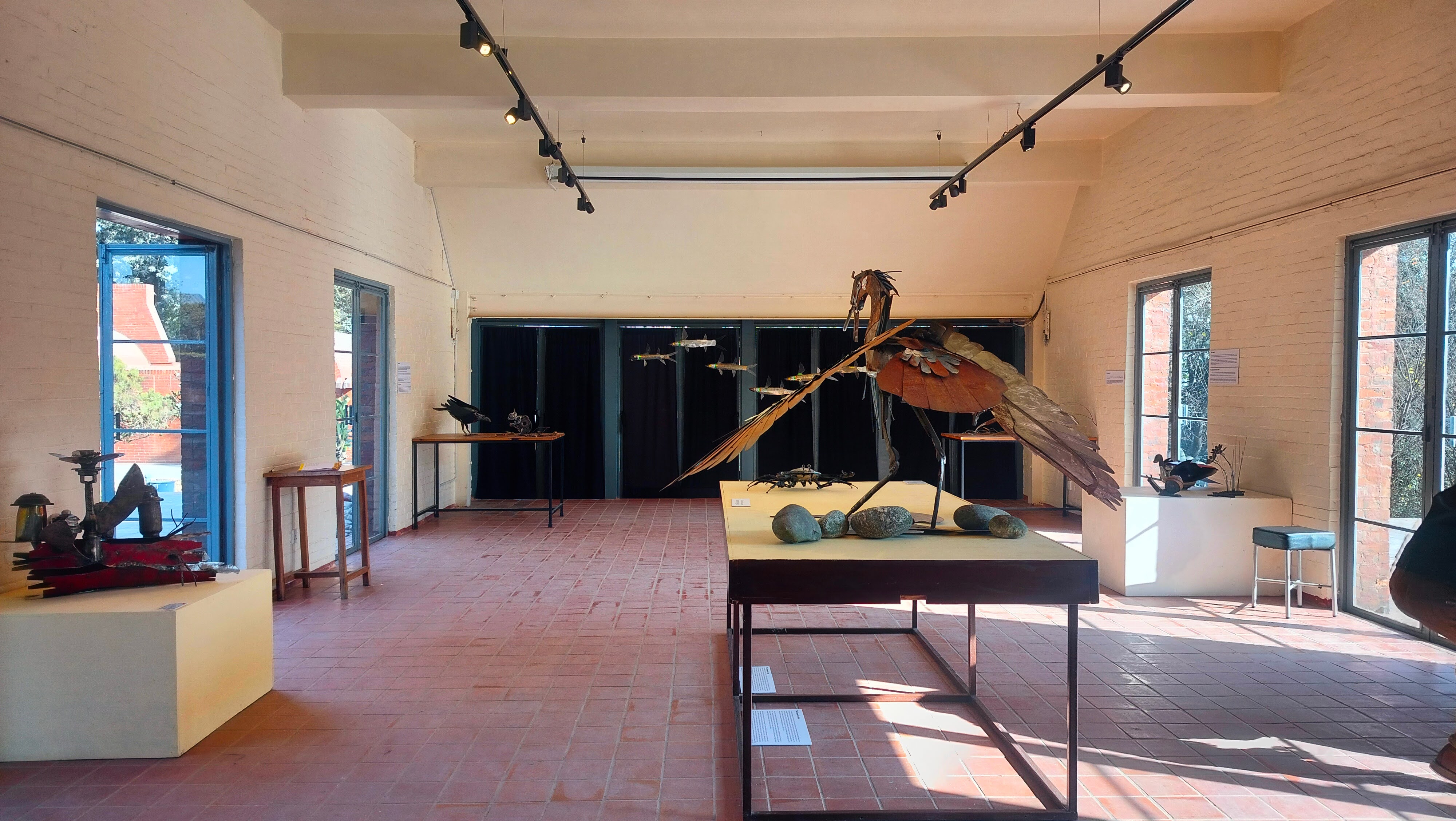
As you enter the gallery, the first thing that strikes you is the huge metal haron spreading its wings, which seems to be in a position to attack. Nevertheless, the haron is placed near the crab, which seems to attack the crab.
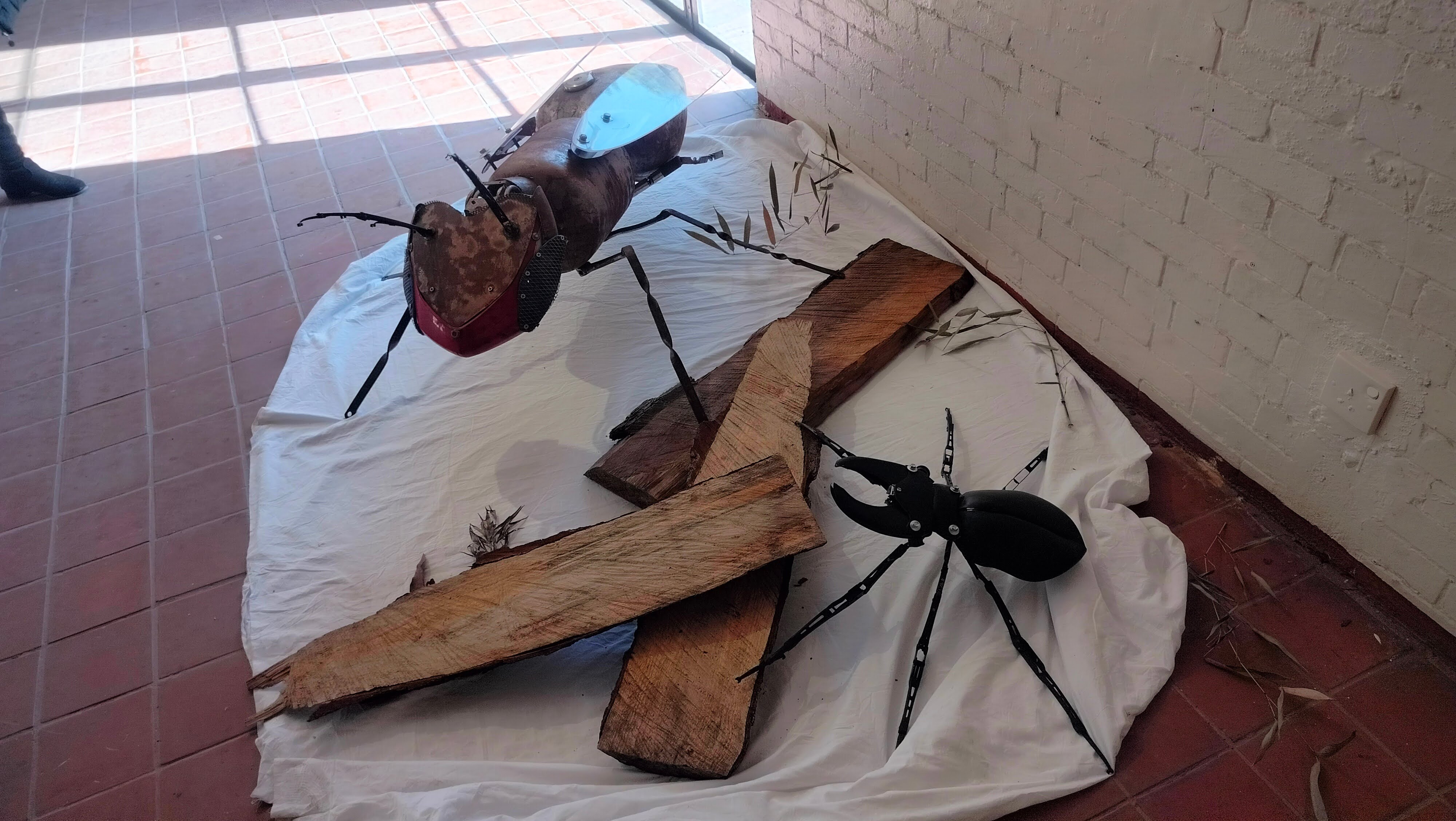
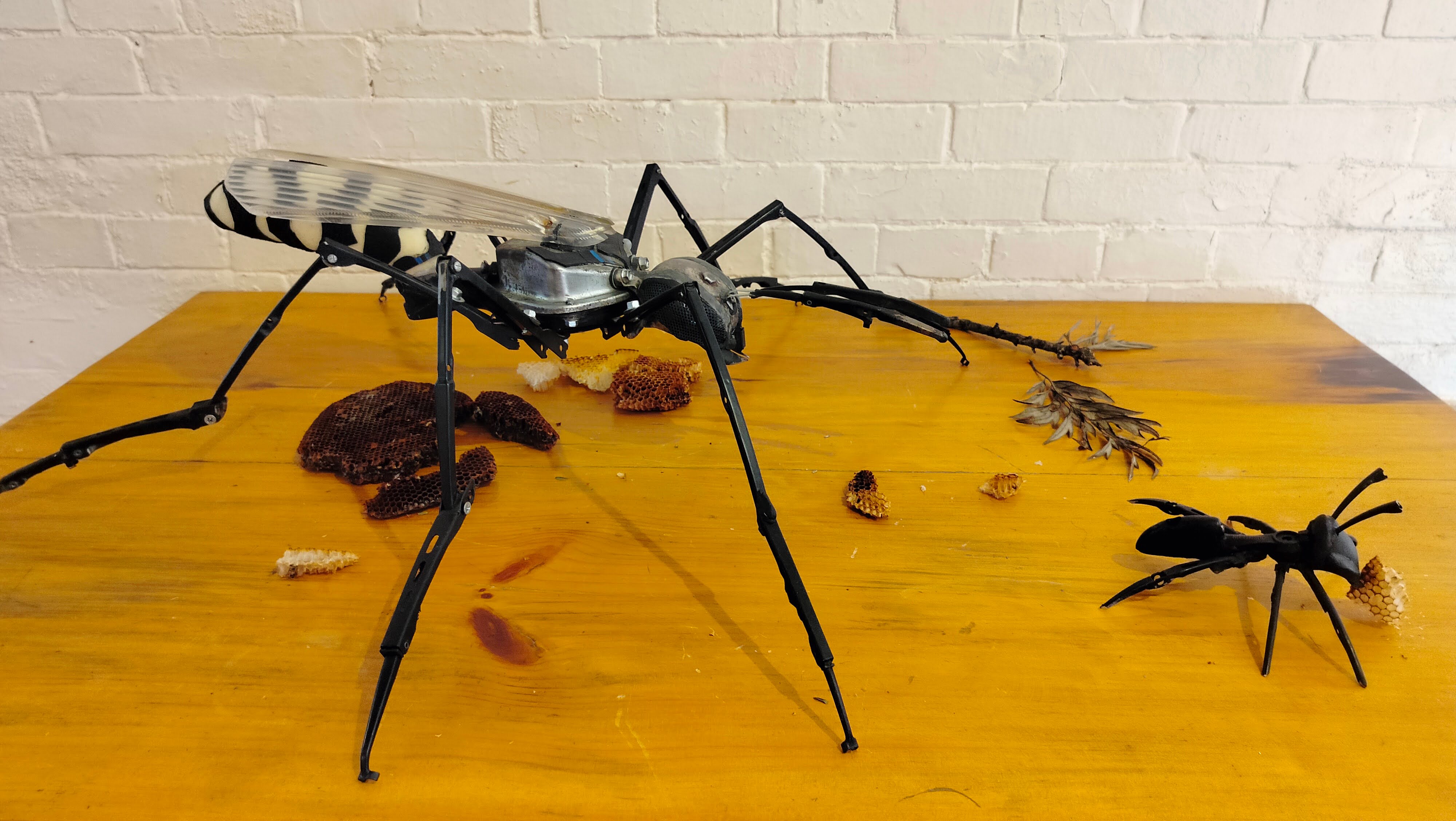
Likewise, there is a battle between the queen wasp and the ant. The wasp is running after the little ant who has stolen her babies. With the placement of the wasp comb and a few dried leaves, sculptures made of rusty, ignored junk magically come alive.
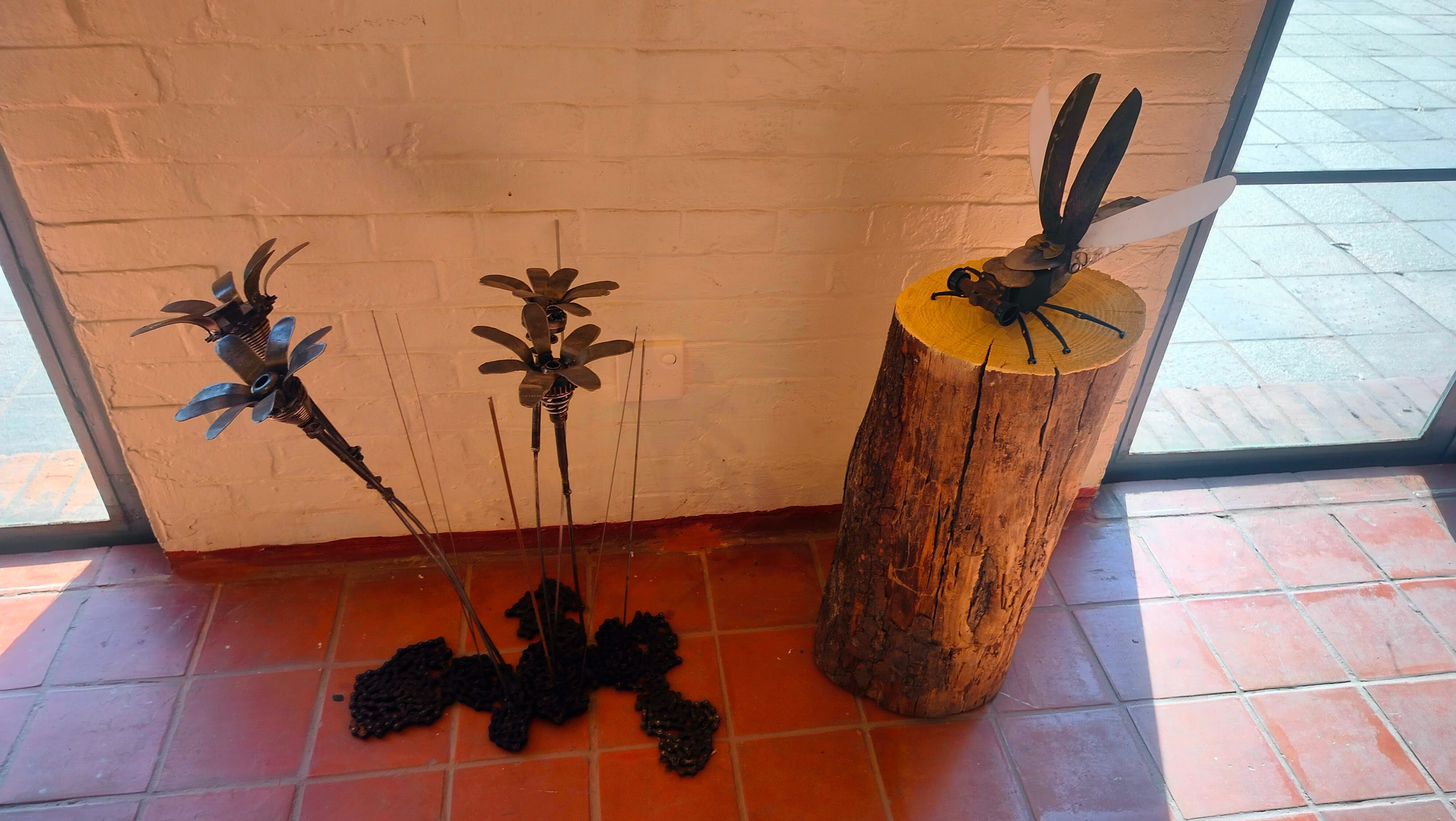
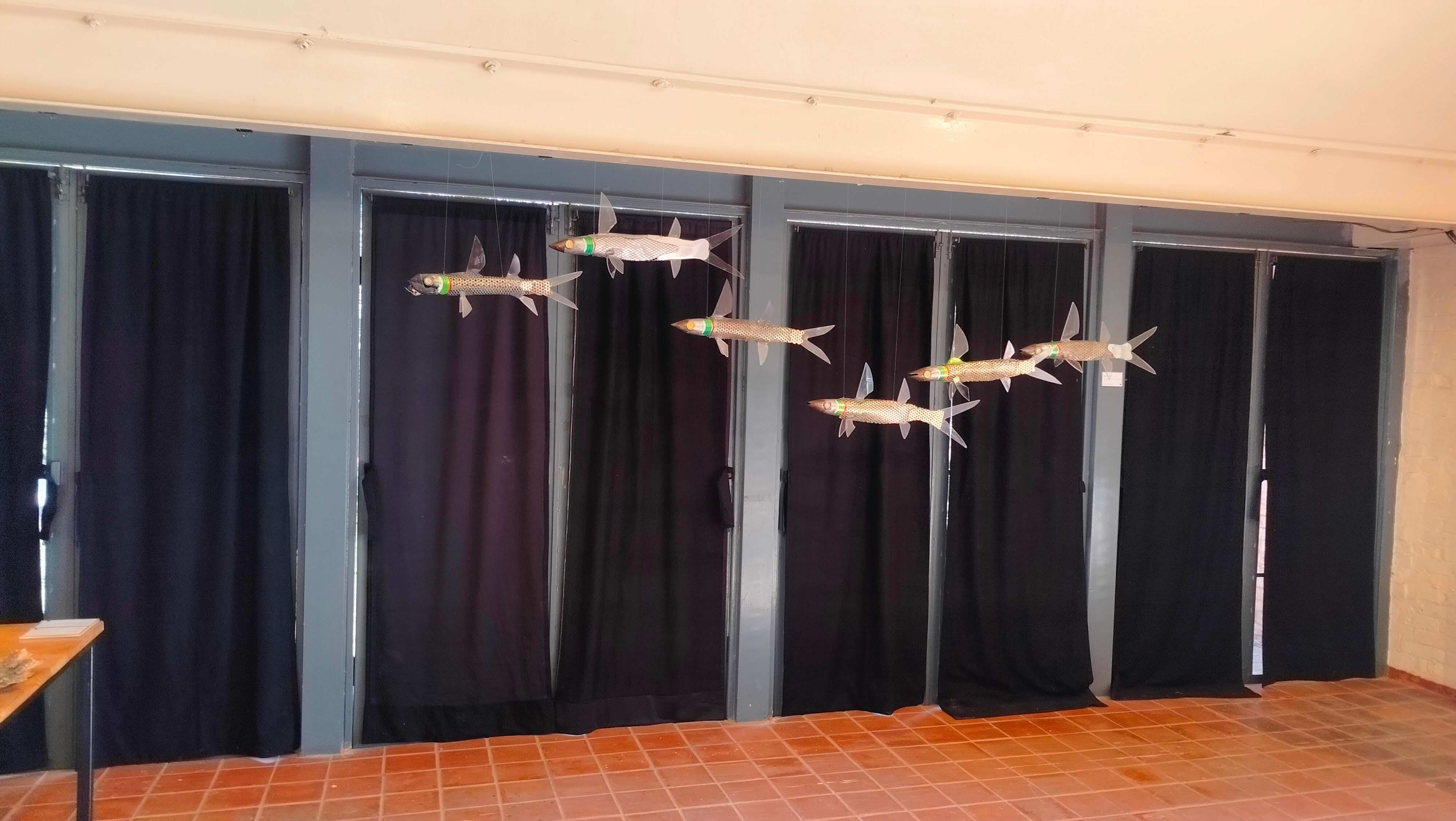
The exhibition features 26 sculptures made from waste materials, shaped into animals, birds, insects, and other elements of fauna. Koirala is a self-taught artist who previously worked as a concept artist, designing characters for animation—a background that influenced his approach to sculpture.
“When I worked in an animation studio, I had to design various characters and study their movements and body structures,” Koirala says.
In the exhibition, most of the sculptures are not static but appear to be in motion. As an artist, Koirala draws on memories of his childhood, which he spent closely connected to nature, and now seeks to capture that essence while reminding viewers that the earth is home to all living creatures.
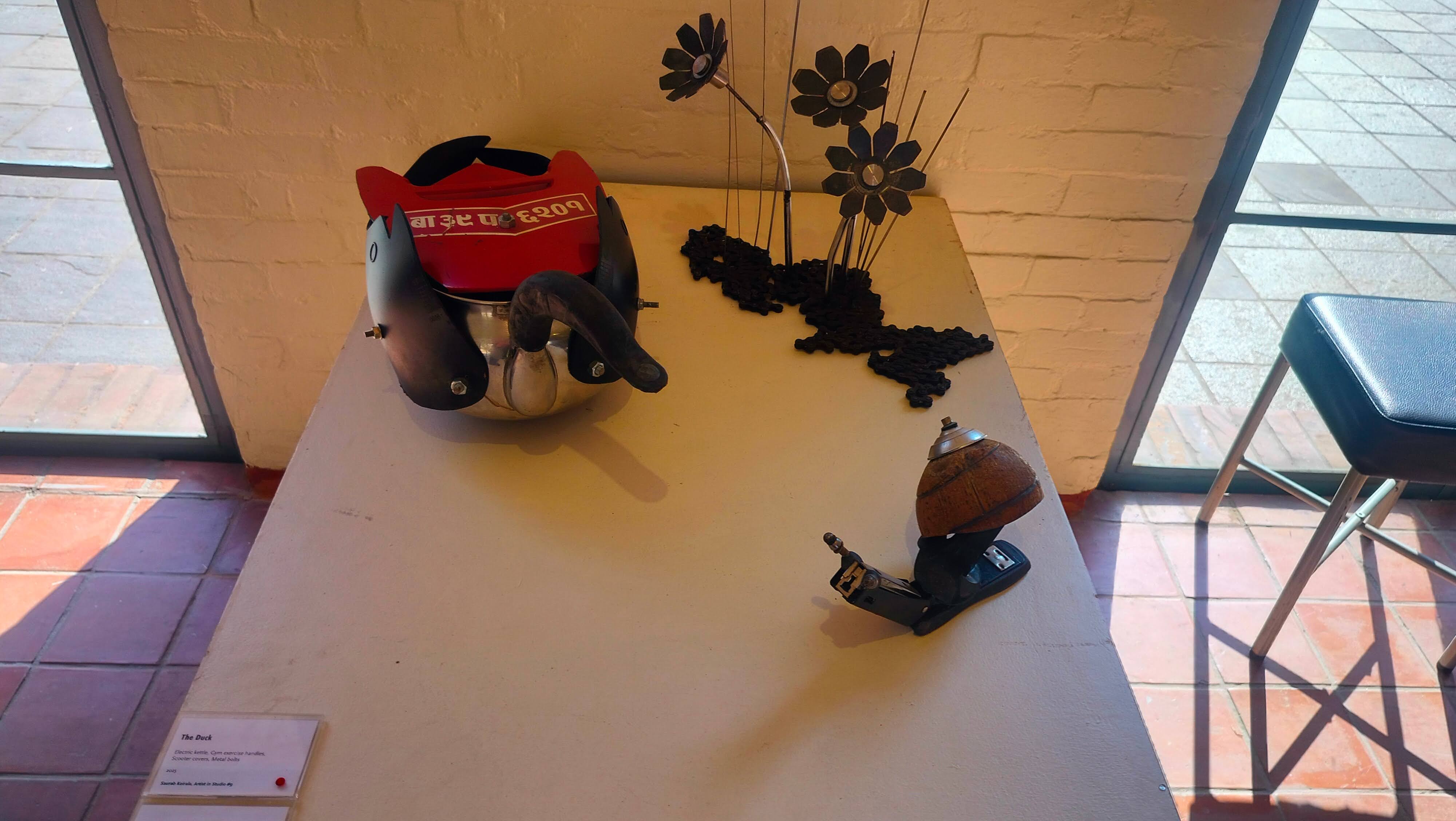
He says, “During the rainy season in my hometown, Biratnagar, there used to be many snails and crabs, and herons would come to the fields to feed on them, something rarely seen these days. Through my art, I am reliving those moments and memories, and raising awareness in society that we need to consider the lives of other creatures as well.”
Unleashing the potential
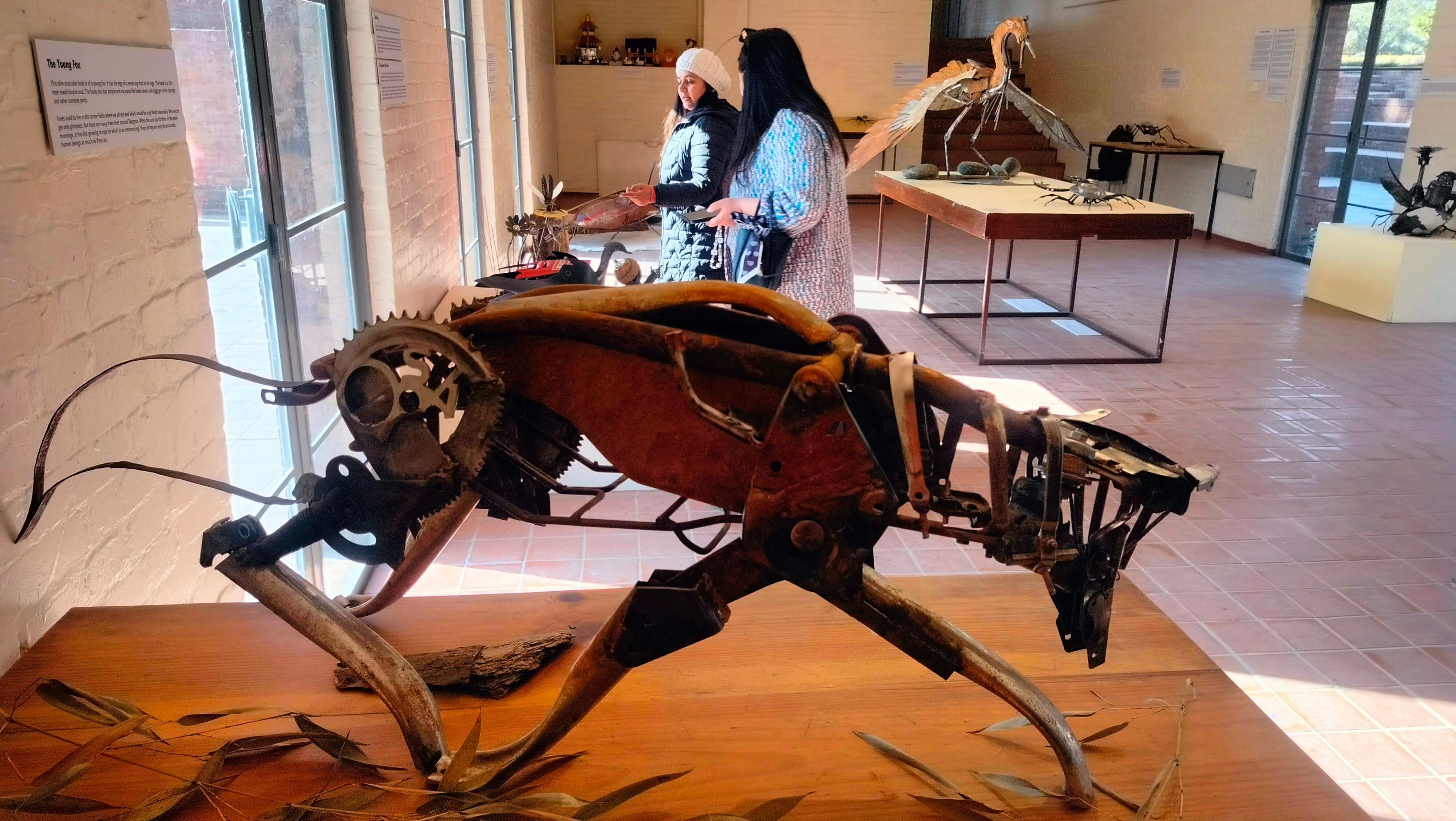
Until 2018, Koirala was unaware of his own potential. He says, “I focused on paintings, digital art, and illustration. But when I participated in the WastArt Competition in 2018, I created a Danphe sculpture from Coke and soda cans. It is now part of the permanent collection at Sagarmatha Next Art Gallery in Syangboche. That experience made me realise that I have the potential to turn trash into art.”
Moreover, he credits his mother, Yashoda Koirala, for inspiring his artistic journey. “My mother used to build houses and temples from discarded cardboard boxes and clay. When I think about how I got into art without any formal education, it all goes back to her,” says Koirala. “She used to be so happy immersed in her creations, and I wanted to feel that same joy, which unconsciously guided me toward art.”
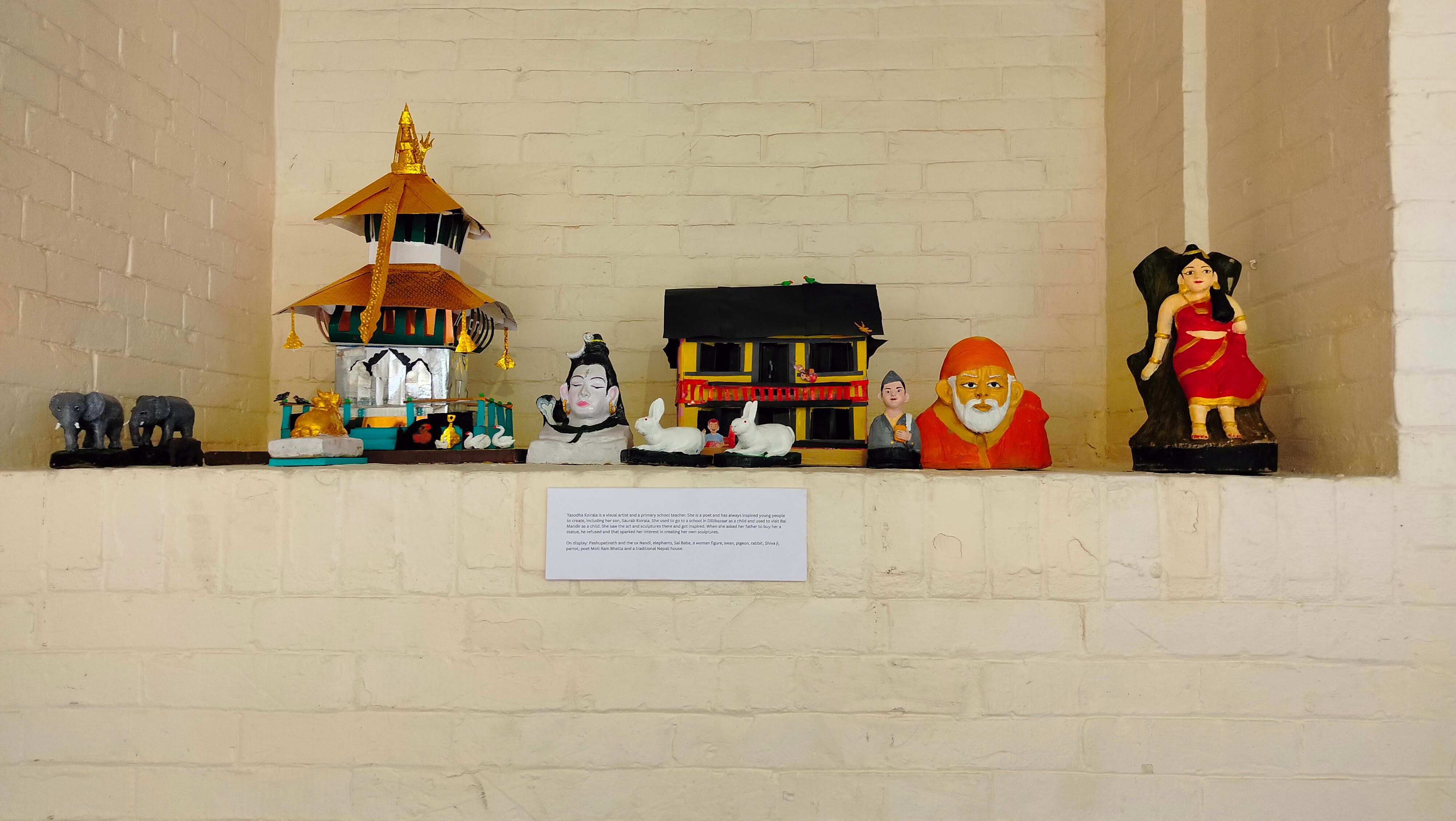
As a tribute to his mother, some of Yashoda’s artworks are also on display. Koirala says art, for him, lies in the moments of creation, which feel void, silent, and empty. It provides an environment that allows him to escape worldly concerns and the constant pressure to stay mindful. The exhibition is an invitation to step into the artist’s world and witness memories, nature and imagination brought to life.
If you want to experience the quiet power of creation and see how void, silence, and emptiness can be transformed into art, visit the exhibition, open until January 31.