


Kathmandu, August 23
Malaysia appears to have restricted the recruitment of Nepali workers to a limited number of foreign employment companies, raising fresh concerns over a long-running dispute over an alleged recruitment syndicate.
Only 25 Nepali foreign employment agencies are currently listed as ‘Registered Recruitment Agencies’ on Malaysia’s Foreign Worker Centralised Management System (FWCMS) portal.
Previously, all foreign employment companies licensed by the Nepali government were able to send workers to Malaysia through the system. Foreign employment agencies have objected to the new arrangement, saying it effectively excludes most Nepali recruiters from the Malaysian labour market.
President of the Nepal Association of Foreign Employment Agencies, Dik Bahadur Khatri, said the move appeared designed to benefit a limited number of foreign employment companies.
“Previously, all Nepali foreign employment companies were listed on the FWCMS portal. Now only 25 have been retained. This is an arrangement designed to give work to a limited number of agencies,” Khatri said. “It will ultimately harm Nepali workers. We oppose it and will launch a protest if necessary.”
The issue is not new. Malaysia had previously attempted to introduce stricter criteria for foreign employment agencies from Nepal, India, Bangladesh, Pakistan and Myanmar.
Dispute over 10-point criteria
Last year, Malaysia introduced a 10-point set of criteria for foreign employment agencies in those labour-sending countries.
Among other requirements, agencies had to have held a licence for at least five years, sent at least 3,000 workers during the previous three years and sent workers to at least three countries during the previous five years.
Nepali foreign employment companies had interpreted the criteria as an attempt to create a recruitment syndicate, arguing that only a limited number of agencies would be able to meet the requirements.
The Nepali government had also opposed the proposed criteria and conveyed its objections to Malaysia through a diplomatic note.
The process was subsequently halted. However, only 25 Nepali foreign employment companies are now listed as registered recruitment agencies on the FWCMS portal, prompting recruitment agencies to view the latest development as a continuation of the earlier plan.
The issue had already caused controversy in Nepal, with the Ministry of Labour maintaining that it was not involved in any effort to establish a syndicate benefiting selected foreign employment companies.
Last month, the ministry said it had taken note of reports alleging that a syndicate was being created to benefit specific foreign employment companies in recruitment for Malaysia. It reiterated its commitment to making the foreign employment sector competitive, transparent and worker-friendly.
The listing of only 25 companies on the Malaysian FWCMS portal has, however, raised fresh questions about the government’s role.
Labour minister raises issue with Malaysian diplomat

Minister for Youth, Labour and Employment Ramjee Yadav has discussed the issue with Malaysia’s acting ambassador to Nepal, Mohamed Firdaus Azman.
According to the ministry, Yadav urged the Malaysian side to address labour migration issues between the two countries through bilateral discussions, consultation and mutual agreement.
The two sides also agreed that matters relating to recruitment could be discussed and resolved through the joint technical committee in accordance with the bilateral labour agreement.
The ministry said it would inform the Malaysian government about Nepal’s position through the Ministry of Foreign Affairs and has also written to the Malaysian side requesting continuation of the existing system.
The government’s response indicates that Nepal has not accepted Malaysia’s unilateral decision to limit the number of Nepali recruitment agencies.
Why is Malaysia seeking a limited number of agencies?
The attempt to restrict the number of agencies recruiting Nepali workers for Malaysia has a long history.
When Malaysia introduced its 10-point criteria last year, Nepali recruitment agencies argued that the requirements would exclude a large majority of agencies and benefit only a small group.
Business representatives had also warned that more than 80 percent of foreign employment companies could be affected if the proposed criteria were implemented.
Some Nepali recruitment agencies had suspected that the proposal could have been pushed forward in Nepal to benefit a limited group of businesses.
The fact that only 25 companies are now listed on the FWCMS portal has therefore not been viewed as a coincidence by industry representatives.
Concerns over ‘Bangladesh model’
Recruitment agencies in Nepal have for years raised concerns over Malaysia’s use of a limited number of agencies to recruit workers from Bangladesh.
They have alleged that the model, under which Malaysia previously relied on a restricted group of recruitment agencies in Bangladesh, was being considered for expansion to other labour-sending countries, including Nepal.
Malaysia has also involved private companies in various aspects of its labour migration management system, raising questions in Nepal about the possibility of private entities gaining excessive control over recruitment.
Similar concerns were raised when Malaysia introduced the 10-point criteria, with critics arguing that it could establish a monopoly in the recruitment process.
How could workers be affected?
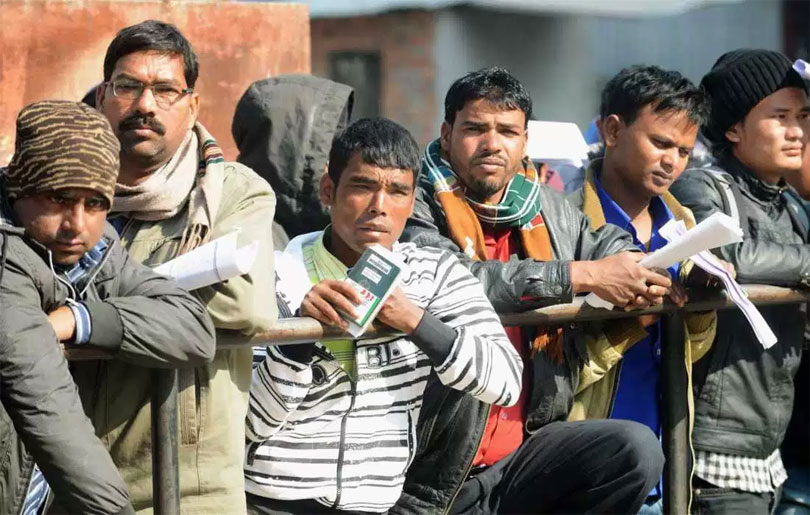
Foreign employment agencies say limiting the number of recruitment companies could ultimately hurt Nepali workers by reducing competition and access to overseas employment opportunities.
With fewer agencies controlling access to Malaysian jobs, recruitment channels could become concentrated in the hands of a small number of companies.
Business representatives warn that this could increase the risk of additional charges being imposed on workers seeking access to employment opportunities.
Similar concerns were raised last year when Malaysia’s 10-point criteria were announced, with foreign employment companies warning that any additional costs created by a restricted recruitment system could ultimately be passed on to workers.
The issue is particularly significant given the large number of Nepali workers in Malaysia. Previous figures have put the number of Nepali workers in the country at around 400,000.
Any decision to concentrate recruitment for Malaysia among a limited number of agencies could therefore have a significant impact on the foreign employment process for a large number of Nepali workers.
Khatri said the association would not remain silent if the decision to restrict FWCMS registration to 25 companies was not reversed.
He said all foreign employment companies legally licensed by the Nepali government should have equal opportunities to recruit workers for Malaysia.
“Every foreign employment company legally operating in Nepal should have equal opportunities. What is the basis for listing only 25 companies on the portal and excluding the others?” Khatri asked.
He warned that the association could launch protests if the arrangement was not revised in the interest of Nepali workers.
The restriction of Nepali foreign employment agencies on Malaysia’s FWCMS portal has now become both a diplomatic and policy challenge for the Nepali government.
The Ministry of Labour has said Nepal will seek an appropriate resolution through mutual agreement between the two countries, within the framework of Nepal’s labour and employment policies, the Foreign Employment Act and regulations, bilateral agreements and international law.
It has also reiterated that necessary diplomatic initiatives will be taken to safeguard the rights and interests of Nepali workers.