Kathmandu, November 5
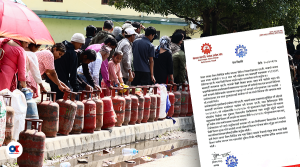
The Nepal LP Gas Industry Association has submitted its official position on the Nepal Oil Corporation’s proposal to introduce a dual pricing system for liquefied petroleum gas (LPG).
Following a meeting at the corporation’s central office on Kartik 13, LPG entrepreneurs were given seven days to submit their views. They submitted a three-point written response to the corporation on Thursday.
The corporation had proposed introducing cylinders of different weights for commercial purposes and allocating 30 per cent of the total gas quota, through Purchase Delivery Orders (PDOs), for commercial use.
However, the association has responded with alternative proposals, saying the corporation’s plan cannot be implemented immediately in its current form.
The association has urged the corporation’s Executive Director, Nagendra Shah, to sell LPG at its actual cost price and provide subsidies only to eligible groups through commercial banks.
Similarly, instead of the proposed 30 per cent allocation for commercial use, the entrepreneurs have requested that only 10 per cent of the gas quota be designated for commercial purposes for the time being, with the remaining supply allocated for household use.
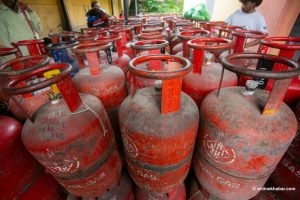
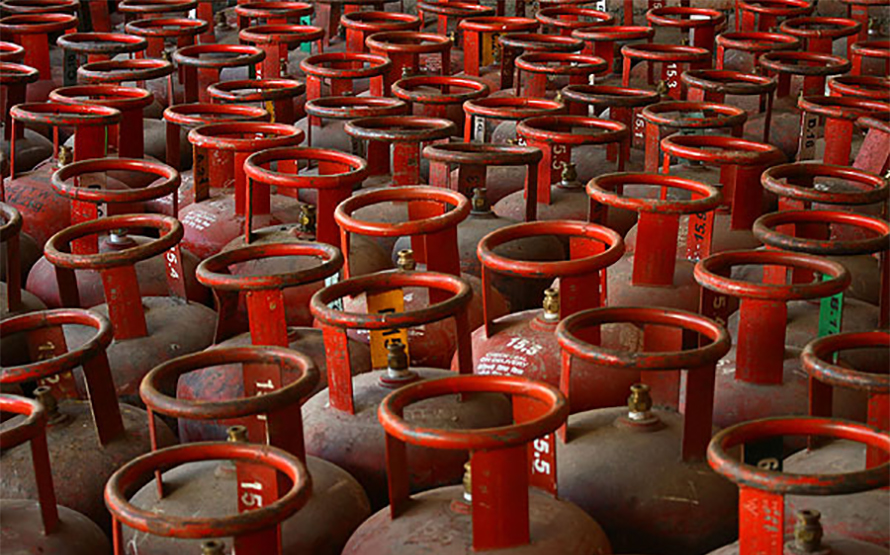
The entrepreneurs have also sought time to implement the corporation’s proposal to introduce cylinders of different capacities. The association’s main demand is to distinguish the existing 14.2-kg cylinders by colour rather than replace them with cylinders of different weights.
Under its proposal, red cylinders would be designated for household use and blue cylinders for commercial purposes.
Association President Diwan Chand said immediately replacing the large number of 14.2-kg cylinders currently in the market would impose a substantial financial burden on gas industries and create major logistical challenges.
“Our proposal is to use the existing 14.2-kg cylinders in red and blue colours. Introducing cylinders of different weights would require replacing the 14.2-kg cylinders already in the market, increasing investment for entrepreneurs and creating significant handling problems,” Chand said.
“However, if the government insists on introducing cylinders of different weights, the industries must be given at least two years to prepare,” he added.
Regarding ongoing discussions with the corporation on subsidies and the quota system, Chand said that while the corporation had proposed allocating 30 per cent of the supply for commercial use, the association had suggested 10 per cent.
“This can be adjusted in the future depending on market conditions. As for subsidies, our clear position is that gas should be sold at its actual cost price, while arrangements should be made to reimburse eligible beneficiaries through commercial banks,” he added.
In its letter to the corporation, the association also recalled a previous agreement between the two sides. The entrepreneurs have urged the corporation to implement without delay the agreement reached on Falgun 20, 2081, in the presence of then Commerce and Supplies Secretary and Corporation Board Chairperson Govinda Bahadur Karki.
Under the third point of the agreement, the corporation had committed to fixing the profit margin as a percentage. The association has called for the commitment to be implemented at the earliest.