
Nepal is a paradox of abundance and struggle. Blessed with snow-fed rivers, fertile plains, rich biodiversity and a vibrant young population, the country possesses every natural ingredient required to build a prosperous economy. Yet, decades after embracing democratic change, our economic reality remains bleak. If we are honest with ourselves, Nepal’s stagnation is not caused by a scarcity of resources but by how we squander our collective energy. For far too long, our national life has been held hostage by hyper-politics, hollow promises, sensationalist propaganda and a systemic disregard for merit and hard work.
Breaking free from the ‘unproductive trap’
In contemporary Nepal, partisan politics has seeped into every corner of public life, from school classrooms and university campuses to civil service desks. For an entrenched class of intermediaries, politics has ceased to be an instrument of public service and has instead become a lucrative magi khane bhado — an easy livelihood built on political patronage.
This culture has distorted social values. When real estate speculation (jagga dalali) and political proximity yield faster rewards than education, technical skills or entrepreneurship, young minds inevitably drift away from productive work. Simultaneously, public discourse is routinely hijacked by algorithm-driven social media noise and YouTube propaganda, keeping citizens emotionally agitated over trivialities while real economic questions go unasked.
How do we produce more?
If we want to reverse the daily exodus of our youth through Tribhuvan International Airport, we must fundamentally change what we talk about. Our public debate must move away from who said what to a single, practical question — How do we produce more at home, create meaningful jobs and turn Nepal from an import-dependent market into an exporting economy?
Nepal does not need to reinvent the wheel; it needs to implement practical, localised planning. The time-tested economic vision of “Grains in the Tarai, Oranges and Fruits in the Hills, and Apples and Herbs in the Himalayas” offers a clear blueprint for doing so.
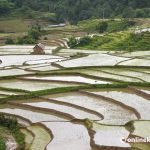
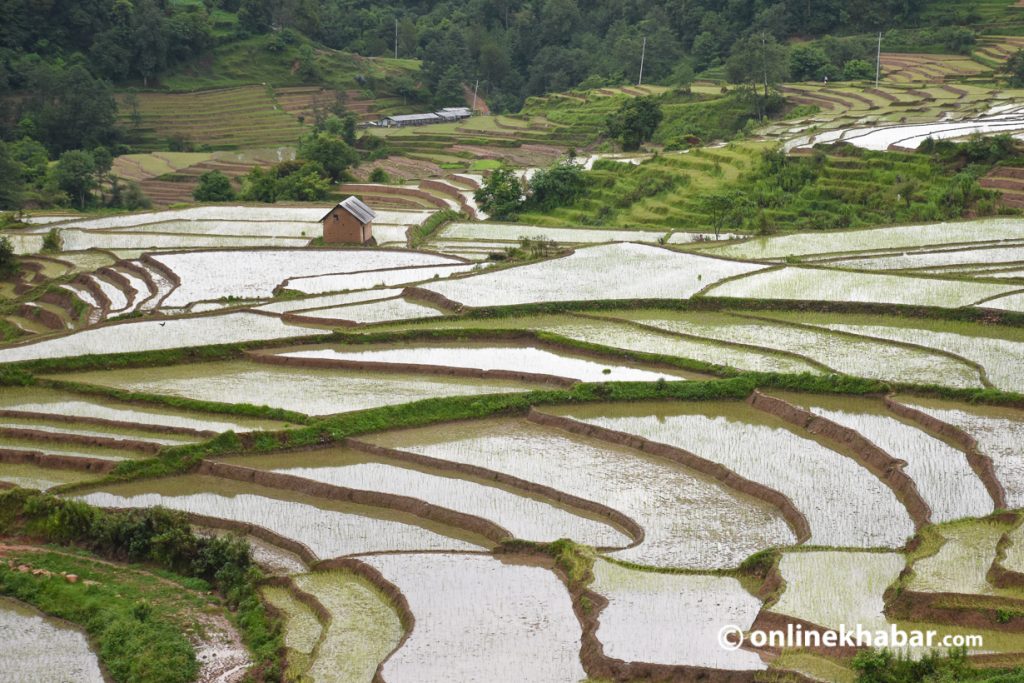
The Terai should be developed into a food basket. By ensuring year-round irrigation, timely fertiliser supplies and rural access roads across our southern plains, we can dramatically increase paddy, wheat and lentil yields, turning the Terai into a surplus food-producing region.
Similarly, hilly districts should be transformed into commercial hubs for Nepali oranges, lemons, kiwis and avocados. Meanwhile, high-altitude regions such as Mustang, Jumla, Manang and other northern districts should focus on large-scale commercial apple cultivation. Producing quality oranges and apples domestically can significantly reduce fruit imports.
High-altitude regions also hold immense potential for cultivating and harvesting high-demand medicinal and aromatic herbs. Developing dedicated herbal zones could help tap into this potential.

Domestic processing over raw exports
Exporting raw materials at throwaway prices only to import expensive finished products is an economic trap. Whether it is medicinal herbs, timber, minerals or agricultural produce, our industrial policy must prioritise local processing and value addition. Setting up agro-processing plants, cold storage facilities and small- and medium-scale manufacturing units in rural municipalities will create tens of thousands of dignified jobs right where people live.
Smart import substitution
While we must import essentials that we do not produce, such as petroleum products and heavy machinery, there is little justification for spending billions of rupees importing bananas, oranges, apples, eggs, potatoes, onions or basic dairy products that Nepali farmers and entrepreneurs can produce domestically.
The government should impose strict import restrictions and protective tariffs on agricultural and consumer goods that Nepali farmers and entrepreneurs can abundantly produce at home. Guaranteed market protection is the single strongest incentive to bring young people back to the soil.
Dismantling ‘red tape’ and backing reform
Production and job creation cannot flourish in a hostile bureaucratic environment. Currently, an entrepreneur wishing to invest in Nepal is forced to navigate a frustrating maze of loopholes, running from one government office to another just to secure basic clearances.
If we want domestic and foreign capital to flow into productive sectors, we must replace outdated, loophole-ridden laws (kaite kanun) with investor-friendly legislation backed by a genuine single-window system, where approvals are transparent, digital and time-bound.
In this context, the current government’s efforts to amend archaic laws, streamline procedures and curb corruption from the top deserve fair recognition. History shows that when leadership at the highest level demonstrates integrity and refuses to tolerate graft, the lower bureaucracy inevitably falls into line.
A call for constructive unity
Nation-building cannot thrive on perpetual cynicism. While holding leaders accountable is a democratic duty, endless, reflex-driven criticism only paralyses governance. When a government takes concrete steps to reform laws, attract investment and promote domestic production, it deserves constructive space and support to deliver results.
After all, we are all part of one Nepali family. Moving forward requires mutual goodwill, respect for honest labour and a shared resolve to prioritise nation-building over partisan division. A country is never built on slogans; it is built in its farms, factories and classrooms.
The day our national conversation is measured by hectares of irrigated land, thriving agricultural production, reduced imports and the number of young people finding dignified jobs at home, Nepal’s true journey towards prosperity will finally begin.