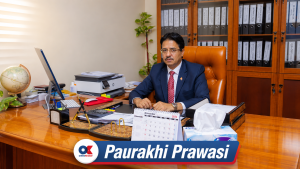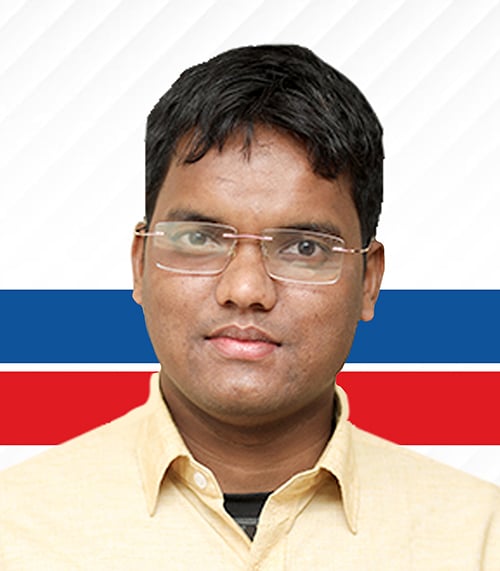

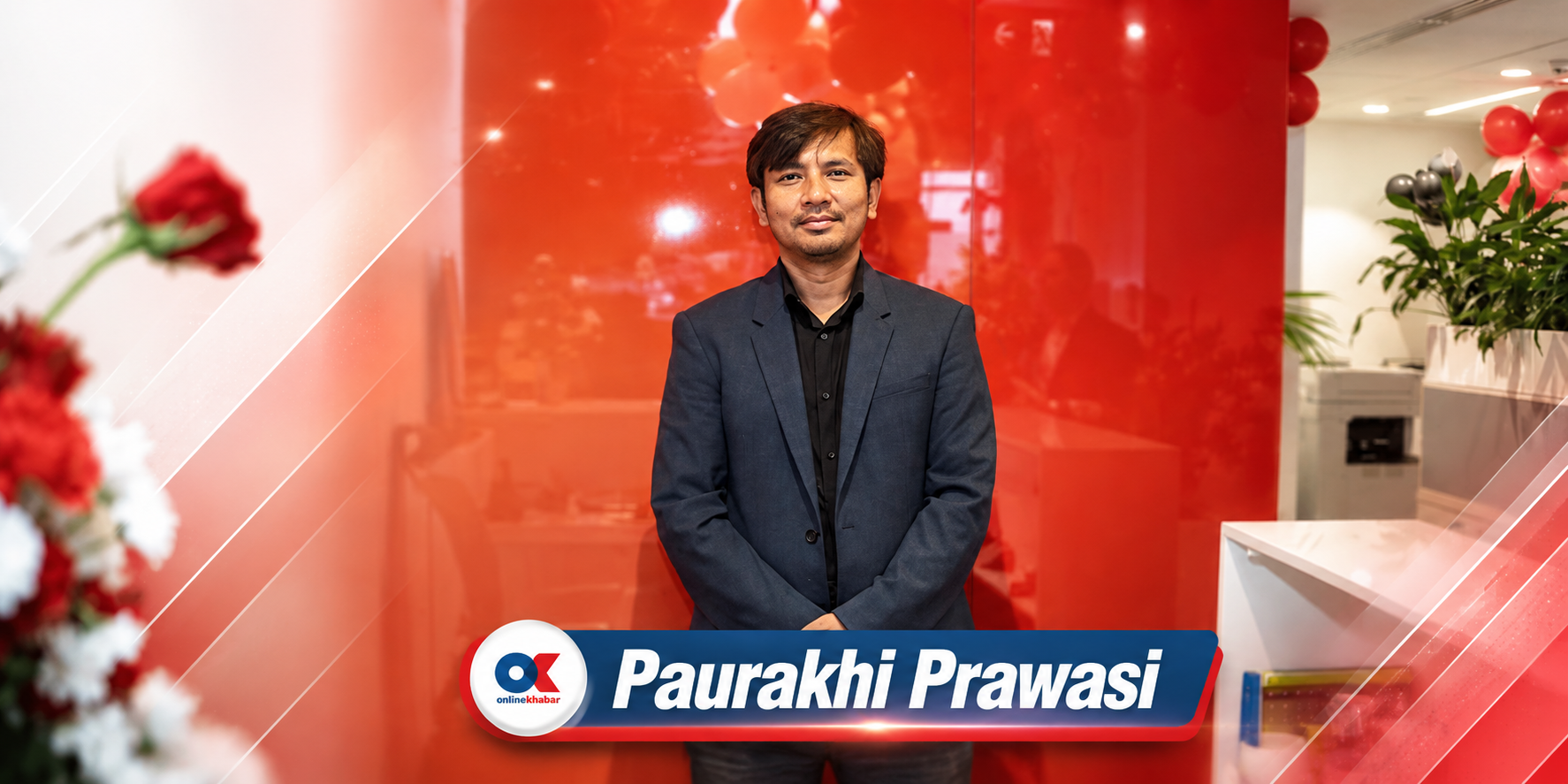
Kamal Chaudhary, 46, never imagined that he would leave Nepal for foreign employment, build a company abroad and eventually create jobs for others.
Growing up in Budhiganga Municipality-4 of Morang, Chaudhary dreamed of becoming a chartered accountant (CA) and building a career in Nepal. But his family could not afford the cost of CA studies, forcing him to abandon that dream and eventually seek opportunities abroad.
Today, the journey that began with financial hardship has taken him from a Rs 4,000-a-month accounting job in Kathmandu to senior positions in multinational companies and, ultimately, ownership of a Dubai-based company with an annual turnover of more than $7 million.
His story is one of persistence, professional growth and overcoming barriers as a Nepali professional in the international business world.
A difficult start
Born in 1979 in Morang, Kamal Chaudhary spent his childhood in his village. He studied at a boarding school until Grade 5 before moving to a government school because of his family’s financial difficulties.
He completed his SLC from Saraswati Secondary School in Duhabi in 1994. Reaching school itself was a challenge. He and his friends walked for about an hour each way, crossing several streams and travelling along dusty roads.
“Those days at the government school were difficult to describe. We would leave for school in the morning and return home only in the evening,” he recalls.
After SLC, Chaudhary studied at Mahendra Morang Adarsh Multiple Campus. He worked alongside his studies to support himself, taking jobs at Bhagwati Store, a battery company and later a soap factory.
He also taught at boarding schools and worked as a volunteer at his former school to cover his education expenses.
After completing his BBS, he moved to Kathmandu around 2000 in search of better opportunities.
The dream of becoming a CA
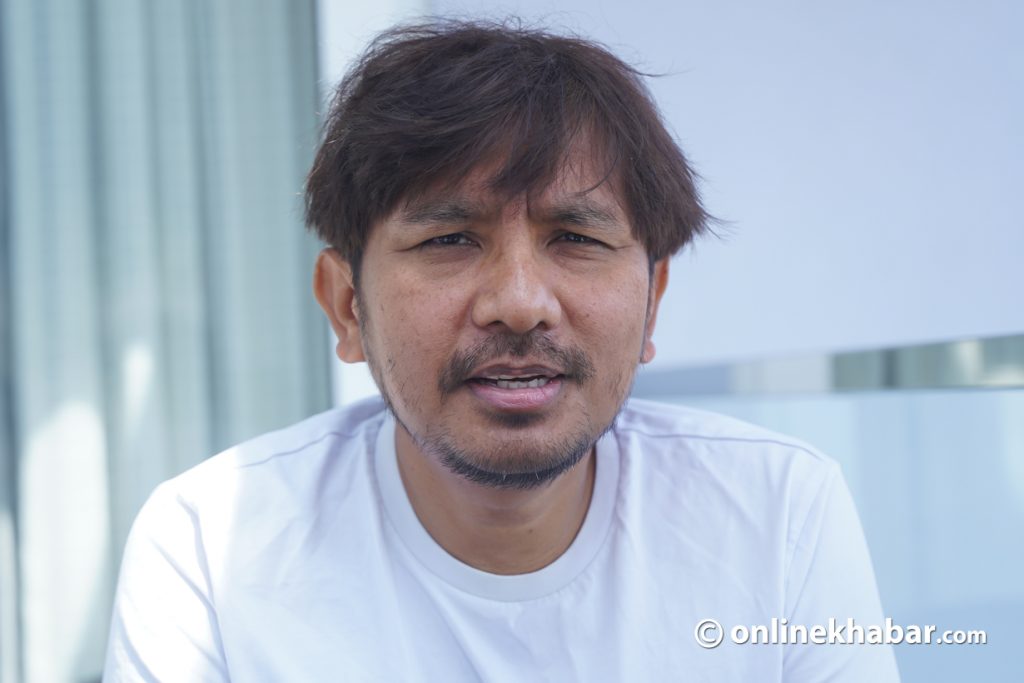
While studying at Mahendra Morang, Kamal Chaudhary had set his sights on becoming a chartered accountant.
But his family could not afford it.
“You would have to sell two bighas of farmland to pay for your CA studies. How would we educate your other siblings?” his father told him.
At the time, CA studies were not available in Nepal in the way he wanted, meaning he would have had to go to Delhi, India, where the cost was around six lakh Indian rupees.
Without the money to pursue the qualification, Chaudhary’s dream of becoming a CA came to an end.
“I had to put my CA dream aside. I came to Kathmandu looking for a better future,” he says.
From a Rs 4,000 salary to sleeping at the office
In Kathmandu, Kamal Chaudhary enrolled in a master’s programme at Shanker Dev Campus in Putalisadak in 2000.
But even finding a place to live was difficult.
Eventually, he found a small room in Chyasal, Lalitpur, which cost Rs 400 a month. He shared it with three friends while searching for work.
Around 2001, he found a job as an accountant at SCS Global Management Consultancy in Kamaladi. His monthly salary was Rs 4,000.
The salary barely covered his college fees and living expenses.
At one point, he could no longer afford his room rent and spent an entire year sleeping at his office.
“I couldn’t even afford the Rs 400 rent. With Rs 4,000, I had to decide whether to pay college fees, rent or cover my daily expenses. For about a year, I slept wherever I worked,” he recalls.
Food was another struggle.
He would often go to Ratna Park, where cheap food was available.
“There was bhutan (buffalo offal) for Rs 5. On days when I didn’t have enough money for food, I would eat that until I was full, drink water and go to college and the office,” he says.
“Those days still feel like yesterday.”
After leaving the consultancy, he worked as a senior accountant at Dalima Resort in Kurintar for a year and later became finance head at Daikin/Himal Air Conditioner.
But his income still did not meet his ambitions.
He began considering foreign employment.
Qatar changed the course of his career
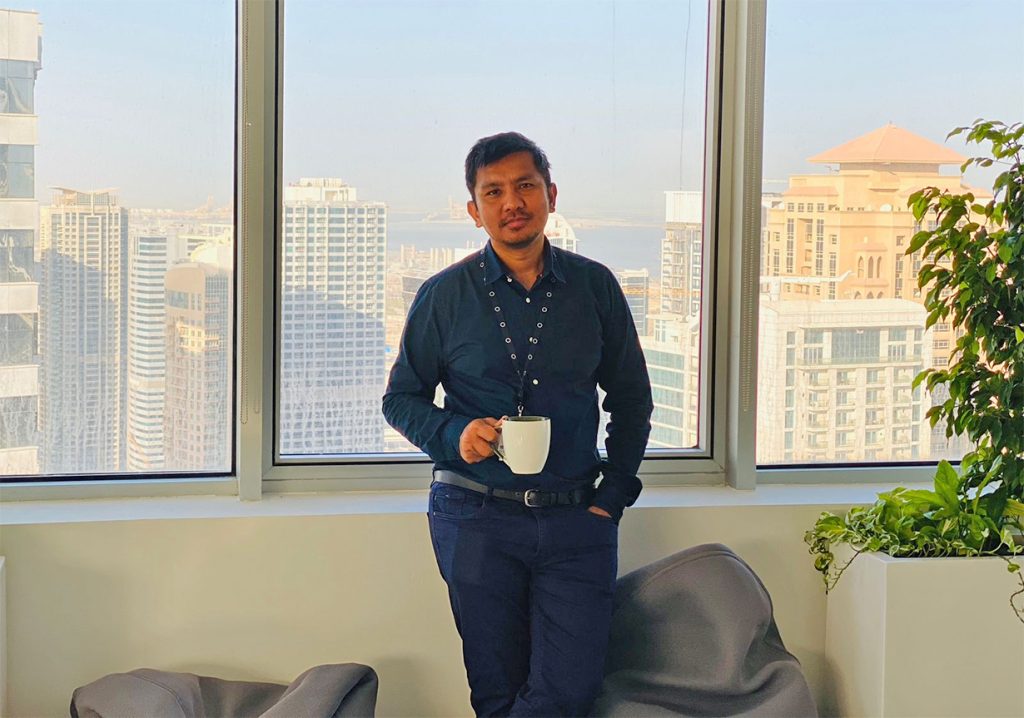
In 2004, Kamal Chaudhary travelled to Qatar for the first time, joining Satco Trading as an accountant.
The company was involved in construction and imported construction materials from countries including China, Vietnam, Germany, Taiwan, India and Pakistan.
His starting salary was 1,200 Qatari riyals.
He was dissatisfied with the pay and resigned after six months. However, he could not immediately move to another company because of Qatar’s employment regulations at the time.
His employer eventually increased his salary to 3,600 riyals, and he continued working there for two years.
Still eager to advance, Chaudhary applied to Samko International in Doha and was selected in 2007.
The company was involved in mechanical, electrical and plumbing (MEP) works and had been contracted for the Doha Tower project.
Kamal Chaudhary joined as a project controller.
He worked on the Doha Tower project for two years and helped complete it successfully.
“My salary at the time was 9,000 Qatari riyals,” he says. “When you go to Doha today, you can see the round tower. I worked on that project as a controller. Many other Nepalis also worked hard to build that tower.”
The project became an important milestone in his career.
The turning point: a multibillion-dollar project
Kamal Chaudhary’s next major opportunity came in 2008 when Australian company Kempe Engineering was looking for a project controller for a Qatar Aluminium project.
He applied despite having fewer formal qualifications than many of the other candidates.
Other applicants were foreign professionals with CA and CCA qualifications. Chaudhary had an MBS from Tribhuvan University and his experience working on the Doha Tower project.
“I had the lowest qualification among the candidates,” he says. “But I had the experience of working as a controller on the Doha Tower project.”
He was eventually selected.
Getting the required NOC was another hurdle, but he managed to obtain it and joined the company.
His role on the Qatar Aluminium project became what he describes as the turning point of his life.
The massive project had a multibillion-dollar budget, with Kempe Engineering handling work worth around $1.5 billion.
Chaudhary was responsible for project control and budget planning. He says he worked closely on aluminium processing and gained experience in handling large-scale industrial projects.
Around 700 workers were involved in the project, including Nepali, Indian and Filipino workers.
The project was completed successfully, and Chaudhary was promoted to management level.
From Qatar to Mozambique and the UAE
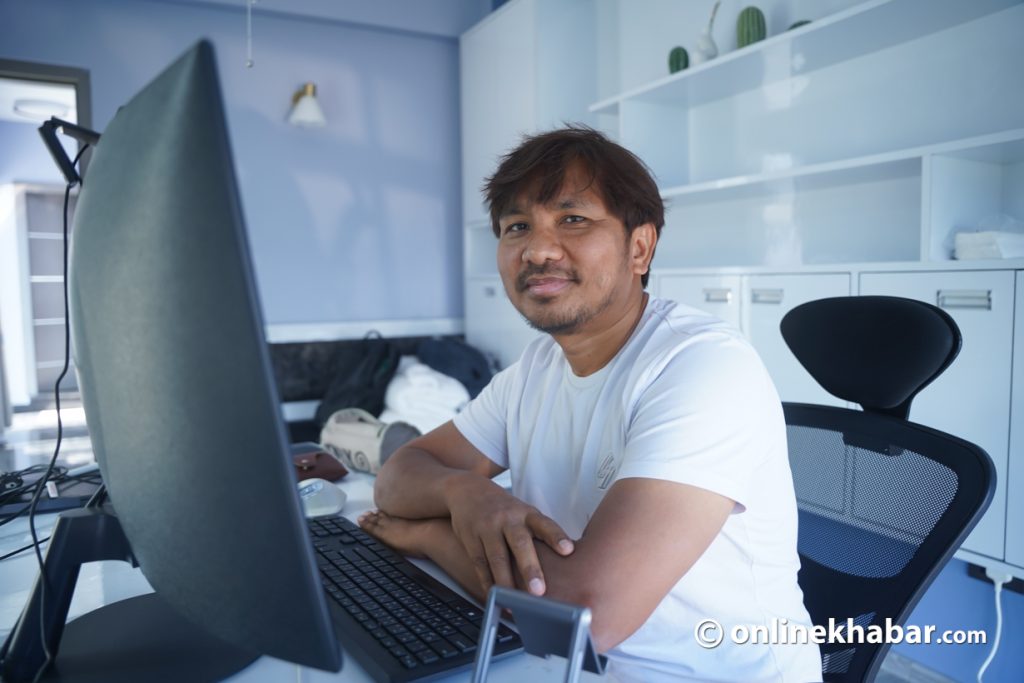
In 2011, Kempe Engineering sent Kamal Chaudhary to Mozambique as an assistant finance manager for an aluminium upgrade and modification project.
The project, undertaken with British multinational BHP Billiton, was worth around $460 million, according to Chaudhary.
After successfully completing the assignment, he returned to the UAE and was appointed regional finance manager.
He was responsible for operations across several branches in Dubai, Qatar, Oman and Saudi Arabia.
The company later merged with Australian and Finnish companies in 2014.
Chaudhary continued to rise through the corporate ranks.
Helping Nepalis rise with him
As his position grew, Kamal Chaudhary also began helping other Nepalis find opportunities in the companies where he worked.
He helped Nepali workers move from entry-level positions such as tea boys to clerks and supervisors.
“I helped many Nepali youths get jobs. I helped them move from tea boy positions to clerks and supervisors,” he says.
He also pushed for better salaries for Nepali employees.
According to Chaudhary, some workers who initially earned around Rs 100,000 eventually reached salaries of Rs 500,000–600,000.
But his own career eventually hit another obstacle.
When he was considered for promotion, he says the company required a CA qualification for the position.
Although he was among the most senior candidates, he did not have the qualification.
He also felt he was being treated differently because he was Nepali.
“I felt that I was being looked down upon because I was Nepali. My salary was around Rs 1.1 million a month at the time. I decided to leave the company,” he says.
Turning frustration into his own company
The experience became a motivation for Kamal Chaudhary to build something of his own.
In 2022, he established Clean World Management Consultancy in Dubai.
He brought Finnish national Pentti Korhonen on board as a partner, citing his decades of experience in marketing and international projects.
Chaudhary says the partnership was partly driven by the realities of the international business environment, where Asian entrepreneurs can still face difficulties in securing major projects.
His company now reports annual business of more than $7 million, equivalent to nearly Rs 1 billion.
Chaudhary says his company works on major projects and provides consultancy and related services.
Why he chose Dubai
Kamal Chaudhary says one of the major differences he has observed between the Gulf countries and Nepal is the enforcement of rules.
“In Dubai and Qatar, you don’t have to pay bribes to get work done. You have to complete the work properly and according to the rules, otherwise you face penalties,” he says.
He believes this discipline has contributed significantly to the development of countries such as Qatar and the UAE.
Nepal, he argues, needs not only better laws and policies but also stronger implementation and cleaner leadership.
Bringing experience back to Nepal
Despite building his career abroad, Kamal Chaudhary remains closely connected to Nepal.
He believes Nepalis working overseas have accumulated valuable skills, knowledge and international experience that can contribute to Nepal’s development.
For him, Nepal’s young people need to become more actively involved in development, while the country should also find ways to bring back the expertise of its migrant workforce.
He says the recent youth-led movement has created some hope for change, but argues that Nepal needs leadership committed to transparency and development.
“It’s not enough to have policies and laws. The intentions of those leading the country also need to be clean,” he says.