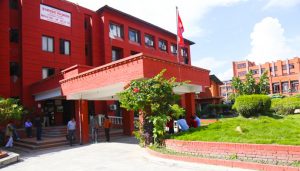

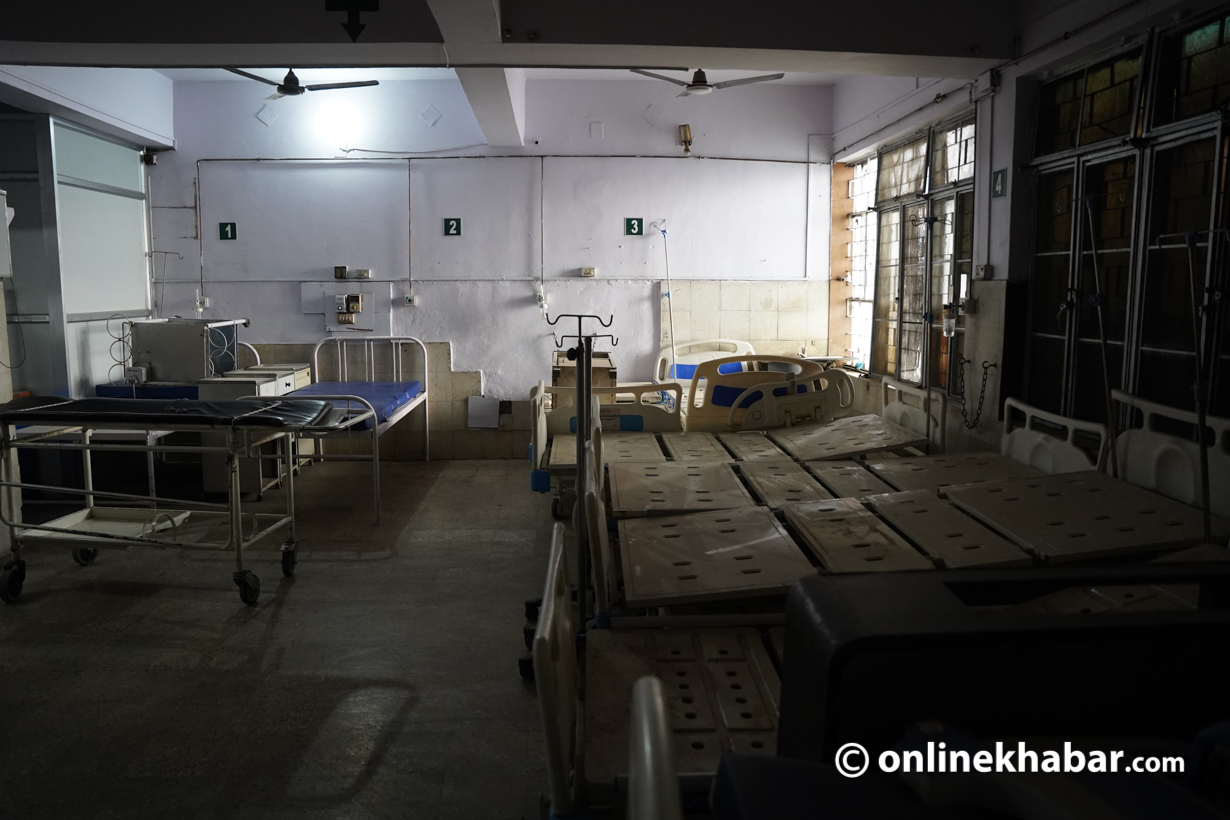
For generations, hospitals have been the centre of healthcare. When people become ill, they travel to a clinic or hospital. A doctor examines them. Medicines are prescribed. Treatment begins. Then patients return home, and healthcare largely waits until they come back again. It is a model that has served medicine well for more than a century. But it is also a model built around a simple assumption: Healthcare happens inside hospitals. The twenty-first century invites us to challenge that assumption.
In my previous article, I argued that healthcare should not stop caring for patients when they leave the clinic. If that is true, another question naturally follows.
Where should healthcare happen?
The traditional answer is obvious. Hospitals. The future answer may be very different. Healthcare should happen wherever people need it. Sometimes that will be inside a hospital. Often, it will not. Consider a child who develops a fever in Humla. Before a doctor is seen, important decisions have already been made. Should the family wait another day? Should they begin the long journey to the nearest health facility? Can they afford the travel? Is the illness serious enough to justify leaving work and school? By the time the child reaches a hospital, the most important barrier has already been crossed. Not the hospital door. The distance. Distance has always shaped healthcare in Nepal. It determines how quickly people seek care. How much they spend. Whether they complete follow-up visits. Whether they receive specialist advice. Whether they survive emergencies. Geography should never determine the quality of healthcare a person receives. Yet too often, it still does.
Hospitals are indispensable. No digital technology can replace emergency departments, operating theatres, intensive care units or skilled clinicians. Nor should it. The goal is not to replace hospitals. It is to extend their reach. A hospital should no longer be viewed as the place where healthcare begins and ends. It should become the centre of a much larger network of continuous care. Imagine a patient returning home after treatment for pneumonia. Two days later, breathing becomes more difficult. Today, that patient often faces an impossible decision. Should they wait? Should they spend an entire day travelling back to the hospital? Or should they hope the symptoms improve? A patient-centred healthcare system offers another possibility. The patient reports worsening symptoms through a simple digital follow-up. The treating clinician reviews the information. Perhaps reassurance is all that is needed. Perhaps medicines need to be adjusted. We should arrange new investigations before the patient begins travelling. Or perhaps immediate referral is essential. Healthcare reaches the patient before the crisis reaches the hospital.
Nepal presents this question more clearly than almost any other country. We are a nation of extraordinary geography. Communities are separated by mountains, hills, remote valleys, rivers, weather and difficult roads. For millions of Nepalis, reaching healthcare is itself a major challenge. Sometimes the first obstacle is not disease. It is distance. Every unnecessary journey carries a cost. Parents miss work. Children miss school. Families borrow money. Elderly patients endure exhausting travel. For many, a routine follow-up appointment becomes an entire day’s journey. Sometimes much longer.
We often measure access to healthcare by counting hospitals. Perhaps we should instead ask a different question. How much travelling should a patient need to do to receive good healthcare? Modern technology allows us to rethink that question. Instead of asking patients to travel whenever expertise is needed, we can increasingly allow expertise to travel instead. That simple shift changes everything.
Imagine a dermatologist in Kathmandu. Today, patients from every corner of Nepal travel long distances for consultations that may last only fifteen minutes. Now imagine that many of those consultations could be performed remotely after appropriate triage. Patients travel only when procedures or direct examination become necessary. The specialist spends more time practising medicine. Patients spend less time travelling. Healthcare becomes more efficient without compromising quality.
The same principle applies across many specialities, including mental health, rehabilitation, nutrition, medication counselling, diabetes education, and post-operative follow-up. Not every medical interaction requires physical presence. Some require expertise. Those are not always the same thing. This is where telemedicine becomes transformative. Its greatest contribution is not replacing hospital visits. Its greatest contribution is reducing unnecessary hospital visits. Hospitals remain available for patients who genuinely need hospital care. Many of the routine consultations, specialist advice, medication reviews, and patient education can safely occur much closer to where patients actually live.
A truly connected healthcare system also changes the role of local health facilities, such as health posts, primary care clinics, and community health workers. Instead of functioning independently, they become connected to district hospitals, teaching hospitals and specialists. A nurse in a rural municipality can consult a specialist when necessary. A community health worker can receive guidance without referring every patient to an urban hospital. Knowledge begins moving through the healthcare system instead of patients carrying the entire burden. This approach strengthens, not weakens, local healthcare. People often assume digital health centralises medicine. The opposite can happen. When local providers remain connected to specialists, they become more capable of managing patients within their own communities. Only those requiring advanced care need referral. Healthcare becomes distributed. Expertise becomes shared. Patients remain closer to home whenever possible. This broader philosophy also changes how we think about healthcare infrastructure.
Traditionally, governments improve access by constructing additional hospitals. Hospitals will always remain essential. Digital infrastructure can extend the value of every hospital already built. One specialist can support multiple districts. One teaching hospital can strengthen dozens of rural facilities. One consultation can eliminate an unnecessary journey. Healthcare capacity grows not only by building more buildings but by connecting the ones we already have.
This philosophy is reflected in MEDeCLOCK. Rather than treating hospitals as isolated institutions, it proposes a connected healthcare ecosystem in which hospitals, health posts, clinics, diagnostic centres, pharmacies and patients can interact through a shared digital infrastructure. Telemedicine becomes one component of that ecosystem, not an isolated service but an extension of coordinated care supported by longitudinal health information and secure communication. Whether this approach ultimately becomes part of Nepal’s healthcare future will depend on evidence, careful implementation and public trust. One principle already seems clear. Healthcare should no longer be defined by where hospitals stand. It should be defined by how effectively expertise reaches people. Perhaps the most important hospital of the future will not be the one with the tallest building. It will be the one whose knowledge reaches the greatest number of people. The true purpose of healthcare is not to bring patients to hospitals, but it is to bring health to people.