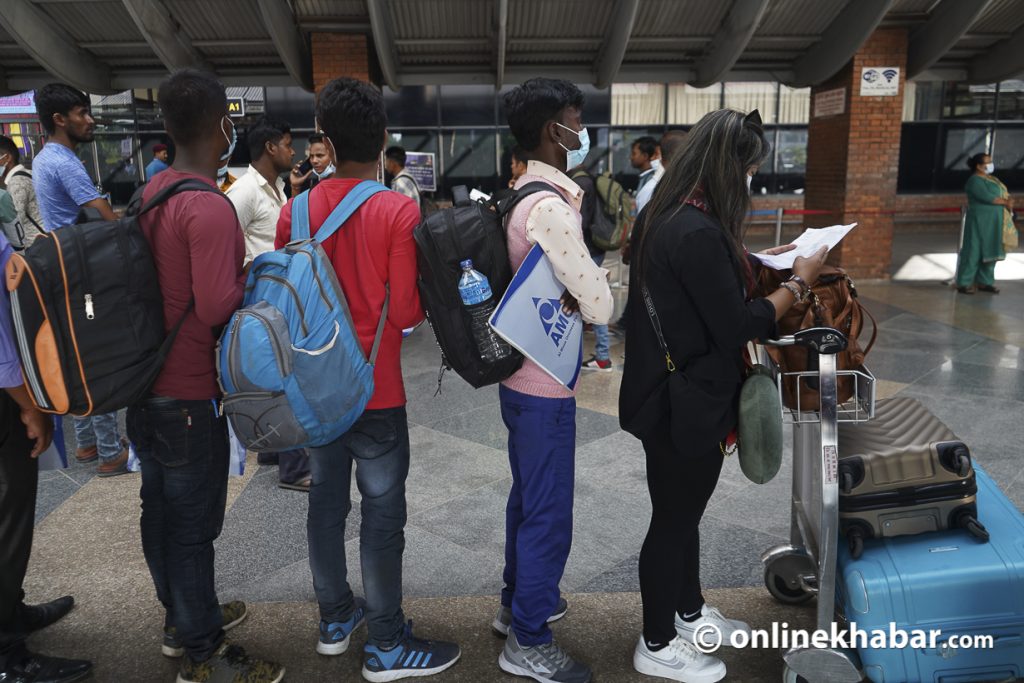
Every morning, Kathmandu’s airport tells the truth about Nepal’s economy. The queue at the departure gate, filled with young men in matching jackets clutching plastic folders, represents the country’s biggest export and most reliable source of income. Lately, that queue has been getting shorter.
Nepal is, in effect, a remittance economy with a country attached. Money sent home by workers abroad accounts for more than a quarter of GDP and keeps roughly six in 10 households afloat. Much of it comes from the Gulf, where nearly two million Nepalis lay bricks, guard malls and fold hotel towels. The arrangement suited everyone. Gulf states got cheap labour. Families got new roofs. Politicians got a pressure valve. Why create jobs at home when Doha and Dubai would do it for you?
The valve is now sticking. Since the United States and Israel began striking Iran in February, the Gulf has gone from a safe bet to a war zone. The recruitment of Nepali workers has roughly halved. Hotels have placed staff on “unpaid leave”, a phrase that means exactly what employers hope workers will not notice. Construction, retail and transport — the sectors that absorb much of Nepal’s migrant workforce — are among the most exposed.
Officials point out that remittances hit a record last year. True, but beside the point. Today’s transfers are the wages of men who left months ago. The shrinking queue at the airport will show up in household accounts later. Admiring a full reservoir while the river dries up is not a strategy.
Nor will peace fix everything. The deeper threat is not missiles but machines. Gulf governments are pouring money into artificial intelligence and automation, and their reasons are obvious. Robots need no visas, no dormitories and no flights home when airspace closes. Autonomous robots are already working on construction sites in the region, while Qatar’s postal service has deployed robots to sort mail.
Consultants at McKinsey estimated years ago that close to half of jobs in the Gulf could be automated using existing technology, and that in the UAE, foreign workers performed nearly all of the work considered automatable. The war has only strengthened the case for automation. To a Gulf planner, a workforce that can be stranded overnight looks like a liability.
So the workers will come home, some now and more later. The question is what they will come home to. At present, not much. Hundreds of thousands of unemployed Nepalis are already registered at government job centres, while about half a million young people enter the labour market every year. A returnee risks being ghar ko na ghat ko — belonging neither here nor there.
The government says it is drafting a 10-year employment plan. Nepal does not lack plans; it lacks plans that arrive before the problem. An old saying advises, pani aaunu agadi nai paal baandhnu — build the embankment before the rain. Five bricks would be a start.
First, count. Nobody knows exactly how many workers have lost their jobs in the Gulf. A state that cannot count its returnees cannot help them.
Second, certify. A man who has spent a decade wiring towers in Doha may still be classified as “unskilled” at home because nobody has assessed what he knows. Quick, affordable skills assessments would turn that experience into credentials employers can trust.
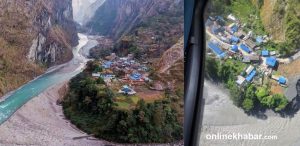
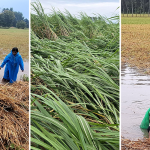
Third, rebuild. The government has launched a major reconstruction effort following the August floods. Nepal’s returnees have built airports in the desert; they can build bridges in Rasuwa. Importing contractors while local builders sit idle would be a special kind of folly.
Fourth, invest. Three decades of remittances have gone largely into land, houses and imported televisions. Affordable credit and simpler paperwork could help channel those savings into workshops, farms and businesses that create jobs for others.
Fifth, move up the value chain. If Nepalis continue to work abroad, they should have better opportunities to pursue jobs that require human skills and judgement, including nursing, elder care, skilled trades and software development. Such jobs can pay better and may be less susceptible to automation. That means fixing schools and training systems now, not after the next crisis.
None of this is glamorous. All of it is overdue. For 30 years, the Gulf gave Nepal breathing room, and Nepal used it mostly to hold its breath. Machines are getting cheaper every year; the excuses are not.
Afno haat Jagannath, goes the proverb: one’s own hands are one’s greatest resource. Nepal has spent a generation exporting its hands. It is time to put them to work at home.