Kathmandu, October 11
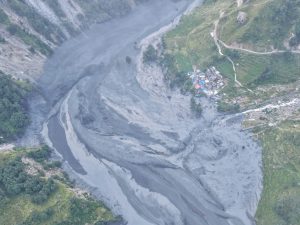
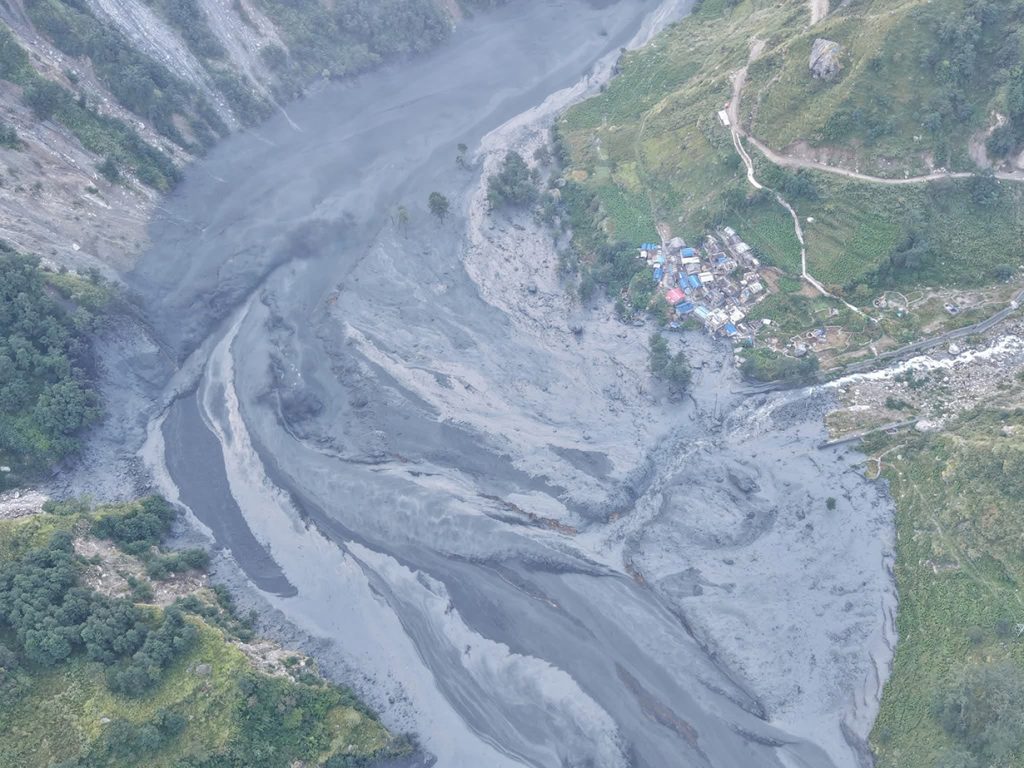
A sudden flood carrying mud, rocks and debris swept through settlements along the Budhi Gandaki River in northern Gorkha on Sunday morning, damaging bridges, houses and hydropower infrastructure.
While the extent of the destruction is becoming clearer, the exact origin of the flood and the sequence of events that triggered it remain uncertain. Preliminary observations point to the Ungilung Khola, a tributary that flows into the Syarkhola before joining the Budhi Gandaki.
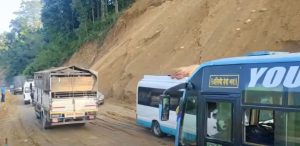
The flood has also disrupted road connections between Gorkha and Dhading, damaged settlements along the river corridor and raised concerns about the safety of communities in the remote mountainous region.
Tracing the flood upstream
To understand how the flood reached the Budhi Gandaki, it is necessary to follow the river upstream from Arughat, a market town situated along the Gorkha-Dhading border, around 40 kilometres northeast of Gorkha Bazaar.
From Arughat, the Budhi Gandaki flows north through the remote settlements of northern Gorkha. About 50 kilometres upstream lies Philim, the administrative centre of Chumnubri Rural Municipality and a major settlement within the Manaslu Conservation Area.
Around five to seven kilometres beyond Philim, the Syarkhola joins the Budhi Gandaki from the left. Another five to seven kilometres upstream, the Ungilung Khola flows into the Syarkhola.
These tributaries have emerged as important clues in the search for the flood’s origin.
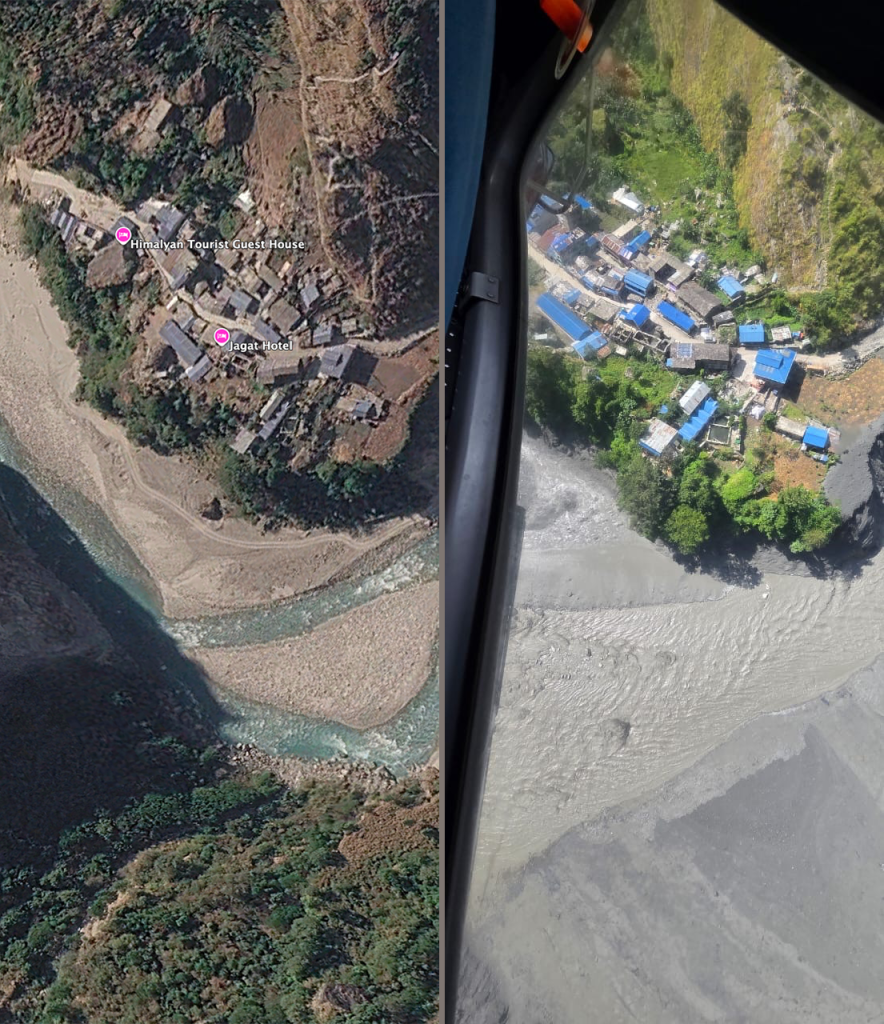
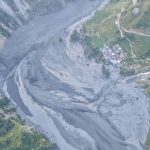
A team led by Sushil Thapa, managing director of the Budhi Gandaki Hydropower Project, conducted an aerial inspection on Sunday morning. According to Thapa, the team observed floodwater from the Ungilung Khola flowing through the Syarkhola and into the Budhi Gandaki.
“Floodwater from the Ungilung Khola was seen flowing through the Syarkhola into the Budhi Gandaki. The Budhi Gandaki upstream of that point was flowing normally,” Thapa said.
He added that the flood appeared to have originated in the Chumchet area of the Chum Valley, although its precise cause would only become clear after technical and scientific investigations.
The Nepal Army’s preliminary reconnaissance team, meanwhile, reported that a dry landslide in the Philim area of Chumnubri-3 had blocked the Budhi Gandaki, with the subsequent release of the water triggering the flood.
The accounts point to a possible connection between a landslide and the sudden surge, but the exact location where the river may have been obstructed and the sequence of events have yet to be conclusively established.
A technical team, including geologists and personnel operating an unmanned aerial vehicle, has been deployed to investigate the terrain and determine the cause.
Bridges, settlements and hydropower projects damaged
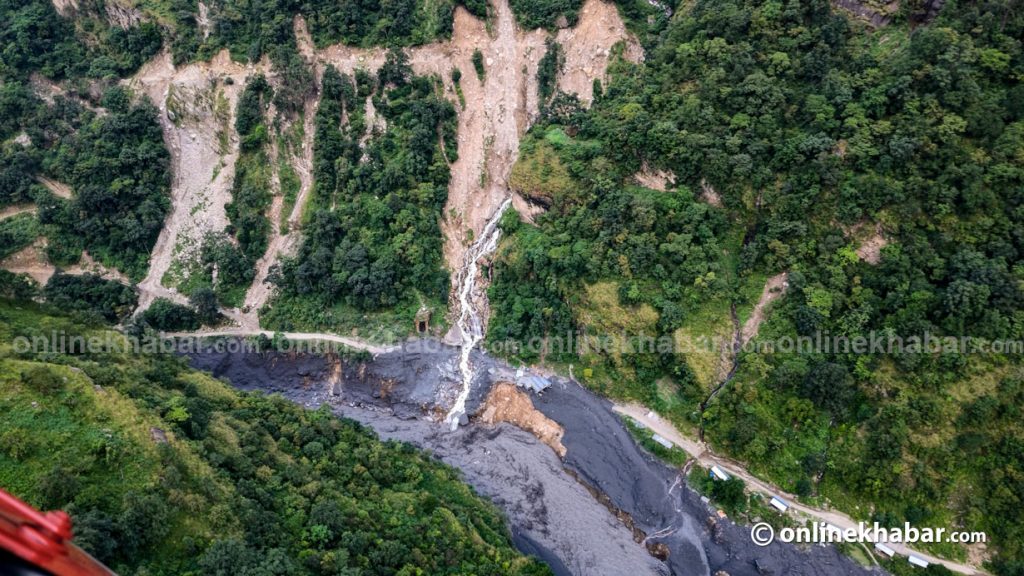
The flood has caused extensive damage to infrastructure along the Budhi Gandaki corridor.
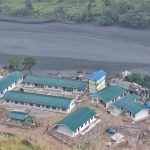
Among the affected facilities is the construction camp and associated structures of the 341-megawatt Budhi Gandaki Hydropower Project at Salleri in Dharche Rural Municipality-3. Preliminary reports indicate that the project’s powerhouse and nearby houses were swept away.
A Bailey bridge constructed by the 14.15-megawatt Dobhan Khola Hydropower Project was also washed away.
Several bridges connecting settlements along the river have been damaged or destroyed. The bridge at Soti, which links Philim and Arughat, was swept away, disrupting movement between Soti and Manbu in Arughat Rural Municipality. The damage has affected access to wards 2 and 3, while suspension bridges at other locations have also sustained damage.
The bridge connecting Gorkha and Dhading at Arughat suffered damage, with one section reportedly swept away. Its loss has further complicated movement between the settlements on either side of the river.
The destruction has also affected Jagat Bazaar, a key stop for trekkers entering the Manaslu region. Local administration records show that more than 100 tourists entered the Manaslu area through Jagat on Saturday, a day before the flood struck.
According to preliminary details released by the National Disaster Risk Reduction and Management Authority on Sunday evening, the flood damaged two motorable bridges, two suspension bridges and three hydropower projects.
At least 45 houses were completely destroyed and another 27 partially damaged. The reported losses also include 34 livestock sheds, 12 pig pens or animal sheds, and three vehicles.
Five people missing, 82 rescued
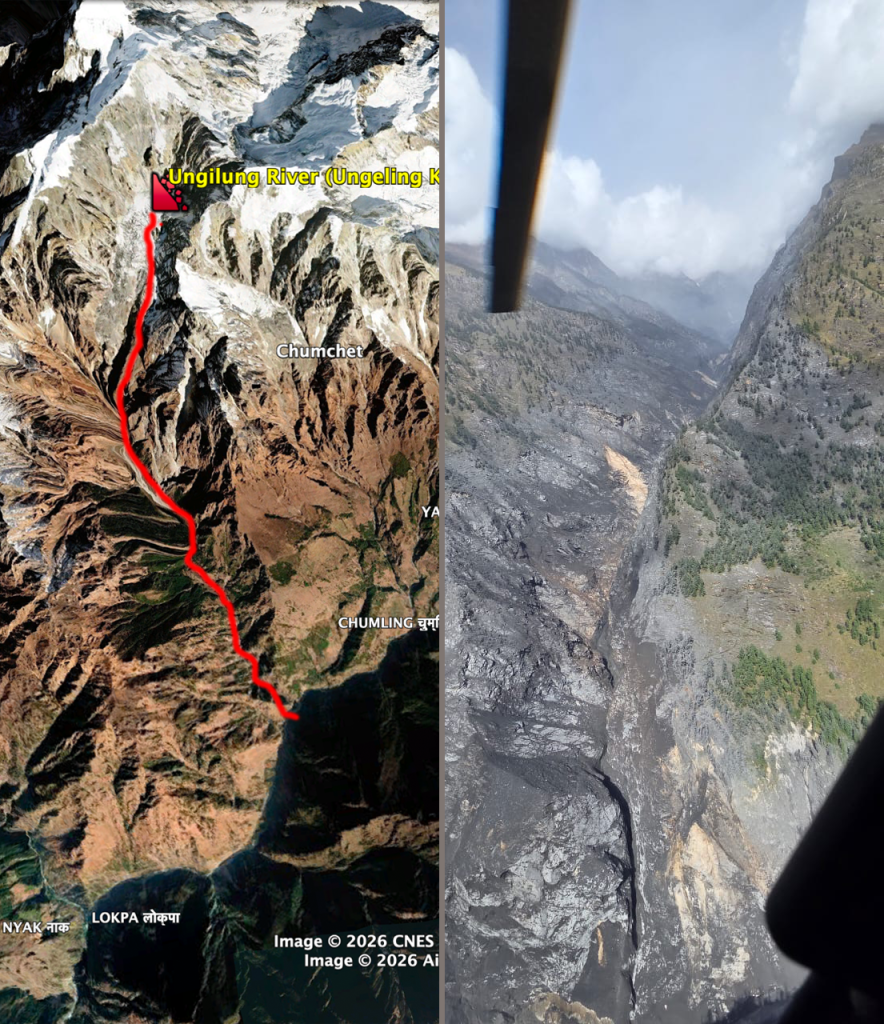
Five people — two women and three men — remain unaccounted for in the Ungilung area of Chumchet, Chumnubri-6, according to the disaster authority’s preliminary report.
Authorities mobilised four Nepal Army helicopters to evacuate 82 people from affected areas, including nine foreign nationals.
Search and rescue operations, relief distribution and other emergency response activities are continuing. Authorities have also been warning communities in vulnerable locations to remain alert to further risks.
The full extent of the damage and the number of people affected could change as teams reach remote settlements and complete their assessments.
Technical teams deployed to investigate
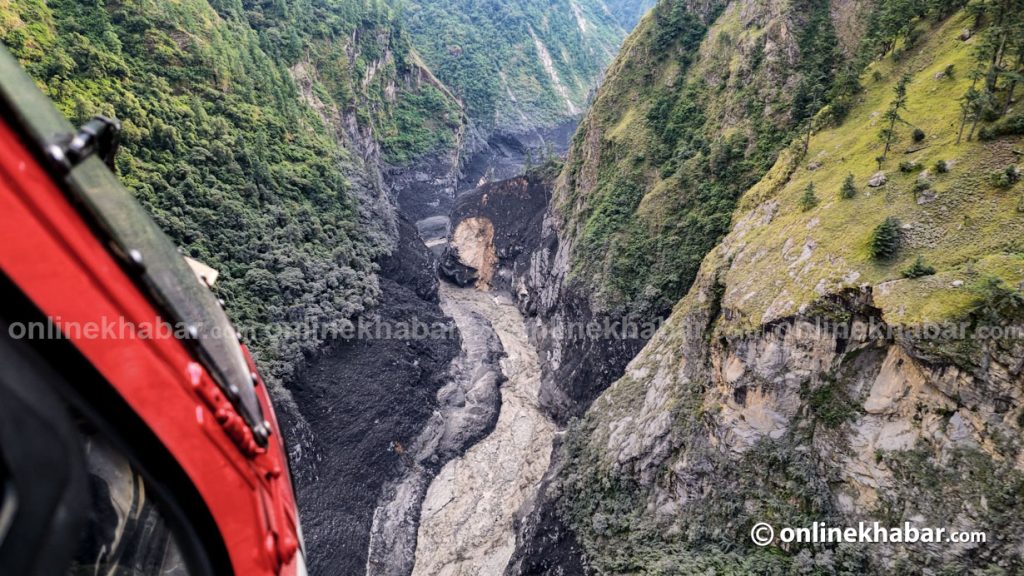
The government has mobilised technical teams to investigate the flood’s origin and assess the surrounding geological conditions.
A three-member team comprising geologists and personnel equipped with a drone has been sent to the affected area to examine the terrain and gather evidence.
A separate team involving the director generals of the Department of Roads and the Department of Local Infrastructure is assessing the possibility of installing Bailey bridges as temporary replacements for damaged bridges and road connections.
Authorities are also coordinating the delivery of relief supplies and the deployment of rescue and response teams to affected areas.
The investigation is expected to establish whether a landslide blocked the river, where any obstruction occurred and how the accumulated water was released. Until that assessment is complete, the precise mechanism behind Sunday’s destructive flood remains unconfirmed.
The damage along the Ungilung Khola, Syarkhola and Budhi Gandaki provides a trail for investigators to follow. But determining what triggered the sudden surge will require further fieldwork and scientific analysis.